• Skip to main content
  • Skip to footer
  • Donate
  • Become a Member
  • Volunteer With Us!
  • Cart

Waterford Foundation

  • Education
    • K-12 Education Programs
    • The Waterford Fair
    • Waterford Craft School
    • Waterford HIstory
    • Remote Learning
    • The Quakers
    • African Americans in Waterford
  • Preservation
    • Historic Buildings
    • Mill Stabilization Project (2009-2023)
    • John Wesley Community Church Restoration
    • Dashboard Map of Western Loudoun Development, 1950-2020
    • Phillips Farm
    • Notes from the Preservation Desk
  • Shop
    • Books
    • Donate
    • Membership
    • Lantern Light Fund
  • Events
  • Weddings & Rentals
  • About
    • Contact Us
    • Meet the Staff
    • Meet the Board
    • Visit Waterford
    • Support
    • Join Us
  • News
  • Privacy Policy

Archives for February 3, 2026

What Does Historic Preservation Mean?

February 3, 2026 by Abigail Zurfluh

When you walk around places like Waterford, you can feel the history of the place. That is by design. The care and protection of historic areas like Waterford is called historic preservation. Historic preservation is largely agreed to be defined as the identification, interpretation, care of, and protection of historic artifacts and objects, sites, buildings and structures, landscapes, and districts. There are multiple different fields of preservation (that often intersect with other fields and interests) in which preservationists dive into that definition: including archaeology, architecture, museums, planning, building technology, advocacy, material culture, conservation, public history, and more. What the definition of historic preservation means and how they interpret it in their work can differ from preservationist to preservationist.

So, what does historic preservation mean to preservationists in Loudoun County? Below learn a little bit about the insights of what preservation means to them from Margaret “Margie” Salazar-Porzio, Ph.D. of Oatlands Historic House and Gardens, Ian MacDougall of the Virginia Piedmont Heritage Area, William Milone of Loudoun County Planning and Zoning, and Jana Shafagoj of Morven Park.


Margaret “Margie” Salazar-Porzio, Ph.D. is the Executive Director of Oatlands, a site of the National Trust for Historic Preservation in Loudoun County. With more than 15 years of experience in museums and public humanities, she previously served in leadership roles at the Smithsonian Institution, the Institute of Museum and Library Services, and the President’s Committee on the Arts and the Humanities. At Oatlands, she is leading a community-centered transformation focused on descendant engagement, education, land stewardship, and long-term sustainability.

What does historic preservation mean to you?

“To me, historic preservation is about stewarding places in ways that protect their historical and cultural significance while also inviting active engagement, inquiry, and connection to the present. Preservation to me is about honoring the people and their lives that are embedded in a landscape, including those that are difficult or complicated. At Oatlands, preservation means holding complexity, centering descendant voices, and ensuring that the site remains relevant and meaningful to the communities it serves today and in the future. As stewards, we must treat the site as a shared inheritance that extends beyond any one generation. Our choices today must therefore be guided by the long view, made with the understanding that others will inherit this place and continue its care.”

How did you get interested in historic preservation?

“My path into historic preservation came through public history and museum work. I’ve spent my career thinking about how history is interpreted, who gets to tell those stories, and how institutions can better reflect the full American story. Working at places like the Smithsonian and now at Oatlands has deepened my belief in the power of place: that historic sites are not simply lovely backdrops; they are places where civic learning, dialogue, and connection can unfold. With thoughtful interpretation, these places draw people into history as a lived experience, encouraging reflection and honest engagement with our shared past.”
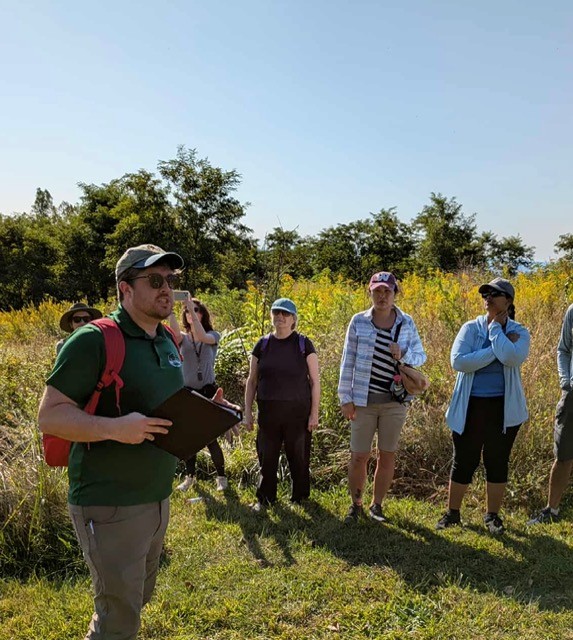

Ian MacDougall joined the Virginia Piedmont Heritage Area in June 2021. He graduated with a Bachelor of Arts in Political Science from Virginia Commonwealth University in 2017. After completing his degree, Ian worked for the Colonial Williamsburg Foundation’s Military Programming department from 2017- 2021, focusing on organizing museum programming concerning Virginia’s role in the American War for Independence, as well as researching the experience of the British Army in the Commonwealth. Ian served as Public Programs Coordinator for VPHA from 2021-2025, managing the many public programs offered by the organization, including the popular Annual Conference on the Art of Command in the Civil War. He also served on the LoudounVA250 Committee in the role of Programs Chair from 2022-2025, having recently overseen the committee’s bicentennial commemorations of the Marquis de Lafayette’s visit in 1825. Ian became VPHA’s Executive Director in 2025, and oversees the Association’s daily business, development, fundraising, membership, and preserving the integrity of the historic landscape of the Virginia Piedmont Heritage Area. He and his wife Christine share a home in the bucolic village of Taylorstown in Loudoun County, and he spends his free time traveling to historic sites across Virginia and the east coast.

What does historic preservation mean to you?

“To me, historic preservation is the act of curating a living, outdoor museum where the landscape serves as the gallery floor and the structures act as its artifacts. Rather than just saving an old building simply because it’s been around a long time , it is about protecting the integrity of a site so that the relationship between the environment and its history remains visible and can be learned from. By treating a landscape as a museum, We ensure its exhibits are not obscured by modern encroachment but are instead maintained as immersive educational tools. To be able to take someone through a historic village, house, battlefield, or ancient road can and will inspire a sense of place and the moments in history it witnessed. There’s no better way to learn about ourselves and our history than to step into the places in which these events transpired and feel it around you.”

How did you get interested in historic preservation?

“I became engaged in history from a young age, from spending my time with my mother reenacting at Fort Loudoun State Historic Park in Tennessee. Sleeping in a wooden barracks building and watching muskets and cannons fired can do a lot to inspire curiosity in history. Growing up later in Williamsburg, I was surrounded by history and preservation. From my time in the Fife and Drum Corps, to some fantastic history teachers in school, and parents that fed that love of history, you could say there was little chance I wouldn’t pursue historic preservation as a career. I found a perfect home in the Virginia Piedmont Heritage Area in that way, matching my love of history with a passion to protect it for future generations.”
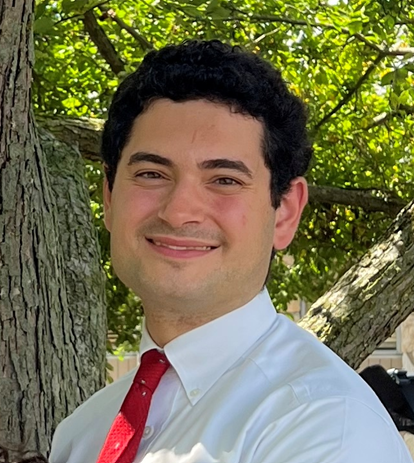

A local to this region, William Milone grew up in Alexandria’s Old and Historic District and fell in love with old places at an early age. William attended the University of Virginia (UVA) in Charlottesville, where he graduated with a Bachelors in Architectural History and a Masters of Architectural History. He lives with his wife Emily in Downtown Leesburg in a mid-19th century home.

What does historic preservation mean to you?

“To me, historic preservation- the effort to protect and interpret cultural resources in the face of visible and invisible change across society- is an imperative because it is the most socially responsible way to manage our constructed environment. Historic preservation offers people an immersive opportunity to understand their past, with physical evidence of past lives, cultures, social movements, wars, etc. to back up childhood history lessons. Preservation saves mountains of materials and energy by motivating us to reuse high-quality older buildings mostly produced with renewable, natural materials rather than replacing them with new buildings that may prove less physically durable or well-loved with time. Historic landscapes are an economic boon for local governments, and more importantly, create an irreplicable sense of place and quality of life for locals and visitors alike.”

How did you get interested in historic preservation?

“I grew up in an 1898 Queen Anne Victorian row house in the Old and Historic
District in Alexandria. For as long as I can remember, I’ve loved our old pine
floors with their rich wood grain pattern, the steep staircase with its decorative
newel posts and turned balusters, the door and window trim profiles that change
as you move up the house from floor to floor, and those wavy old window and
transom panes. My dad briefly worked in historic preservation locally and
remains involved at an advocacy level, so I was aware of the historic
preservation field from an early age. I’ve always cared deeply about historic
places and I knew I wanted to work in historic preservation just about as soon as
I realized I had the option.”


Jana Shafagoj holds a B.A. in Historic Preservation & History from Mary Washington College and a M.A. in Archaeology of Old Buildings from the University of York, UK. During her almost 30-year career, she has been lucky enough to explore, research, and preserve buildings throughout the Mid-Atlantic states and the UK. Jana accepted the Director of Preservation position at Morven Park in 2010 after being contracted by Morven Park in 2000 to determine the construction phasing of the Davis Mansion, a 6-month project, and again in 2009, to manage the Davis Mansion rehabilitation project. In her current role, Jana is responsible for the preservation of Morven Park’s historic structures and museum collections, and the interpretation of the site’s history to the public. She also manages Morven Park’s latest ground-breaking initiative, the 246 Years Project.

What does historic preservation mean to you?

“At its most basic, historic preservation is the study and protection of historic buildings. I don’t entirely agree with the word “preservation” which sounds like we are trying to stop all change and treat the building like an artifact in a museum, only to be carefully handled with white gloves. Instead, historic preservationists manage the evolution and adaptation of our built environment. As preservation professionals, we are called upon to identify the elements of each building that convey its history and must be maintained versus the ones that can be sacrificed to ensure the building’s continued relevancy to society. When properly done, historic preservation enables our historic built environment to continue to serve our community and remain a physical reminder of the community’s past for future generations. The old buildings and natural landscapes surviving within our communities allow us to subconsciously orientate ourselves in time and place, providing a sense of awe for the passage of time and a connection to our unique landscapes.”

How did you get interested in historic preservation?

“I love old houses. Ever since I was a kid, I have loved crawling around attics and cellars, looking for hidden rooms and old finishes. As I grew, this turned into a passion for understanding the evolution of our expectations for “home”. Although I appreciate buildings that have survived mostly untouched for a long time, I care more for the houses that have been shaped by each generation that called them home. Those buildings, like the Davis Mansion at Morven Park, are the ones where you find forgotten hidden spaces. That endless possibility of discovery is what I love most about this field.”
Filed Under: Preservation Tagged With: Notes from the Preservation Desk

Staff Spotlight: Leadership in Preservation and Public History

February 3, 2026 by Abigail Zurfluh

One of the most important parts about historic preservation is stewarding that love and care for history and the environment for future generations. Our Historic Preservation Director, Abigail Zurfluh, exemplifies this through her service on the inaugural Youth Advisory Council for another Loudoun County National Historic Landmark- Oatlands Historic House and Gardens!

The purpose of the Oatlands Youth Advisory Council is to advise Oatlands staff and the larger advisory council on interpretation, outreach, programming, and engagement with families, children, and young adults and professionals. The Youth Advisory Council has brought together people with multiple different backgrounds including historic preservation, art history, public history, archives and libraries, museums, and marketing. Together, they create, advise, and support the creation of new interpretive materials, programs, and more aimed at engaging families, children, and young adults and professionals with Oatlands. Finally, members of the Oatlands Youth Advisory Council will also serve as mentors to students interested in historic preservation, public history, and environmental conservation as they enter the field.

We are excited for Oatlands for this new chapter, and can’t wait to see what comes from the Youth Advisory Council!

Filed Under: Uncategorized

Diving into the John Wesley Community Church Restoration Project

February 3, 2026 by Abigail Zurfluh

In 2002, a long term capital rehabilitation and restoration project began at the John Wesley Community Church. Boots are now ready to be back on the ground in the Church this February for the final stage of this long term project! The goals of this final stage is to finish returning the building to its period of significance and to finish making historically sensitive capital improvements to the building to improve accessibility and long-term stability. As well, the Foundation aims to implement interpretive materials in the space that shares the story of the African American community of Waterford, with the involvement and support of the descendant community. This would support the long-term preservation of this integral property to the Waterford National Historic Landmark and help in sharing the history of the church and its congregation to the public.

Whether the restoration and rehabilitation project is for a house, church, mill, or barn- there is a lot of planning work involved from the decision to move forward with a restoration project to boots on the ground construction works starts. Read on below to learn more about the planning work undertaken to get to the point we are at now in the John Wesley Community Church Restoration project. 

Documentation: The Historic Structures Report

The first step in any project is to understand the full scope of it. When it comes to properties like the John Wesley Community Church, that means the production of a historic structures report (HSR). A historic structures report is a deep dive into the building to understand the totality of the property: compiling historic and archival research, documentation of the physical building from the roof to the foundation, expert evaluations of the current condition, and recommendations for work. These reports are pulled together by a team of experts from architectural historians, archaeologists, architects, and engineers. 

In 2019, the HSR for the Church was created. This HSR is what was used to determine what restoration work remained at the John Wesley Community Church in this final stage. The entire report is 150 pages and documents the Church from the foundation to the steeple through the use of historic research, expert analysis, engineering assessments, and high tech imaging including laser scans and drone images. We pass along our gratitude for the entire team of specialists who created the HSR from SmithGroup, Robinson & Associates, and TYLIN (then Silman).

Creating Architecture and Engineering Plans

After the completion of the HSR, the next step is to determine the scope of work and create architectural and engineering plans for the project. For the John Wesley Community Church, the scope of work was determined to be restoring the exterior stone retaining wall, sanctuary balcony restabilization, creation of new entry paths at both the sanctuary and basement entrances, finish work in securing the exterior envelope, finish work in preserving the original wood elements (including pews, balustrade, floors, and altar) in the sanctuary, and a plaster restoration in the sanctuary as well. We can’t thank the team at SmithGroup- Susan Pommerer, Jim Shepherd, and Chris Wood- who has worked in creating and finalizing plans with us over the past year and a half pro-bono! 

Funding Work: Grant Applications

The priorities and analysis of the John Wesley Community Church in the HSR, and further developed with architecture and engineering plans have also supported grant applications for funding for this project, including the $225,000 grant received from the Virginia Black, Indigenous, People of Color Fund managed by the Virginia Department of Historic Resources.

Engaging with Stakeholders and the Public

An important and integral stakeholder group of the John Wesley Community Church is the descendant community of the Church. We are so thankful for the support of the descendant community in this project: from sharing stories and images with us of the Church, writing letters of support in grant applications, providing comments and suggestions in plans, coming and sharing in design and approval meetings, assisting in plans to lead interpretation, and more! This vital restoration work would not be possible without your support! 

The public were also invited to provide comments and ask questions about the project before finalizing the plans for the Church in 2025- at the John Wesley Community Church Restoration Open House and the Waterford Foundation Annual Meeting. Thank you to everyone who came to these events, asked questions, and provided feedback!

Easement Holder Review

For properties under easement like the John Wesley Community Church, all changes within the scope of the easement have to be approved by the easement holder. For the John Wesley Community Church, the easement holder is the Virginia Department of Historic Resources (VDHR). The easement stewardship team at VDHR were engaged throughout the design process, and approved of the finalized plans. Thank you to the easement stewardship team for your support! 

Certificate of Appropriateness

The John Wesley Community Church is also within the County’s Waterford Historic and Cultural Conservation District, and therefore is subject to the guidelines of the Waterford Historic District. If a project is within the historic district boundaries and falls within the purview of the guidelines, a Certificate of Appropriateness is needed. A Certificate of Appropriateness is an official document authorizing exterior alterations (including restoration and rehabilitation work), new construction, or demolition subject to the historic district guidelines. In Loudoun County, the Historic District Review Committee issues Certificate of Appropriateness for the County’s historic districts (Aldie, Beaverdam Creek Historic Roads, Bluemont, Goose Creek, Oatlands, Taylorstown, and Waterford). A Certificate of Appropriateness was received for the Church project in January 2026. We appreciate the support of Loudoun County Planning and Zoning staff that supported us through the process of receiving a Certificate. 

Choosing a Contractor

The final piece to the puzzle for a restoration project is choosing a contractor. For projects like this, a contractor specializing in historic restorations is required. After releasing a request for bid period this past summer, Carpenter Beach Construction was chosen as the contractor for the project. We look forward to working with them again!


What comes next? Construction work (depending on weather) is slated to begin in February 2026, and the timeline shows that work will be completed by the end of 2027. During this time, we will be working in collaboration with the descendant community of the Church to create a permanent exhibit about the African American community of Waterford and the history of the John Wesley Community Church to be displayed in the Church after the project is complete.

How to follow along: We look forward to updating you regularly about the project and sharing pictures of the project on social media and in the monthly Foundation newsletter. 

Descendants of the John Wesley Community Church: sign up here to receive our descendants newsletter to get regular updates about the project and more!

How to support the project:

  • Volunteer: we have an upcoming (February 2026) volunteer project to help prepare the Church for construction by moving, covering, and/or removing items from the Church to keep them protected during the project. If you’re available to help move furniture and other items out of the Church for safe storage, please let us know here.
  • Donations: Donations to the Lantern Light Fund support the Foundation’s efforts to preserve and share Waterford’s African American heritage sites, stories, and artifacts. Lantern Light Funds go to support projects like the John Wesley Community Church Restoration as well as projects at the Second Street School, and educational programming such as field trips, lectures, exhibits, walking tours, and more. You can find out more about the Lantern Light Fund at this link.

We can’t wait to see what comes next for the Church!


Glossary of Terms:
  • Capital Infrastructure:  large-scale physical assets to a community such as buildings, roads, bridges, and utilities
  • Conservation or Preservation Easement: a legal document between a property owner and an accepting and qualified organization or locality that aims to protect the historic, environmental, and/or cultural significance and heritage of the property. 
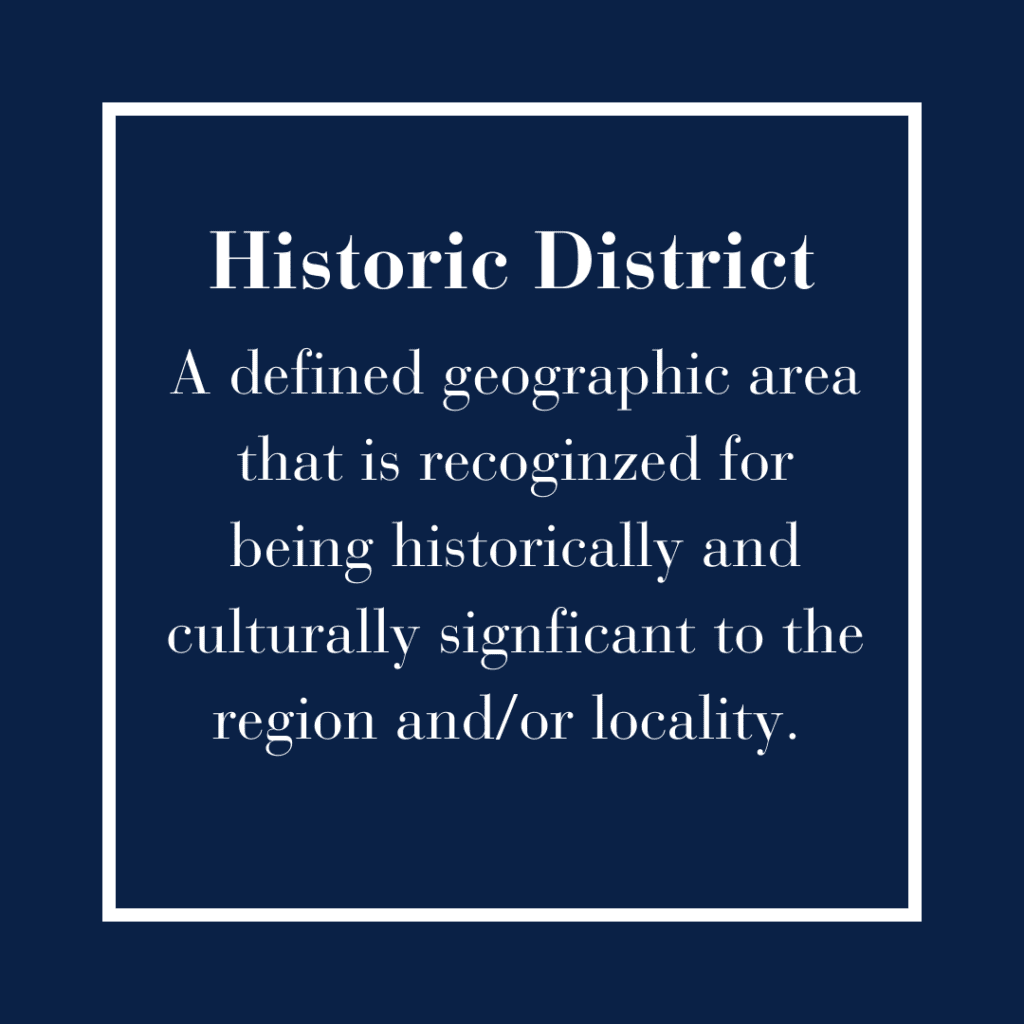
  • Historic District: a defined geographic area that is recognized for being historically and culturally significant to the region. Properties within this district can be (depending on locality and jurisdiction) subject to guidelines for preserving historic structures.
  • Historic Structures Report (HSR): a comprehensive document prepared for a historic structure that documents the history, architecture, current conditions, and significance to support further preservation work on the property.
  • Period of Significance: the recognized span of time where a property receives its’ historic significance
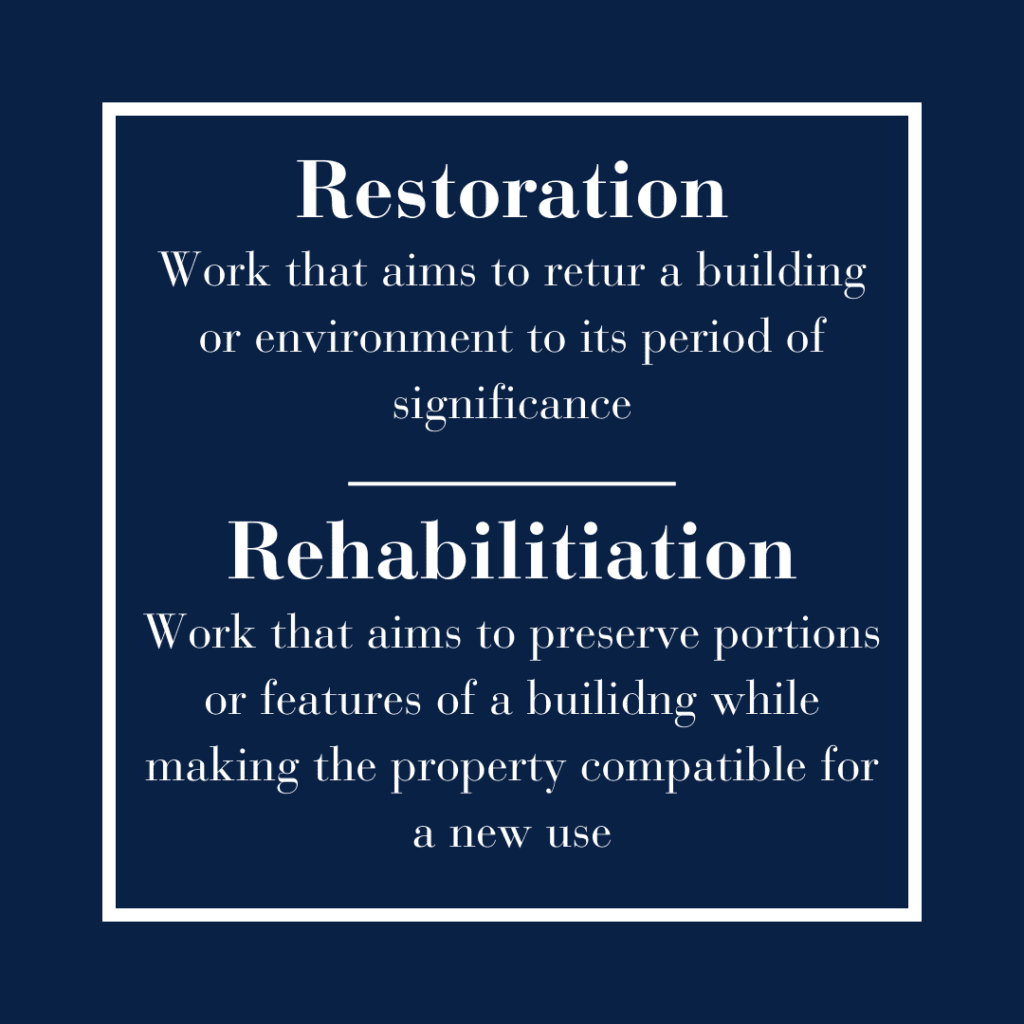
  • Rehabilitation: work that aims to preserve portions or features of a project while making the property compatible for a new use
  • Restoration: work that aims to return a building or environment to a certain period of time (period of significance)
  • Secretary of Interior Standards for the Treatment of Historic Properties: often shortened to Secretary of Interior Standards, these are the nationally recognized guidelines for historic preservation projects to follow, sorted into four categories: preservation, rehabilitation, restoration, and reconstruction. 
  • Stakeholder: a person or group with documented interest in a subject

Filed Under: Preservation Tagged With: Notes from the Preservation Desk

Footer

Office Manager oldschool@waterfordfoundation.org
Phone: 540-882-3018 x 2

Privacy Policy


Join Us

Copyright © 2026 · Waterford Foundation · Log in