• Skip to main content
  • Skip to footer
  • Donate
  • Become a Member
  • Volunteer With Us!
  • Cart

Waterford Foundation

  • Education
    • K-12 Education Programs
    • The Waterford Fair
    • Waterford Craft School
    • Waterford HIstory
    • Remote Learning
    • The Quakers
    • African Americans in Waterford
  • Preservation
    • Historic Buildings
    • Mill Stabilization Project (2009-2023)
    • John Wesley Community Church Restoration
    • Dashboard Map of Western Loudoun Development, 1950-2020
    • Phillips Farm
    • Notes from the Preservation Desk
  • Shop
    • Books
    • Donate
    • Membership
    • Lantern Light Fund
  • Events
  • Weddings & Rentals
  • About
    • Contact Us
    • Meet the Staff
    • Meet the Board
    • Visit Waterford
    • Support
    • Join Us
  • News
  • Privacy Policy

archives

Experience the Maranda Project This Year at the Fair!

August 28, 2026 by Abigail Zurfluh

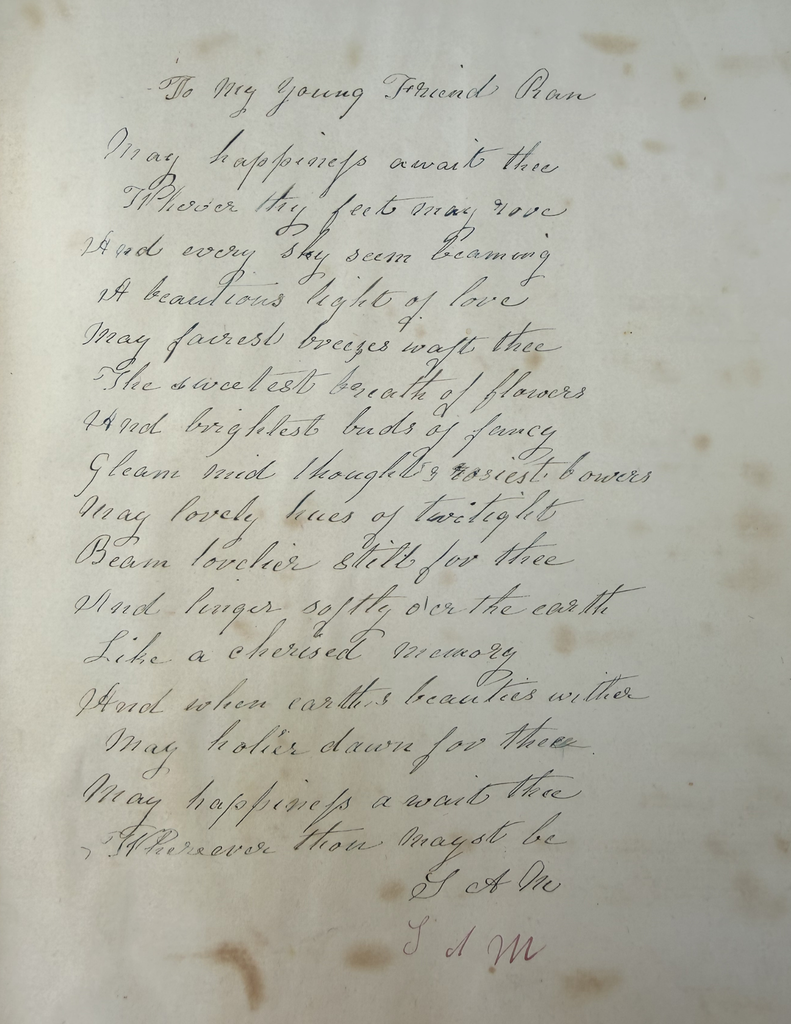
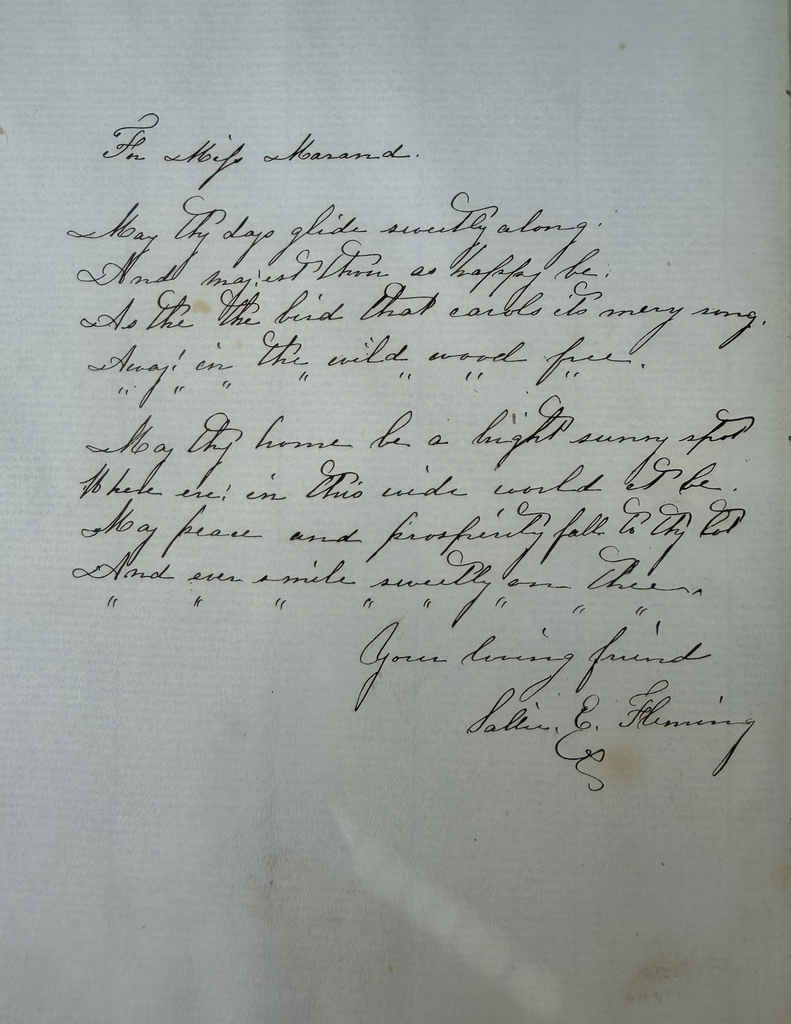
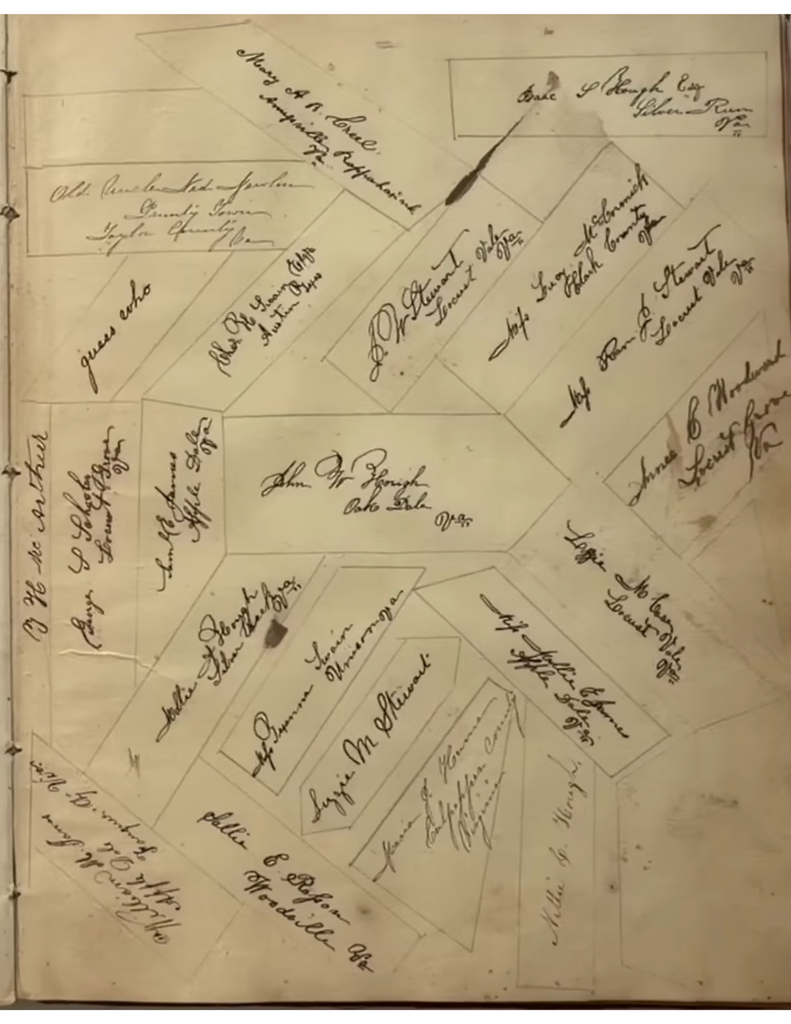
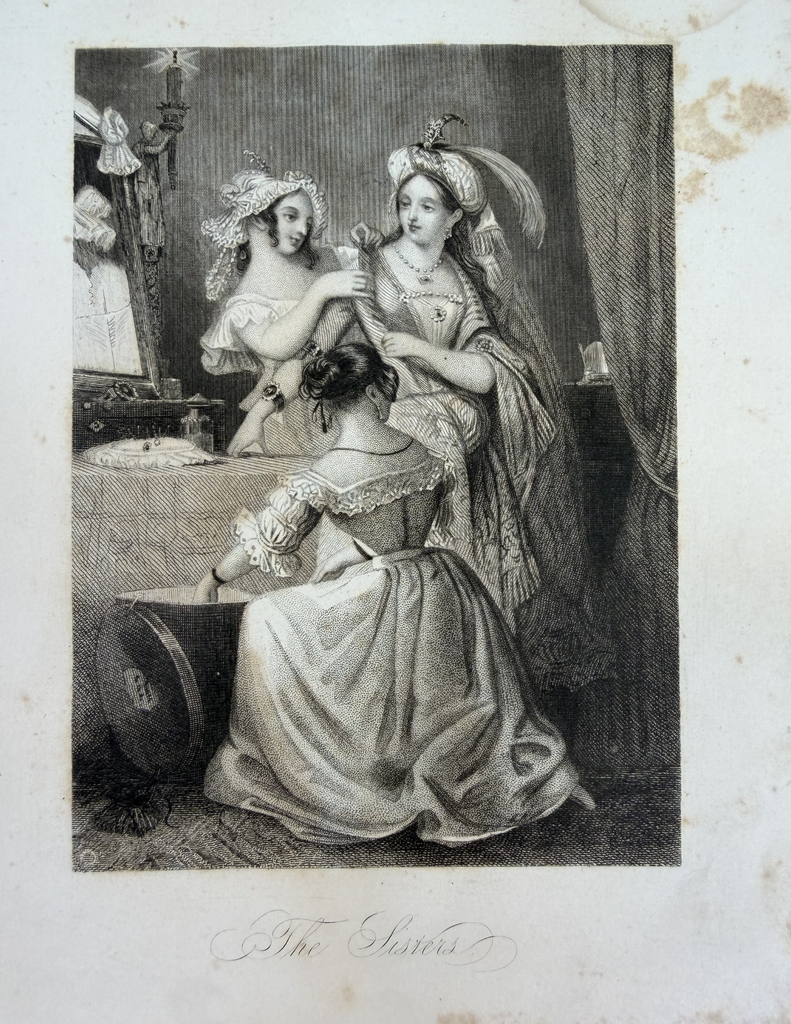
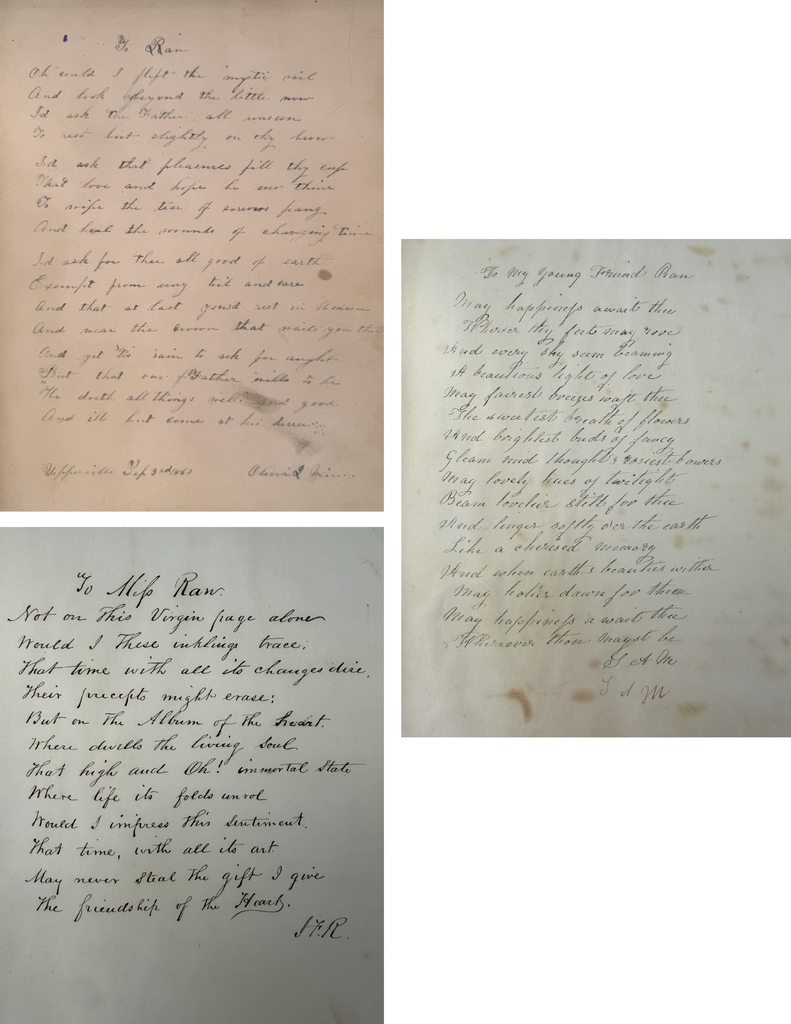
What would you expect to find if you went into a thrift store in California? Maybe some clothes, salt and pepper shakers, boots, or maybe some furniture? If you were Margarete Miller- a collage artist, podcaster, and author- looking for collage material, what you would find would be an 1860 friendship album all the way from Waterford, VA! This friendship album belonged to Maranda Stewart, and is coming home to Waterford to be donated to the archives. This incredible journey back home to Waterford is called the Maranda Project, and you can be a part of it too this year at the Fair! Below, learn more about this story and how you can be involved this year during the Waterford Fair:

The Find

First off, what is a friendship album? A friendship album is a book commonly used like the back of a yearbook today- where friends and family would sign notes, names, drawings, and even poems for the person who owned it. This friendship album belonged to Maranda Stewart, who started her album during the Civil War here in Waterford and continued it through 1885. 
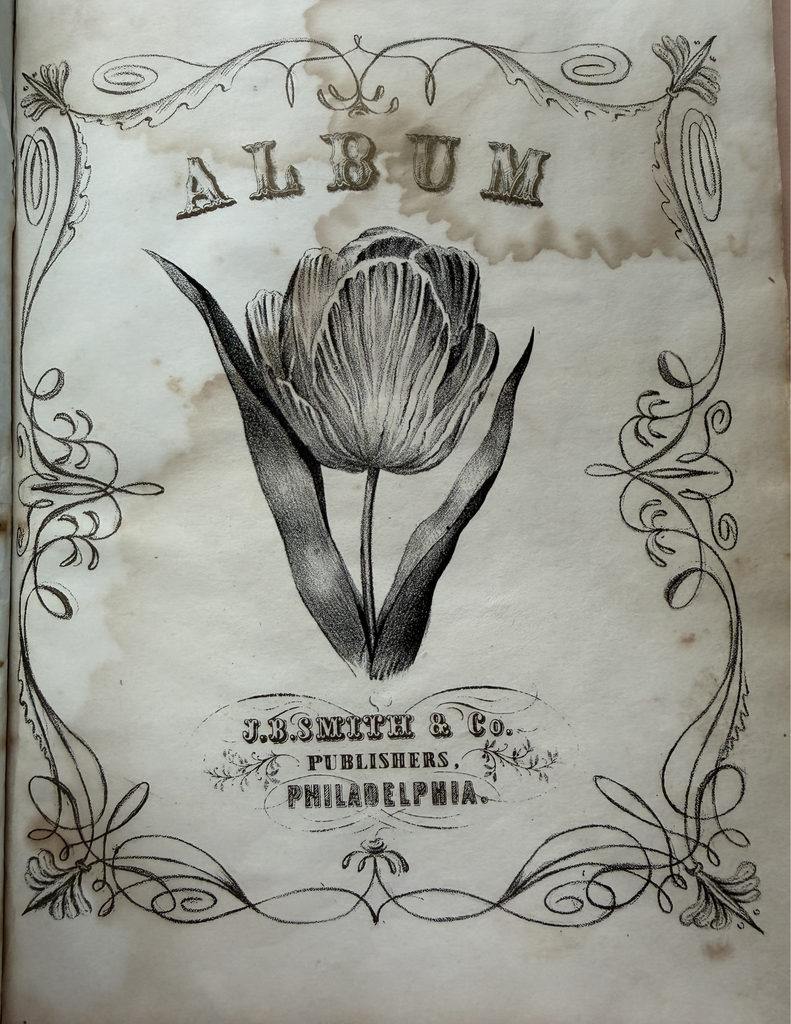
The album found its way across the country to a thrift store Savers store in California, where it was found by a collage artist Margarete Miller. She researched the album, and invited the public to be a part of the story- from talking about her research to inviting people to mail in their addition to a friendship album much like Maranda’s. Margarete is going to be here during the Fair this year to donate the friendship album to the archives (to be on display this year at the Fair!) along with a companion album! You can learn more about Margarete’s on her blog linked here.

How You Can Experience the Maranda Project:

This year at the Waterford Fair (October 2-4), make sure to drop by the Craft School tent on the Old School lawn for all things Maranda Project!:

  • The Friendship Album will be on display for you to see (weather permitting)!
  • Kids (and kids at heart)- make your own friendship album to take around the Fair and back home with you!
  • On Saturday at 12:30pm, Margarete Miller will be at the Craft School tent giving a tent talk about the Marnada Project! Hear the story about this incredible discovery from her! Tent talks are included in your fair ticket, but make sure to book in advance to reserve your spot! 

To learn more about the Waterford Fair and to purchase your tickets, check out the Fair website linked here. We hope to see you there!

Learn more about the 82nd waterford Fair & get your tickets today!

Filed Under: archives, Fair Tagged With: history

Stories from the Attic – Edwin R. Gover

May 5, 2022 by Waterford Foundation

Written by Edith Crockett, with contributions from John and Bronwen Souders, Jonathan Daniel, and Debbie Robison.


More than a few Waterford residents are so fascinated by our village’s history that they always keep a sharp eye out for early artifacts, letters, paintings and more about Waterford. Last year, Edith Crockett learned of a painting of a “vintage” building said to be located in Waterford. Not recognizing the structure, she contacted Bronwen and John Souders about its possible identity. The Souders immediately recognized it as a painting of their own barnyard, done in the 1930s, by a member of the Carr family, prominent in Waterford history. It was quickly acquired by them and now has “come home.”

Not long ago, another Waterford resident, Jonathan Daniel, acquired a letter from Edwin R. Gover written to a Reverend C.H. Nourse concerning a transfer of property, dated July 7, 1854. In an effort to learn more about the circumstances of the letter and to share its contents more broadly, Jonathan was kind enough to share its contents with the Souders, Debbie Robison and Edith, and generously gave us permission to include it in our newsletter:

Waterford, July 7, 1854

Rev. C.H.  Nourse,

                        Dear Sir,

I received your letter on the Fourth, in which you wish to know whether I intend to stand to my proposition or not, in answer I would say that I always try to comply with all engagements that I make, it will not be convenient for me to be in Leesburg before August court Monday if that will suit you. You will let me hear from you or come up to Waterford I have my business to attend to and no one to assist me and I cannot leave it.

            The proposition from your letter coming to me is not altogether correct. Statement in that I could not [have]]? Possession before the first of January instead of the first December and that all the rent up to that time would be coming to me.

Yours with Respect,

Edwin R. Gover

Our own Northern Virginia history sleuth, Debbie Robison, replied:

“This letter suggests that Gover needed to go to the courthouse to record something… I found a deed and trust agreement between Gover and Nourse recorded at the January 1855 court. I suspect this is the [same] transaction since this is the only transaction between the two men at least from 1833-1857.”

Longtime Waterford historians Bronwen and John Souders also went to work immediately, and responded with a stream of remarkable history about Edwin Gover:

“Edwin R. Gover was born on 13 Oct 1818 in Waterford, the illegitimate child of 21-year-old Ann Gover and Andrew S. Anderson (29), a New York transplant. Ann gave birth in the house of Garrett and Elizabeth Gover Hough, her older sister, her mother having died. Edwin was apparently raised by Ann with the help of the extended Gover family (Andrew went on to marry the daughter of a prominent area farmer).

Edwin was living in Leesburg by 1841 as a “mechanic,” probably in the leather-working trade. By 1850 he was identified in the census as a saddler, married and the father of an infant daughter. As of 1859 he was back in Waterford, “gaining in reputation every day, as one of the finest Saddle and Harness Manufacturers in the county.”

In the meantime, he had become active in Democratic Party politics in Loudoun. At the time, the populist Democrats, heirs of the Jacksonian era, were a small minority in Waterford, but gaining strength elsewhere as Virginia slid toward war. By March 1860, Gover was among those endorsing “the candidate best calculated to ensure the triumph of the Democratic Party in the coming contest, and thereby crush out Black Republicanism, preserve the rights of the South, and perpetuate for ourselves and our posterity the blessings of a constitutional Union.”

Nonetheless, when Virginia put secession to the vote the following year, Gover bucked his party and voted with the majority in Waterford against the ordinance. And, in June 1862, he was among the first to enlist in the Loudoun Rangers, Sam Means’s Unionist cavalry company. The following February, “a majority having voted for Gover, he was declared elected [2nd Lt.]. The boys dubbed him ‘Four Eyes.’ He was a kind and pleasant officer, but perhaps a little old [at 43] and slow for the position.”  He was also called “the singing lieutenant” for his vocal talents. By the end of the war, Gover was 1st Lt. and senior officer of Co. A when he and his men were surprised and ignominiously captured on 6 April at Keyes’ Switch on the Shenandoah.

In the fall of 1865 he moved with his family to the farming village of Kansas, Illinois, a hundred miles west of Indianapolis. He died of typhoid in 1882 and was buried north of the village.

 As for the Reverend Charles H. Nourse, he was about the same age as Gover, but cut from different cloth. He was born in Washington, DC, and became a Presbyterian minister. He voted for secession and as of 1860 owned a 40-year-old mulatto slave and her three young children. Nourse was arrested by federal authorities on several occasions, but never wavered in his support for the Confederacy, refusing to sign the oath of allegiance. One Union officer referred to the “reverend gentleman acting as a kind of rebel postbag.” He was able to cross enemy lines with relative freedom as a minister and acted as a rebel courier. 

After the war he moved farther south in Virginia. In 1870 he was in Culpeper County, where he taught school in addition to his ministerial duties—and employed two Black domestics.”

 What an amazing amount of history has surfaced – vividly – all from a short letter written in July, 1854. And there is more: thanks to generous donations from the Gover family a few years ago, the Foundation has in its collections an early sampler by Ann T. Gover dated 1829, and a desk, made in Leesburg, once owned by the Gover family.


Thank you to all the contributors to this glimpse into Waterford history of more than 140 years ago!

Filed Under: archives, history, News, Waterford History

Steer-Divine House

January 23, 2018 by Waterford Foundation

African-American James Lewis (born circa 1800) probably erected this house around 1850. In 1865 Quakers Frank and Mary “Mollie” Dutton Steer bought it, then sold it to Joseph Divine (1841-1933) in 1875. Divine ran a wheelwright shop across the street for many years; he apprenticed with Reuben Schooley before joining the Union Army and did not retire until he was 83. Early in the Civil War he interrupted his long career to join the Loudoun Rangers, a locally raised federal cavalry unit. The home has been substantially enlarged in recent years.

Excerpt from Walk With Us a walking tour of Waterford


Filed Under: archives, Black History, history, quaker

Noah Haynes Swayne, Lincoln’s First Supreme Court Appointee

January 16, 2018 by Waterford Foundation

Did you know…

President Abraham Lincoln’s first Supreme Court appointee attended school in Waterford?

Noah Haynes Swayne (1804-1884) a Frederick County, Virginia, Quaker, was sent to Jacob Mendenhall’s Academy in Waterford in 1817 because of the school reputation for excellence.

Swayne left Virginia in 1824 for the free state of Ohio because of his deep opposition to slavery. Supreme Court records indicate Swayne’s appointment “satisfied Lincoln’s criteria for appointment: commitment to the Union, slavery opponent, geographically correct.”

Courtesy of the Waterford Foundation Archives and Local history collection.

Learn more about Justice Swayne at Wikipedia:   Noah_Haynes_Swayne


Filed Under: archives, Black History, education, history, quaker

Footer

Email: oldschool@waterfordfoundation.org
Phone: 540-882-3018

Privacy Policy

Join Our Email List and Stay Connected!

We Welcome Your Feedback!

Copyright © 2026 · Waterford Foundation · Log in