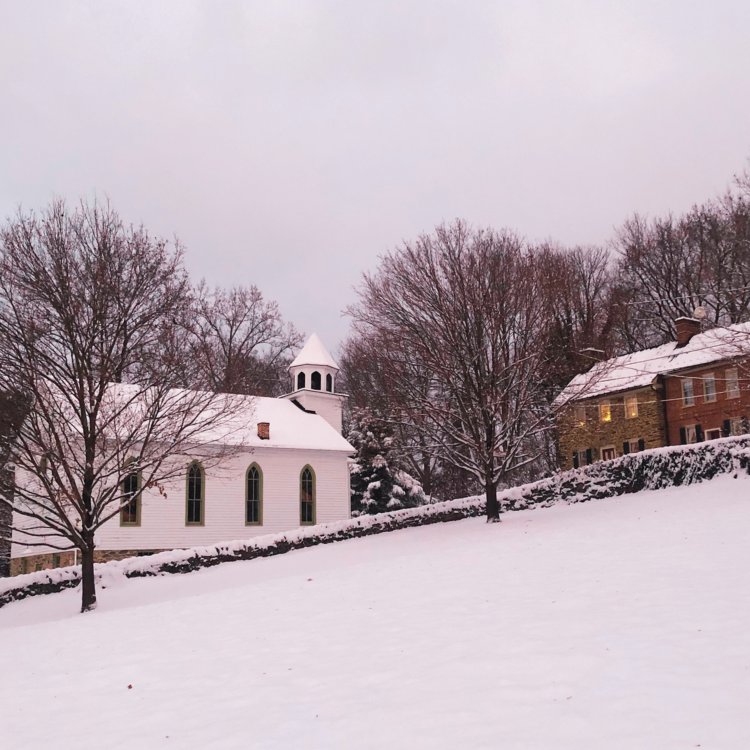
A century or more ago, winters were colder, and creeks and ponds routinely froze over, allowing ice skating for all, including the summer mud puddle in front of Flavius Beans’ house (15575 Second Street) that froze in the winter. Norman Weatherholtz (1914-1998) remembered winters when he was able to walk from field to field over the tops of fences. With all that snow, there were no snowplows, or else modest wooden ones drawn by horses.
About 1910, Rose Charlton Wellman Chamberlin and her new husband , Roy, were dairy farming at Clifton just southeast of the village along Clarke’s Gap Road. She wrote in her diary in January of the temperature being 30 degrees below zero and of the shoveling that Roy, their Black hired help and others dug in deep drifts from Clifton to get their milk to the train station in Paeonian Springs.
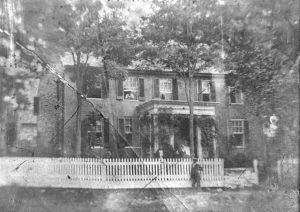
During these colder winters, ice was gathered for the 20 ice houses in town with help from the horses. From the December 22 1881 issue of the Loudoun Telephone:
“Ice gathering has been part of this week’s work in this vicinity—the quality has been good. From 4-6 inches thick and a great deal has been housed” Waterford column, Loudoun Telephone
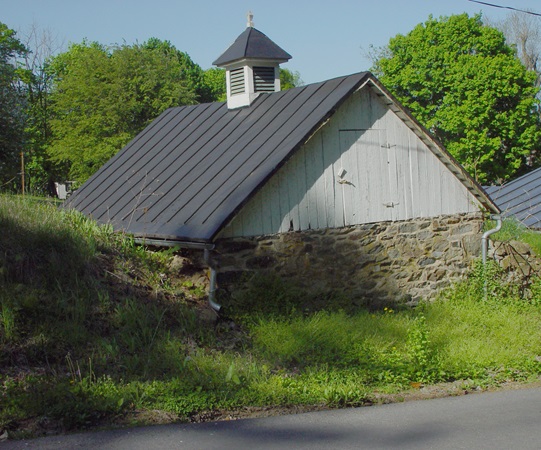
In later years, John Divine’s father “Eb” , invented and had one of the village blacksmiths make a giant ice tong, which clamped the ice. The horses’ pulling on the handles tightened the grip perfectly to keep hold of the ice. Packed tightly with sawdust or straw in the below-ground icehouses, the harvested ice would last into the summer in a time before refrigeration.
Find more recollections like these in When Waterford and I Were Young by John Divine.