• Skip to main content
  • Skip to footer
  • Donate
  • Become a Member
  • Volunteer With Us!
  • Cart

Waterford Foundation

  • Education
    • K-12 Education Programs
    • The Waterford Fair
    • Waterford Craft School
    • Waterford HIstory
    • Remote Learning
    • The Quakers
    • African Americans in Waterford
  • Preservation
    • Historic Buildings
    • Mill Stabilization Project (2009-2023)
    • John Wesley Community Church Restoration
    • Dashboard Map of Western Loudoun Development, 1950-2020
    • Phillips Farm
  • Shop
    • Books
    • Donate
    • Membership
    • Lantern Light Fund
  • Events
  • Weddings & Rentals
  • About
    • Contact Us
    • Meet the Staff
    • Meet the Board
    • Visit Waterford
    • Support
    • Join Us
  • News
  • Privacy Policy

News

2024 Second Street School Painting

July 3, 2024 by Abigail Zurfluh

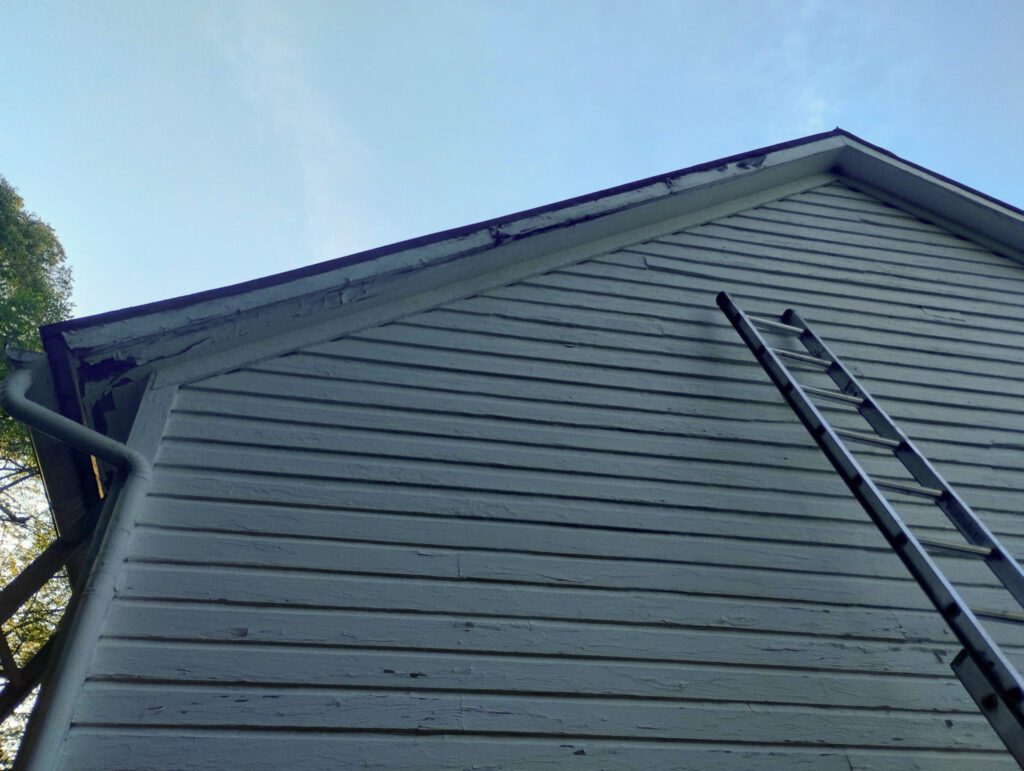
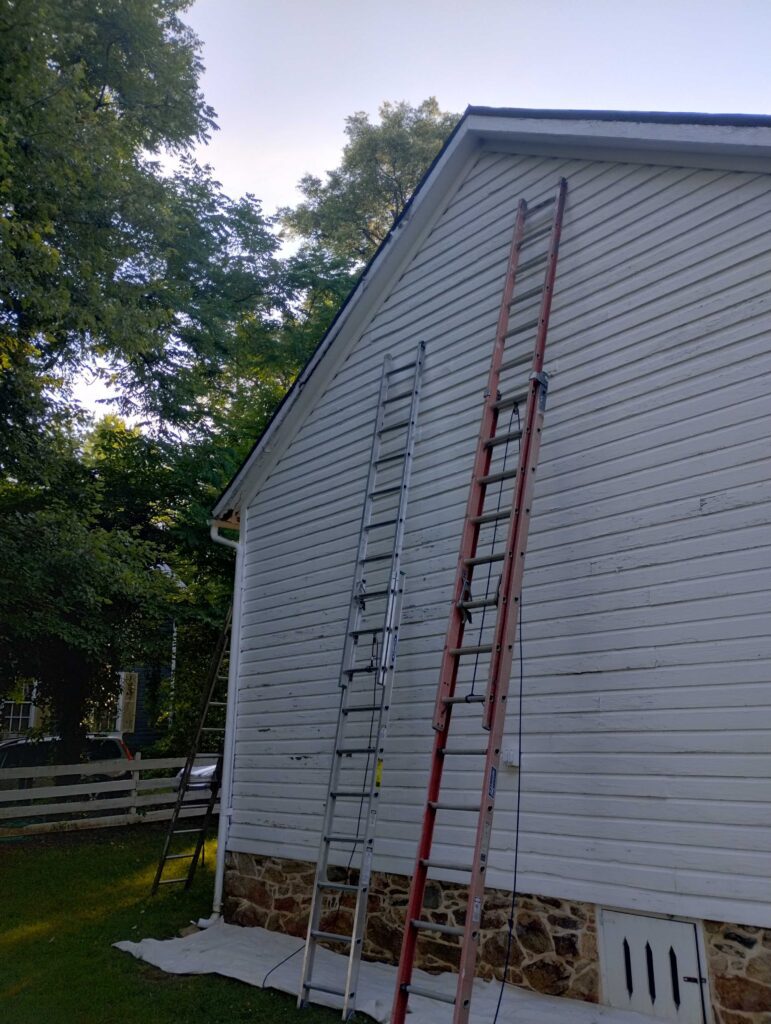
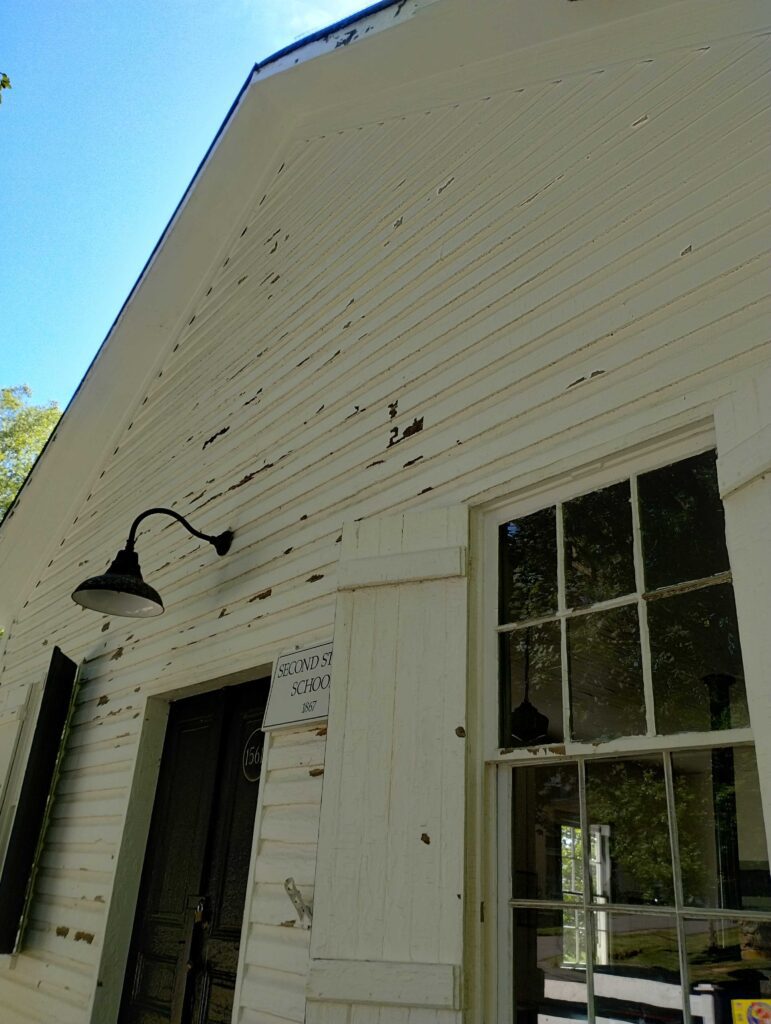
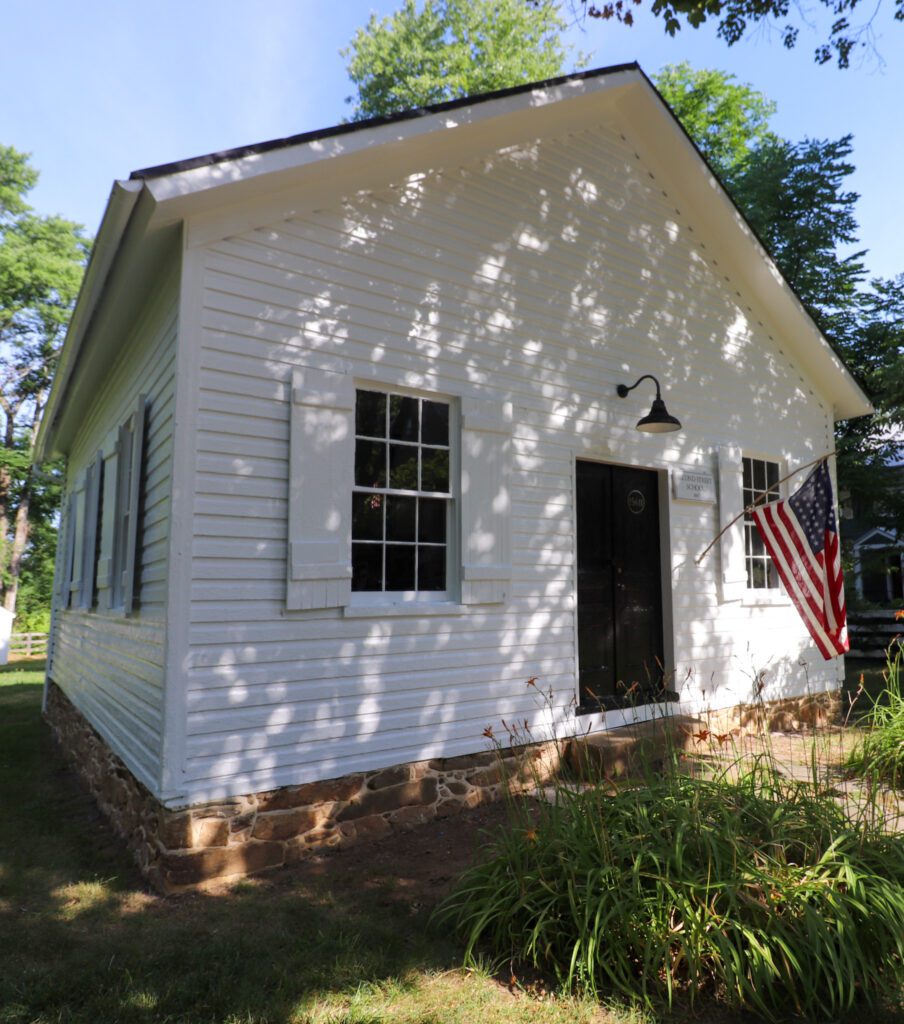
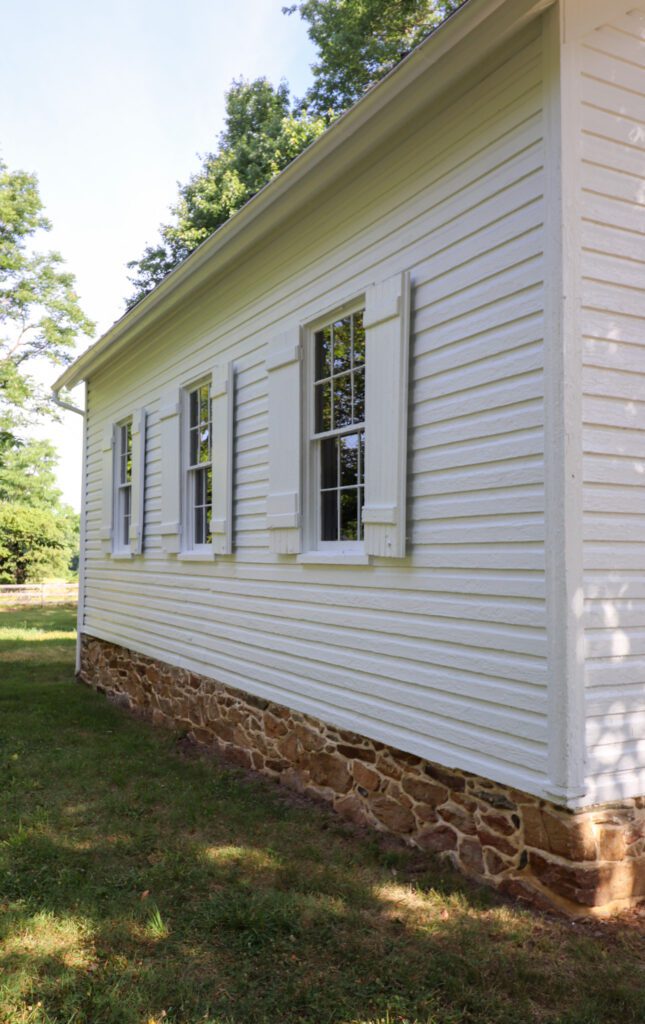
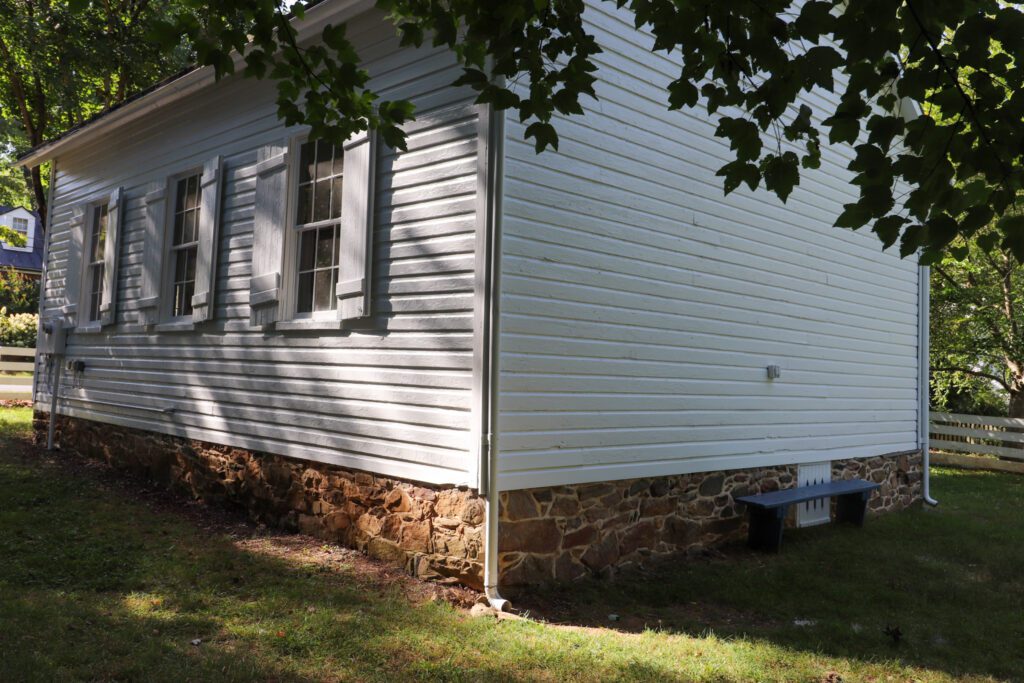
After this last busy school year, we were able to give the outside of the Second Street School some much needed TLC! Following Secretary of Interior Standards for Historic Rehabilitation, repairs were made some woodwork on the rear elevation and the building got a fresh coat of paint. Now, the Second Street School is ready to host another years worth of scholars coming to Waterford to learn about Reconstruction.

Check out below for some before and after pictures! It is thanks to generous donations to the Lantern Light Fund that the Waterford Foundation is able to preserve and educate the public about African American life here in Waterford and Loudoun County.

Before:

After:

To support work like this in the future, please consider a donation to the Lantern Light Fund, our fund that supports the artifacts, sites, and stories of Waterford’s Black community including the Second Street School and the John Wesley Community Church.

Filed Under: News, Preservation, sss

Plague of the Blue Locusts

July 3, 2024 by Stephanie Thompson

Excerpt from Between Reb and Yank: A Civil War History of Northern Loudoun County, Virginia: Chapter 21 – After Gettysburg, Chamberlin and Souders, 2011.


Late June [1863] found the Loudoun Rangers attached to a brigade assigned to protect the B&O tracks west of Baltimore, although as it turned out Stuart’s cavalrymen did minimal damage to that railroad as they hurried to Pennsylvania. On 25 June, when Lee’s intentions were still unknown, Army Chief of Staff Henry Halleck ordered Capt. Sam Means to strip the surrounding countryside of horses suitable for military use, to prevent their capture by the Rebels. In compliance, the Rangers marched to Tenleytown, outside Washington, and began working their way north through Montgomery County. They spared farmers with just one animal but otherwise took horses without regard to their owners’ loyalty, issuing vouchers redeemable through the Quartermaster Department. While some citizens “at first refused to part with their stock,” showing them Halleck’s order silenced most complaints. Means’s command reached Harford County by early July and began collecting horses along the Maryland/Pennsylvania border.

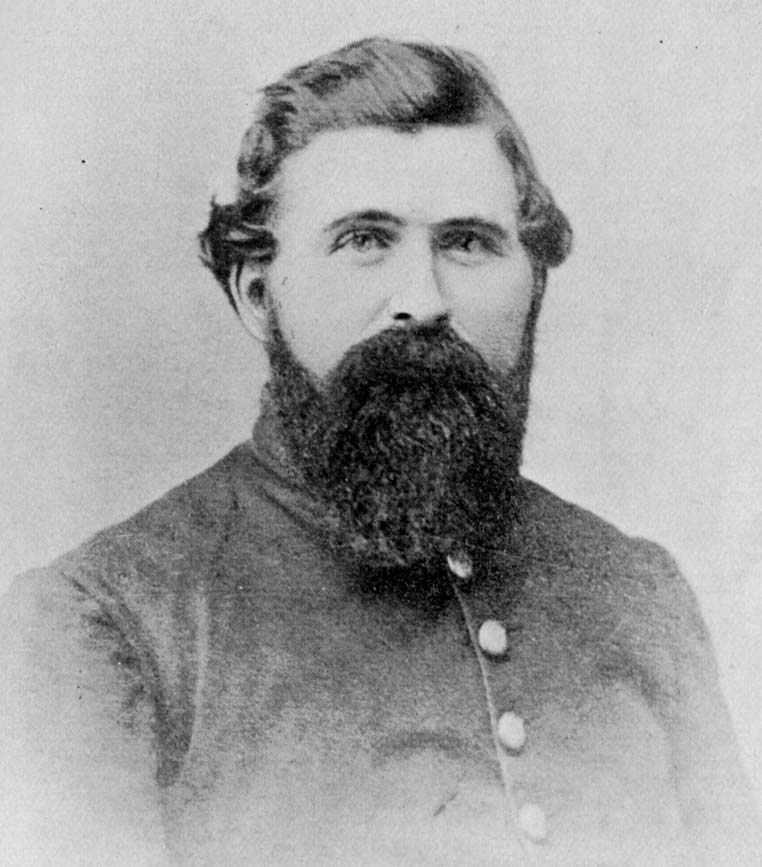
Samuel Carrington Means (August 5, 1827 – March 2, 1891), founder and first captain of the Independent Loudoun Rangers, a Union cavalry unit raised in Virginia in 1862.

The Rangers’ horse detail ended with the Confederate threat, and they returned to Point of Rocks on 15 July to await the arrival of Maj. Gen. George G. Meade’s army on its way south from Gettysburg. Means set up camp at “Dripping Spring,” just north of town. The site was in a dense forest at the foot of the Catoctin Mountain. In short order the Virginians cleared out a shaded courtyard in front of their tents, which was used for morning roll call and as “a reception room for the company’s numerous lady visitors.” Not all, apparently, were ladies. Within a few weeks Sgt. Joe Divine, for one, found himself in the hospital in Frederick being dosed for syphilis. Still, Briscoe Goodhart declared the camp the best they would have during the war. Yet, even in this Eden, there were several serious fights. One pitted Sgt. William Bull and Cpl. Sam Tritapoe in a dispute over spilled coffee. As Goodhart explained, “the Rangers were fighting for principle, and as there was more or less principle involved in a cup of coffee, there was no reason why they should not fight for that as well as to fight [the Rebs].”

On 27 July, while the command was at Dripping Spring, Thomas Fouch enlisted, and gained the distinction of being the youngest Ranger. Like other members of the Fouch family, he had worked on farms around Waterford and Goresville but found himself all alone after his father Temple and brother Henry joined Means’s company in the summer of 1862. Fouch’s father claimed his 5-foot, 4-inch son was 17 and was joining to avoid Confederate conscription. Tom was, in fact, barely 15 (a postwar medical report put his age at enlistment as just 13 years and 4 months).

***

Meade wasted far less time getting the Army of the Potomac on the move than McClellan had after Antietam, although he retraced roughly the same route south through Loudoun County. After assembling his forces at Berlin and Sandy Hook, the Union commander sent the 5th Corps across the river on pontoon bridges to occupy Lovettsville on 17 July. At the same time, Kilpatrick’s cavalry division scouted ahead to Purcellville and Waterford. The next day a tide of blue engulfed north Loudoun, as Meade established his headquarters in Lovettsville and the 1st Corps crossed at Berlin and marched into Waterford that same morning. To the west, the 2nd and 3rd Corps crossed at Harpers Ferry and camped near Hillsboro, while the 5th Corps advanced from Lovettsville to  Wheatland. These masses of men pushed farther south a day later to bivouac at Hamilton, Purcellville, and Woodgrove, and were followed by the 11th Corps, which camped south of Waterford, and the 12th Corps, which skirted the base of the Blue Ridge. Racing to beat Lee to Culpeper, Meade’s entire army passed beyond Loudoun’s southern border by 23 July.

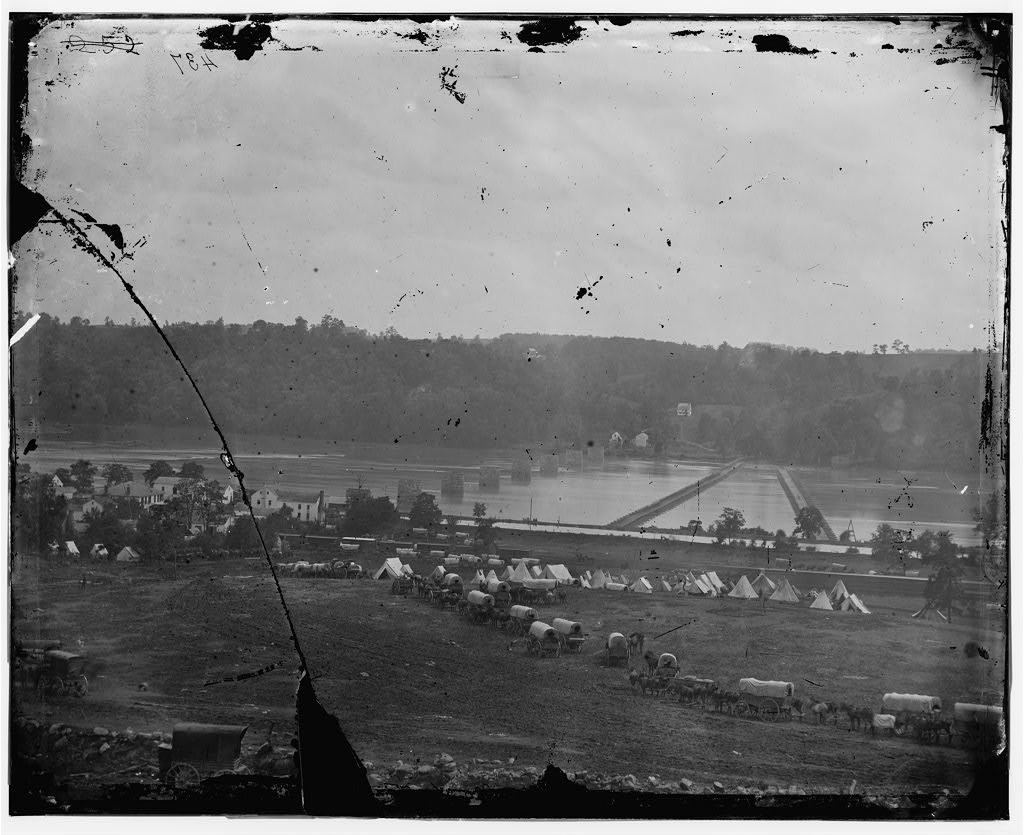
View of Loudoun across the Potomac from Berlin. Double pontoon bridges speeded the crossing of Meade’s army into Virginia (October 1862 photograph by Alexander Gardner, Library of Congress).

While the vast army’s transit of Loudoun was fleeting, it was memorable. The 1st Corps began pouring into Waterford at 10 A.M. on 18 July and, with their departure and the simultaneous arrival of the 11th Corps the following day, the village was awash in blue. Rebecca Williams counted 600 wagons in the supply train, and, watching all the infantry and artillery regiments pass, she assumed, incorrectly, that it must be the greater part of Meade’s army. The 1st Corps set up its camps close to the village, with a large body along Catoctin Creek and others on Amasa Hough’s farm at the northwest end of town. As they had twice done the year before, residents turned out to welcome their Union heroes and feed, or at least give water to, as many as they could. The 7th Indiana Infantry had fond memories of their brief stay.

This part of Loudoun County had a preponderating Quaker population, among whom … we found Friends indeed. On nearing the outskirts of [Waterford] our advance was met by a party of citizens who on learning the purpose to go into camp soon one of them, pointing to a large bluegrass pasture nearby said “There’s grass for thy horses, a fine spring for thy men and beasts, and ricks of cordwood for thy cooking.” The invitation was accepted, gratefully, and it needs not the telling that no order touching top rails was necessary during our stay there.

Sunday afternoon, 20th[sic, 19th] again on the march. It was oppressively hot; as we passed through the village the street was lined with citizens–men in broad-brimmed hats and drab coats, women dressed in the modest garb of their sect, and young ladies and misses slightly more fashionably habited than their mothers–all extending to us their fare-thee-well. Here and there, close by the roadside, was a group of three or four to a half-dozen of these demure young Quakeresses–all sisters, one would judge from their appearance–astonishing the number of thirsty men in the line; to be honest, even I must plead guilty. [In a footnote the author acknowledged that one of the girls encountered that day, Lizzie Dutton, later married a member of his regiment and was, at the time of his writing, secretary of their veterans’ association.]

It had been noticed that among our many visitors there were but few youngish men. Inquiries as to why this was brought the answer, “Many of them are in a Maryland Union regiment.” How do you reconcile that with your religious faith? was asked of one. “We do not call this war, but correcting wayward children.”

21st: [sic, 20th] lay all day near a miserable Secesh town named Hamilton, in the same county, and the day following moved to Middleburg….”

While no one else met his future bride that day, others had equally pleasant memories. A member of the 39th Massachusetts Infantry called Waterford “a right smart place” with about 600 mostly Union inhabitants. American flags waved from some of the houses and women stood in front of their homes offering water to the troops. The New Englander had heard that “several hundred [sic] Union soldiers had enlisted there” and noted, “They do not take Reb. Scrip.”

A soldier in the 84th New York Infantry was similarly impressed.

[After] passing through Maryland and across the Potomac [we came] through the greatest little Union town of all we had seen yet. Nearly at every house, on the porch or stoop, and on the sidewalks, were the beautiful ladies, passing water, and bestowing their real cheering words and blessing, for the soldier-boys, smiling such sweet smiles, which none but real Union ladies know how to smile. Flags and white handkerchiefs were waving at nearly every house–such is the picture of the Union town of Waterford, Va.

Many passing through the village that weekend were struck by the profusion of Union flags. One banner had been hastily sewn by the three young Matthews sisters, Annie, Edie, and Marie, almost certainly for this occasion. Its 35 stars suggest it was made shortly after West Virginia became a state in June, and their concentric arrangement in the “Baltimore pattern” reflects the family’s ties to that city. Although the flag would later be proudly displayed whenever Union troops passed by the family farm, Clifton, the girls would have been in town that day, probably at the home of their aunt, Maggie Gover. At other times, the “treasonous banner” had to be hidden under a floorboard in their attic, where it survived several searches by Southern soldiers.

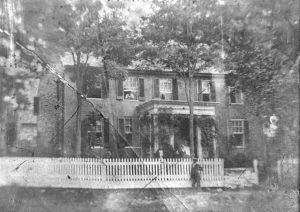
Clifton, home of Annie, Edie, and Marie Matthews, circa 1860.

The Loudoun Rangers accompanied the 1st Corps to Waterford and remained there for several days. Briscoe Goodhart quoted an account of a grand ball staged by officers of the 24th Michigan Infantry in the town’s honor. 

Waterford, a most beautifully embowered and intensely loyal village. It seemed strange to find so patriotic a place in the Confederate dominions. That evening the merry maidens of the place with elastic step tripped the fantastic toe with our army officers. The streets were lined with smiles and beauty. Windows and balconies were filled with matrons, maidens, and children, who waved handkerchiefs and the starry flag, and cheered on the Union troops with many a hurrah for the Union. God bless Waterford!

Elsewhere in the county interaction between citizen and soldier was less cordial, especially with memories of the carnage at Gettysburg still fresh in the Federals’ minds. Members of the 49th Pennsylvania crossed the Potomac on the morning of the 19th and camped on Robert Wright’s “plantation” at Wheatland. Having marched all day with no time to eat, the foot soldiers were angered to discover the former militia general had put a chain on his water pump. One foraging party got into a dispute with a nearby farmer who would not give them any food. (His stacks of grain were later set on fire.) At the next farm a soldier held a gun on the owner, while a second went under the house to retrieve geese, chickens and eggs. That night General Wright’s barn was deliberately torched. The soldiers later heard that the owner had “one of his negroes tied up for telling the Yankees who he was.” 

Mrs. John Janney was appalled by the destruction of “the best built, and the finest barn in the county,” along with large stores of flour, a carriage and “superior” farming equipment. Alcinda’s mood grew even darker when she heard that the soldiers had taken everything Wright had “in the way for food,” leaving his neighbors to feed him and his family. “He is almost literally ruined. This done by the enlightened North, to the Southern savages. Oh! How hard it is, really, to forgive your enemies, but vengeance belongs to God. He will repay it.”

Maj. Gen. Oliver O. Howard’s 11th Corps passed through Waterford on 19 July and camped between that town and Hamilton. Howard took over Israel Warner’s home for his headquarters, and while he treated the owner with respect, there were problems. When soldiers broke into Warner’s corcrib, he persuaded the general to station guards there to see that the corn was measured before being taken away. Yet even though the farmer got an accurate voucher for the grain, he was never paid for his loss. Two horses also disappeared, but the corps quartermaster refused to issue a voucher for “stolen property.” Howard’s men also camped on the nearby farm of Bushrod Fox., where two horses, wheat and hay were taken.

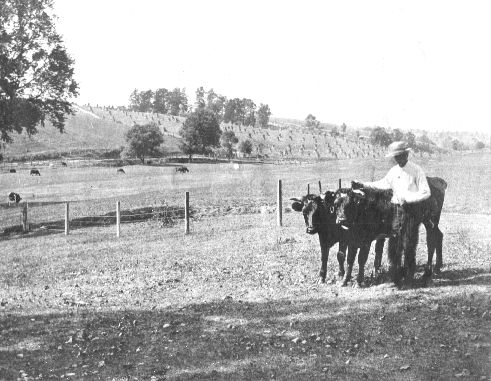
Farm products like these oxen at Clifton and the haystacks in the distance are examples of some of the resources commandeered or destroyed by Union soldiers passing through Loudoun in July 1863.

Such losses were the norm throughout the county. On 22 July, two and a half miles west of Hillsboro, tenant farmer George Virts found himself hosting members of Gen. John Geary’s command, then part of the 12th Corps, which camped at the farm he rented from the Thompson family. His loyalty to the Union proved no safeguard against losses. The soldiers took nearly all of his livestock and poultry, along with tools, harness, the food out of the kitchen and pantry, and even blankets off the beds and a keg of vinegar stored in the cellar. When Virts complained to Geary that night, the general told him to come back the next morning, but the entire command headed south before the matter was resolved.

Evidence suggests that Halleck’s earlier order to impress horses in Maryland was used to justify similar action in Loudoun. Nettie Dawson wrote that Meade’s army was “taking all the horses, but few they will find with southerners. Wheat is all taken to feed to the horses.” The wheat had just been harvested, and in many cases what the Federals did not use they burned. Whatever their loyalties, farmers throughout Loudoun breathed easier after the immense swarm of blue locusts passed.


Read more about how the Civil War impacted northern Loudoun County in Between Reb and Yank: A Civil War History of Northern Loudoun County, Virginia by Taylor M. Chamberlin and John M. Souders, available online here.

Filed Under: history, News, Waterford History

Cold – Good and Bad

June 6, 2024 by Stephanie Thompson

One of the joys of summer is enjoying a cold drink on a hot day. Before electricity and modern refrigeration, Waterford residents, like those in other rural American villages, had to rely on naturally produced ice harvested in the winter and carefully stored to last into the warmer months. In this excerpt from When Waterford and I Were Young, author John Divine explains Waterford’s ice houses, several of which still remain today, although not in use!


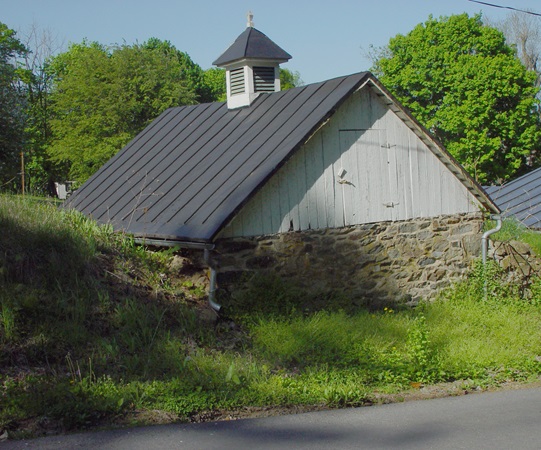
Before modern refrigeration came to Waterford, residents in and around the village relied on spring houses and ice houses to keep food and drink cool during the warm months of the year. Spring houses were not common in the town itself, as there were only a few reliable springs to work with, but many families had an ice house. I can remember at least a couple of dozen, although only a few remain today. One of the best is on the south side of Patrick Street, a well-built stone chamber about 12 feet square and as many feet below ground. A weatherboard shed above keeps the elements out.

Ice house on Patrick Street

Cutting and hauling ice to stock these structures was a regular winter chore. In a hard winter any still body of water would freeze thick enough to provide good blocks of ice. If a broad, slow-moving creek or mill pond was not at hand, some farmers would maintain a small pond just for the purpose.

When the ice was several inches thick and ready to harvest, it would be cut into manageable blocks with special coarse-toothed saws. My father [Jacob Elbert “Eb” Divine (1874-1966)], by the way, invented a set of giant tongs to drag the blocks from the water. The tongs were hitched to the horse traces, and the harder the animal pulled on a chunk, the tighter the device clamped. The blocks were then hauled to the ice houses and laid down with a good layer of straw or sawdust all around as insulation. Emma Myers still recalls cold lemonade in the summer-delicious despite the bits of wet sawdust embedded in the ice.

In warmer parts closer to the coast large quantities of ice were routinely brought in by ship from New England and other points north. Most years, though, Waterford had no shortage of winter to produce all the ice it wanted.

Ice house on Bond Street

A local farmer recorded with obvious feeling one spell of such zero- degree weather in December 1867: “Cold all day. Very cold but thank goodness the wind has stopped blowing…Too cold to think of doing anything. Almost froze by the fire.”

That was not just a figure of speech. On Christmas day in 1848 Mary Reed wandered away from her house south of the village and disappeared. Her neighbors searched high and low, but it was three weeks before David Birdsall came across her frozen body on Mrs. Thurza Rice’s place.

January 1912 must hold the local record for bitter cold. At Clifton, an old farm just south of town, Leroy Chamberlin’s wife Charlton noted in her diary on the 6th that things were freezing in the house and cellar, despite the wood stoves. On the 9th a high wind brought in still colder temperatures, accompanied on the 12th by heavy snow. By the evening of the 13th, the thermometer read 14 degrees below zero, and even heavy covering could not keep the apples in the cellar from freezing. The next morning the mercury stood at minus 25! ” Went to the barns at 5:30 A.M…horses literally covered with frost. Decidedly the coldest weather that has been known here. 30 below in Waterford….”

Clifton, circa 1860

The struggle with January continued. On the 16th, ” Very high wind all night and today. Snow drafting badly. Tried to go to milk train [at Paeonian Springs] in morning. Could get only halfway-road completely closed. All the streams frozen, had to cut holes in branch for stock to drink…all stock suffering from cold. 17th…went with horses to help open roads. Three teams and about 15 men out. Assisted in cutting through about a half mile drift…reached Paeonian at noon. Brought back empty [milk] cans.” There is a lot to be said for central heat, insulation and snow plows.

It was another modern convenience, electricity, that eventually ended the era of the ice house-and changed a lot more besides. Service finally reached Waterford in the 1920s, provided by old Leesburg Power, and one by one families wired their houses.

One of the biggest changes was in lighting. To a village long used to making candles or trimming the wicks and cleaning the sooty chimneys of coal oil lamps, the workings of electricity, and even the new vocabulary, took some getting use to. In one family, the elderly maid, on encountering her first electric lamp, tried to extinguish the light by blowing on the bulb. A more forward-thinking resident couldn’t wait to “get the church electrocuted.”


Find this and other anecdotes from Waterford’s past in When Waterford and I Were Young by John E. Divine with Bronwen and John Sounders, 1997

Filed Under: history, News, Waterford History

Second Street School Program Celebrates 40 years!

June 5, 2024 by Stephanie Thompson

The Second Street School Living History Program celebrated its 40th anniversary in 2024, hosting 33 classes from Loudoun County Public Schools as well as area private schools and homeschool groups. Many thanks to our volunteer docents Emily Baer, Barbara Elbeze, Karen Elliot, Sharyn Franck, Nancy Iarossi and Abigail Pope for together serving 692 students this spring!

Having modified the program curriculum in 2022 to remove role playing in accordance with Loudoun County Public Schools guidelines, students who attend the program today now have greater opportunities to ask questions and compare and contrast the experience of Black students in 1880 with their experiences in modern day schools. In addition, this season we encouraged classes to take a brief bus tour of the village at the start of their field trip, driving past the Waterford Old School (historic school for white students) and the Waterford Elementary School (current school for all public school students) to allow the students attending the program to compare the Second Street School building to those of other Waterford students past and present. 

While the one room schoolhouse is now closed for the season, we look forward to opening its doors to 4th grade students again in the spring of 2025. Registration for 2025 field trips will open in August. Please contact us at oldschool@waterfordfoundation.org to be added to our contact list and notified when registration opens.

Filed Under: education, News, sss, sss-program

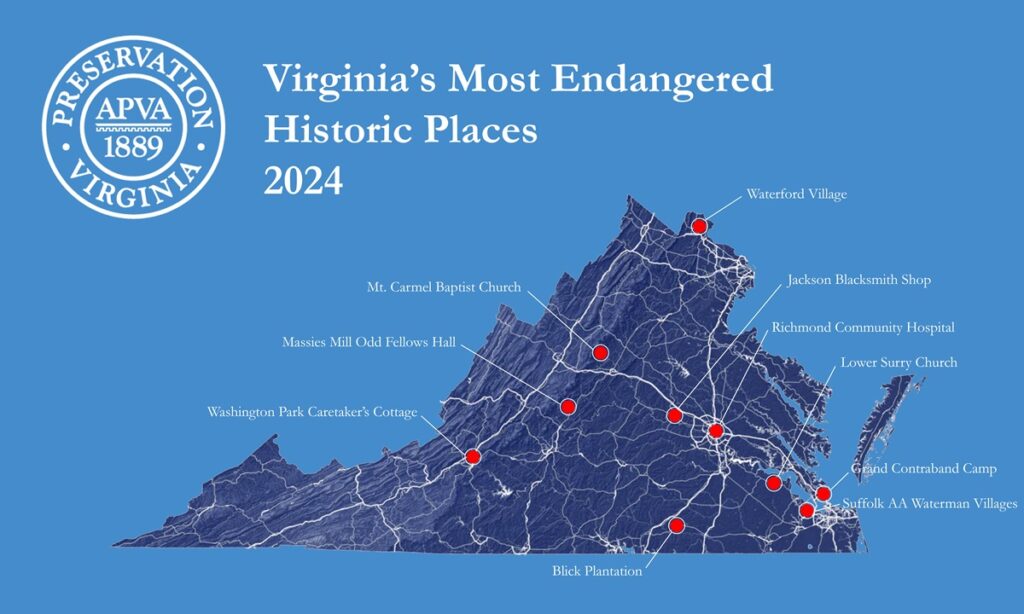
Waterford Historic District Named one of Virginia’s Most Endangered Historic Places

May 14, 2024 by Stephanie Thompson

Every year during Historic Preservation Month, Preservation VA releases a list of that year’s Most Endangered Historic Sites to raise community awareness of threatened historic places. This year, the Waterford National Historic Landmark was included on the list due to the imminent threat of proposed 500kV transmission lines running through the Landmark. 

Construction of 500kV transmission lines in the Waterford National Historic Landmark would destroy the integrity of the historic and cultural viewshed of Waterford and nullify its Landmark status, a designation that the community achieved in 1970 and continues to fight for. While Waterford’s historic integrity is under threat, we are hopeful that being listed as one of Virginia’s Most Endangered Historic Places will raise awareness of this issue and help rally supporters to our cause. Endangerment does not mean the end, it means that there is a community ready and willing to put in the work to save it. The Waterford Foundation is honored to be a part of that community, and are hopeful that it will continue to grow. 

Endangerment does not mean the end, it means that there is a community ready and willing to put in the work to save it.

The Waterford Foundation thanks Preservation Virginia for its support in our work to preserve the historic buildings and open spaces of Waterford in defense of the National Historic Landmark. To learn more about the Most Endangered Historic Places designation and Waterford’s rich history of grassroots preservation, please attend our Preservation Celebration on Sunday, May 19th from 3-5pm at the Waterford Old School (40222 Fairfax Street, Waterford VA 20197). For more information about the threat of the 500kV transmission lines and what can be done, please visit the Loudoun Transmission Line Alliance’s website at www.loudountransmissionlinealliance.org.

Filed Under: News, Preservation

8th Annual Historic Waterford Trail Run Recap

May 3, 2024 by Elizabeth McFadden

On April 20th 382 runners and walkers descended on Main street to take part in the 8th annual Historic Waterford Trail Run. Our 5K & 10K courses weave through the village and its’ open spaces as well as the surrounding farms and neighborhoods giving participants the ultimate tour of Waterford and its’ historic and natural beauty.  

We are so thankful for all of the volunteers that made this event possible.  The Trail Run committee works year-round to put together this amazing fundraising event for the Foundation.  Thank you to Heidi Bickart, our Trail Run Chair and her amazing team of more than 50 volunteers! 

Thank you to the 26 amazing sponsors that contributed to this fundraising event. Thank you to our 2024 sponsors for their support of the preservation and education work of the Waterford Foundation! Find the complete list of sponsors here: https://www.waterfordfoundation.org/event/8th-annual-historic-waterford-trail-run/

Mark your calendars for next year’s Trail Run – taking place on May 10th, 2025! 

Photo by Jennifer Jule Studios

Filed Under: Development, News Tagged With: 2024, news

The Big Storm of ’94

May 2, 2024 by Stephanie Thompson

Reprinted from the 51st Waterford Fair Booklet, October 7, 1994.

On the afternoon of June 16 this year, a powerful wind storm ripped through the Waterford historic district, taking with it many 200 plus year-old trees. These trees had witnessed the development of Waterford from an 18th Century milling center to a thriving 19th Century commercial town serving the needs of the surrounding farming community. The result was a monstrous tangle of downed electric and telephone wires, broken tree limbs, and upturned tree roots as tall as a grown man. The clean-up process took days of around-the-clock work by power companies, VDOT and tree services.

The storm hit the northeast side of town, working around to the southwest. The highest points of the town and surrounding hills suffered direct hits. 

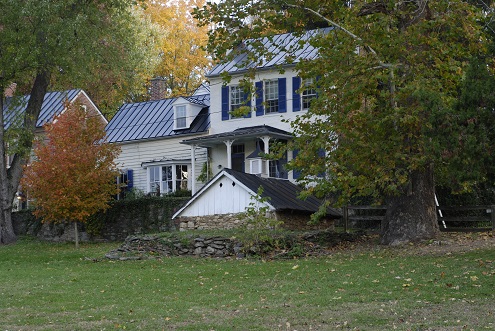
The damage to buildings was largely the result of huge trees falling on porches or roofs and ripping great gashes in the fabric of the buildings. The homes on the north side of the Big Hill and the east side of High Street felt the full impact of the storm, being vulnerable because of their location on higher ground than most of the town. Two grand Victorian style houses narrowly avoided damage as many of the very large trees between them were destroyed by the wind. One owner described how the wind and resulting internal pressure in her home sent the roof access door to their attic sailing across the garden. Likewise, at Mill End, an imposing house across from the Mill at the lower end of town, the greatest damage was suffered in the gardens surrounding the house where some 22 trees were damaged or destroyed.

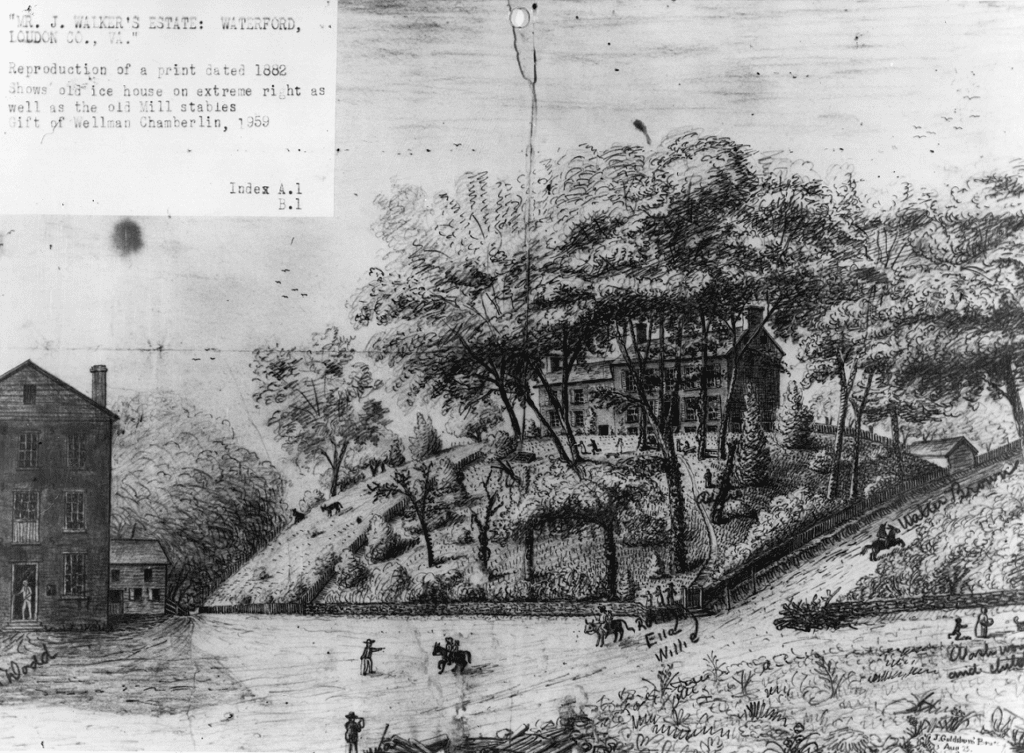
This reproduction of an 1882 sketch shows Mill End on the hill above and to the north of the Mill.

The Waterford Foundation’s Mill was a victim of a tree falling from Mill End, which is located on higher ground. The impact of the full length of the enormous tree split the tin roof and pulled the bricks loose down the north face of the two upper stories. Ironically, its location on lower ground did not save it from damage because of the height of its four stories.

Filed Under: history, News, Preservation

2023 Annual Awardees

May 2, 2024 by Elizabeth McFadden

Eagle Scout Recognition

The awards portion of the evening kicked off with our Eagle Scout Recognition of Jonathan Jovene for his Second Street School fence work.  Jonathan cleared the brush and re-installed fence posts in the schoolyard and make the fence sound again! Thank you, Jonathan! 

Strategic Partners

We were so pleased to see the Mill re-stabilization project come to a successful and on-time completion at the end of July last year. The Mill has never looked better, and we are looking forward to expanded use of the building in the days to come. The construction phase of this project was the culmination of over 10 years of work to secure funding, to study the building and produce a historic structure report, and to plan and execute a restoration project that would stabilize the building for the future. Our 2023 special recognition award(s) recognizes the members of the team who worked to make this treasured building safe for many years to come.  Loudoun County Department of Transportation and Capital Infrastructure has managed the project from the beginning and through the design and construction phases. Glave and Holmes Architects served as project architects through the design and construction phases. As contractor, Carpenter Beach Construction managed the carpenters, masons, and other tradespeople who worked to stabilize and rehabilitate the historic structure. Finally, Arbor Ridge Builders reproduced the massive timber-framed Hurst frame, the most significant structural artifact of the circa 1818 mill. Thank you to everyone involved in this huge and important project! 

Community Partners

We would not be the great organization we are today without some great community partners.  An important part of preserving the Landmark is conserving the bountiful open spaces that help tell Waterford’s agricultural and industrial story. The connection between the historic and natural fabrics of Waterford can easily be seen out on the Schooley Mill Meadow.

Balls Run, a tributary of Catoctin Creek runs through the property. As erosion has happened naturally along the bank, the need for a riparian buffer was made clear. Thanks to our Community Partners of 2023 – the Loudoun County Soil and Water Conservation District and the Piedmont Environmental Council – 600 trees were planted on both sides of the Catoctin to make up the new riparian buffer at no cost. Now the creek bank will be protected for many years to come. We thank you for your important contribution to our preservation and conservation mission, and look forward to seeing your important work continue in Loudoun County.

Volunteer of the Year

Everyone should have someone to call when you’re in a pinch right before a big event. Say, for example, that you are days away from your biggest educational outreach event and fundraiser, and you find out that the only toilet in a critical building is out of order. Or that the pilot program of your brand new field trip is two days away in November and the heat goes out in a critical building. Who would you call? We’re so grateful that we have Jeff Bean’s number, who has helped us solve so many problems in the past year and beyond. When we discovered that the Mill toilet was not working properly within a few days of the start of the Fair, he understood the urgency of the issue and pulled out all the stops to make sure the toilet was fixed in time for the event. And then just a month later, the heaters at the Second Street School continued to cause problems days before the first group of the Reconstruction program came out. Jeff once again pulled out all the stops, staying until the early hours in the morning to make sure that the seventh graders coming had a comfortable environment to learn in. We can’t thank you enough for all that you have done to keep the Foundation running smoothly Jeff. 

Lifetime Achievement

The Lifetime Achievement Award was established to recognize outstanding contributions to the work of the Waterford Foundation.  This year, we are honoring a man whose dedication and hard work have been the backbone of our Fair’s ticket booth operations for over two decades and who was a major contributor to the Old School restoration project. Hans Hommels, has been the invisible hand ensuring thousands of fairgoers are greeted with a smile, despite the challenges that arise before they even step foot into Waterford. For 25 years, Hans has orchestrated the complex ballet of ticket booth operations, a task that might seem straightforward to the uninitiated but is, in reality, is a huge undertaking. Managing up to four booths, coordinating shifts that stretch from the early morning till the close of day, and training dozens of volunteers each year, Hans has created the first impression of the Fair for countless attendees. After co-chairing with John DeCourcy from 1997 to 2014, Hans took over as chair for 7 more years, demonstrating an unwavering commitment to the Fair and to Waterford. This incredible tenure of service, came to a close in 2022, marking the end of an era. But that’s not all…

In 2007 the Foundation recruited Hans for a job that no one else could have done. Many of us remember watching the fire that destroyed our auditorium and damaged the Old School on that dreadful day in January 2007. The fire was a devastating blow to the Foundation and to the community.  However, from the beginning the determination to restore the classroom building and rebuild the auditorium was strong. Hans agreed to lead the rebuilding effort by chairing the Old School Steering Committee, a group that included Susan Sutter, Walter Music, and Kathleen Hughes. With Hans’s commitment to the village and his years of experience in construction management, he was the ideal candidate for the job. Hans thrives on challenges, and there were many challenges during the five years of the reconstruction project. The committee involved the community in the process. Hans visited village residents to ask for their views and participated in a series of public meetings.  Then Hans and his team interviewed 12 architectural firms. That search led to the hiring of Quinn Evans, a firm with vast experience with historic buildings, as the project architects for both the classroom building and the auditorium. After Loudoun County approvals had been secured, reconstruction of the classroom building began with Corbett Construction in March of 2008. Hans was a constant presence on the site, working with the builder, checking progress daily, and solving problems as they arose, while always insisting on high quality work. Meanwhile Hans and his team members worked with Quinn Evans to create a design for the auditorium that would complement the historic architecture. The design was finalized after more input from the community and approvals from both the Historic District Review Committee and the Virginia Department of Historic Resources, which holds an easement on the building.  During this time Hans and his team sent out Requests for Proposals to ten construction firms.  After meeting with the firms that submitted the top five bids, the team recommended Scott Long. Construction began on the auditorium in the summer of 2011.  Again, Hans was on site at the auditorium almost every day, with pages of plans under his arm, checking work as it was installed—carpentry, plumbing, electrical, HVAC. Amazingly, the project came in under budget, a rare achievement. None of this would have happened without the hundreds of hours of pro bono work Hans donated to the Foundation as our in-house Project Manager.  Without his dedication, the Foundation would not have a beautifully restored Old School and a spectacular new auditorium. Please look around you to see his contribution. 

Hans, your legacy is not just in the smooth operation of ticket sales or the countless hours you’ve dedicated to the Old School. It’s in the community you’ve helped build, the volunteers you’ve inspired, and the countless fairgoers and Old School event attendees whose experiences you’ve enhanced. On behalf of everyone here, and all those who have had the privilege of working with you or being welcomed by you, we say thank you. 

Thank you to Susan Sutter & Bonnie Getty for these kind words.

Thank you to everyone who joined us for such a great evening. We are looking forward to seeing you at all of the fun events coming up in 2024! 

Filed Under: News, Uncategorized, Volunteer Tagged With: 2024, meeting, news

  • « Go to Previous Page
  • Page 1
  • Page 2
  • Page 3
  • Page 4
  • Interim pages omitted …
  • Page 8
  • Go to Next Page »

Footer

Office Manager oldschool@waterfordfoundation.org
Phone: 540-882-3018 x 2

Privacy Policy


Join Us

Copyright © 2025 · Waterford Foundation · Log in