• Skip to main content
  • Skip to footer
  • Donate
  • Become a Member
  • Volunteer With Us!
  • Cart

Waterford Foundation

  • Education
    • K-12 Education Programs
    • The Waterford Fair
    • Waterford Craft School
    • Waterford HIstory
    • Remote Learning
    • The Quakers
    • African Americans in Waterford
  • Preservation
    • Historic Buildings
    • Mill Stabilization Project (2009-2023)
    • John Wesley Community Church Restoration
    • Dashboard Map of Western Loudoun Development, 1950-2020
    • Phillips Farm
    • Notes from the Preservation Desk
  • Shop
    • Books
    • Donate
    • Membership
    • Lantern Light Fund
  • Events
  • Weddings & Rentals
  • About
    • Contact Us
    • Meet the Staff
    • Meet the Board
    • Visit Waterford
    • Support
    • Join Us
  • News
  • Privacy Policy

Preservation

What Does Historic Preservation Mean?

February 3, 2026 by Abigail Zurfluh

When you walk around places like Waterford, you can feel the history of the place. That is by design. The care and protection of historic areas like Waterford is called historic preservation. Historic preservation is largely agreed to be defined as the identification, interpretation, care of, and protection of historic artifacts and objects, sites, buildings and structures, landscapes, and districts. There are multiple different fields of preservation (that often intersect with other fields and interests) in which preservationists dive into that definition: including archaeology, architecture, museums, planning, building technology, advocacy, material culture, conservation, public history, and more. What the definition of historic preservation means and how they interpret it in their work can differ from preservationist to preservationist.

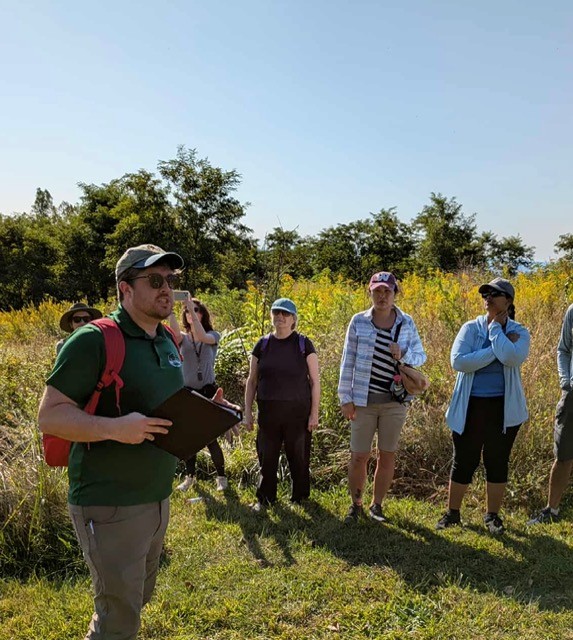
So, what does historic preservation mean to preservationists in Loudoun County? Below learn a little bit about the insights of what preservation means to them from Margaret “Margie” Salazar-Porzio, Ph.D. of Oatlands Historic House and Gardens, Ian MacDougall of the Virginia Piedmont Heritage Area, William Milone of Loudoun County Planning and Zoning, and Jana Shafagoj of Morven Park.


Margaret “Margie” Salazar-Porzio, Ph.D. is the Executive Director of Oatlands, a site of the National Trust for Historic Preservation in Loudoun County. With more than 15 years of experience in museums and public humanities, she previously served in leadership roles at the Smithsonian Institution, the Institute of Museum and Library Services, and the President’s Committee on the Arts and the Humanities. At Oatlands, she is leading a community-centered transformation focused on descendant engagement, education, land stewardship, and long-term sustainability.

What does historic preservation mean to you?

“To me, historic preservation is about stewarding places in ways that protect their historical and cultural significance while also inviting active engagement, inquiry, and connection to the present. Preservation to me is about honoring the people and their lives that are embedded in a landscape, including those that are difficult or complicated. At Oatlands, preservation means holding complexity, centering descendant voices, and ensuring that the site remains relevant and meaningful to the communities it serves today and in the future. As stewards, we must treat the site as a shared inheritance that extends beyond any one generation. Our choices today must therefore be guided by the long view, made with the understanding that others will inherit this place and continue its care.”

How did you get interested in historic preservation?

“My path into historic preservation came through public history and museum work. I’ve spent my career thinking about how history is interpreted, who gets to tell those stories, and how institutions can better reflect the full American story. Working at places like the Smithsonian and now at Oatlands has deepened my belief in the power of place: that historic sites are not simply lovely backdrops; they are places where civic learning, dialogue, and connection can unfold. With thoughtful interpretation, these places draw people into history as a lived experience, encouraging reflection and honest engagement with our shared past.”


Ian MacDougall joined the Virginia Piedmont Heritage Area in June 2021. He graduated with a Bachelor of Arts in Political Science from Virginia Commonwealth University in 2017. After completing his degree, Ian worked for the Colonial Williamsburg Foundation’s Military Programming department from 2017- 2021, focusing on organizing museum programming concerning Virginia’s role in the American War for Independence, as well as researching the experience of the British Army in the Commonwealth. Ian served as Public Programs Coordinator for VPHA from 2021-2025, managing the many public programs offered by the organization, including the popular Annual Conference on the Art of Command in the Civil War. He also served on the LoudounVA250 Committee in the role of Programs Chair from 2022-2025, having recently overseen the committee’s bicentennial commemorations of the Marquis de Lafayette’s visit in 1825. Ian became VPHA’s Executive Director in 2025, and oversees the Association’s daily business, development, fundraising, membership, and preserving the integrity of the historic landscape of the Virginia Piedmont Heritage Area. He and his wife Christine share a home in the bucolic village of Taylorstown in Loudoun County, and he spends his free time traveling to historic sites across Virginia and the east coast.

What does historic preservation mean to you?

“To me, historic preservation is the act of curating a living, outdoor museum where the landscape serves as the gallery floor and the structures act as its artifacts. Rather than just saving an old building simply because it’s been around a long time , it is about protecting the integrity of a site so that the relationship between the environment and its history remains visible and can be learned from. By treating a landscape as a museum, We ensure its exhibits are not obscured by modern encroachment but are instead maintained as immersive educational tools. To be able to take someone through a historic village, house, battlefield, or ancient road can and will inspire a sense of place and the moments in history it witnessed. There’s no better way to learn about ourselves and our history than to step into the places in which these events transpired and feel it around you.”

How did you get interested in historic preservation?

“I became engaged in history from a young age, from spending my time with my mother reenacting at Fort Loudoun State Historic Park in Tennessee. Sleeping in a wooden barracks building and watching muskets and cannons fired can do a lot to inspire curiosity in history. Growing up later in Williamsburg, I was surrounded by history and preservation. From my time in the Fife and Drum Corps, to some fantastic history teachers in school, and parents that fed that love of history, you could say there was little chance I wouldn’t pursue historic preservation as a career. I found a perfect home in the Virginia Piedmont Heritage Area in that way, matching my love of history with a passion to protect it for future generations.”


A local to this region, William Milone grew up in Alexandria’s Old and Historic District and fell in love with old places at an early age. William attended the University of Virginia (UVA) in Charlottesville, where he graduated with a Bachelors in Architectural History and a Masters of Architectural History. He lives with his wife Emily in Downtown Leesburg in a mid-19th century home.

What does historic preservation mean to you?

“To me, historic preservation- the effort to protect and interpret cultural resources in the face of visible and invisible change across society- is an imperative because it is the most socially responsible way to manage our constructed environment. Historic preservation offers people an immersive opportunity to understand their past, with physical evidence of past lives, cultures, social movements, wars, etc. to back up childhood history lessons. Preservation saves mountains of materials and energy by motivating us to reuse high-quality older buildings mostly produced with renewable, natural materials rather than replacing them with new buildings that may prove less physically durable or well-loved with time. Historic landscapes are an economic boon for local governments, and more importantly, create an irreplicable sense of place and quality of life for locals and visitors alike.”

How did you get interested in historic preservation?

“I grew up in an 1898 Queen Anne Victorian row house in the Old and Historic
District in Alexandria. For as long as I can remember, I’ve loved our old pine
floors with their rich wood grain pattern, the steep staircase with its decorative
newel posts and turned balusters, the door and window trim profiles that change
as you move up the house from floor to floor, and those wavy old window and
transom panes. My dad briefly worked in historic preservation locally and
remains involved at an advocacy level, so I was aware of the historic
preservation field from an early age. I’ve always cared deeply about historic
places and I knew I wanted to work in historic preservation just about as soon as
I realized I had the option.”


Jana Shafagoj holds a B.A. in Historic Preservation & History from Mary Washington College and a M.A. in Archaeology of Old Buildings from the University of York, UK. During her almost 30-year career, she has been lucky enough to explore, research, and preserve buildings throughout the Mid-Atlantic states and the UK. Jana accepted the Director of Preservation position at Morven Park in 2010 after being contracted by Morven Park in 2000 to determine the construction phasing of the Davis Mansion, a 6-month project, and again in 2009, to manage the Davis Mansion rehabilitation project. In her current role, Jana is responsible for the preservation of Morven Park’s historic structures and museum collections, and the interpretation of the site’s history to the public. She also manages Morven Park’s latest ground-breaking initiative, the 246 Years Project.

What does historic preservation mean to you?

“At its most basic, historic preservation is the study and protection of historic buildings. I don’t entirely agree with the word “preservation” which sounds like we are trying to stop all change and treat the building like an artifact in a museum, only to be carefully handled with white gloves. Instead, historic preservationists manage the evolution and adaptation of our built environment. As preservation professionals, we are called upon to identify the elements of each building that convey its history and must be maintained versus the ones that can be sacrificed to ensure the building’s continued relevancy to society. When properly done, historic preservation enables our historic built environment to continue to serve our community and remain a physical reminder of the community’s past for future generations. The old buildings and natural landscapes surviving within our communities allow us to subconsciously orientate ourselves in time and place, providing a sense of awe for the passage of time and a connection to our unique landscapes.”

How did you get interested in historic preservation?

“I love old houses. Ever since I was a kid, I have loved crawling around attics and cellars, looking for hidden rooms and old finishes. As I grew, this turned into a passion for understanding the evolution of our expectations for “home”. Although I appreciate buildings that have survived mostly untouched for a long time, I care more for the houses that have been shaped by each generation that called them home. Those buildings, like the Davis Mansion at Morven Park, are the ones where you find forgotten hidden spaces. That endless possibility of discovery is what I love most about this field.”


Filed Under: Preservation Tagged With: Notes from the Preservation Desk

Diving into the John Wesley Community Church Restoration Project

February 3, 2026 by Abigail Zurfluh

In 2002, a long term capital rehabilitation and restoration project began at the John Wesley Community Church. Boots are now ready to be back on the ground in the Church this February for the final stage of this long term project! The goals of this final stage is to finish returning the building to its period of significance and to finish making historically sensitive capital improvements to the building to improve accessibility and long-term stability. As well, the Foundation aims to implement interpretive materials in the space that shares the story of the African American community of Waterford, with the involvement and support of the descendant community. This would support the long-term preservation of this integral property to the Waterford National Historic Landmark and help in sharing the history of the church and its congregation to the public.

Whether the restoration and rehabilitation project is for a house, church, mill, or barn- there is a lot of planning work involved from the decision to move forward with a restoration project to boots on the ground construction works starts. Read on below to learn more about the planning work undertaken to get to the point we are at now in the John Wesley Community Church Restoration project. 

Documentation: The Historic Structures Report

The first step in any project is to understand the full scope of it. When it comes to properties like the John Wesley Community Church, that means the production of a historic structures report (HSR). A historic structures report is a deep dive into the building to understand the totality of the property: compiling historic and archival research, documentation of the physical building from the roof to the foundation, expert evaluations of the current condition, and recommendations for work. These reports are pulled together by a team of experts from architectural historians, archaeologists, architects, and engineers. 

In 2019, the HSR for the Church was created. This HSR is what was used to determine what restoration work remained at the John Wesley Community Church in this final stage. The entire report is 150 pages and documents the Church from the foundation to the steeple through the use of historic research, expert analysis, engineering assessments, and high tech imaging including laser scans and drone images. We pass along our gratitude for the entire team of specialists who created the HSR from SmithGroup, Robinson & Associates, and TYLIN (then Silman).

Creating Architecture and Engineering Plans

After the completion of the HSR, the next step is to determine the scope of work and create architectural and engineering plans for the project. For the John Wesley Community Church, the scope of work was determined to be restoring the exterior stone retaining wall, sanctuary balcony restabilization, creation of new entry paths at both the sanctuary and basement entrances, finish work in securing the exterior envelope, finish work in preserving the original wood elements (including pews, balustrade, floors, and altar) in the sanctuary, and a plaster restoration in the sanctuary as well. We can’t thank the team at SmithGroup- Susan Pommerer, Jim Shepherd, and Chris Wood- who has worked in creating and finalizing plans with us over the past year and a half pro-bono! 

Funding Work: Grant Applications

The priorities and analysis of the John Wesley Community Church in the HSR, and further developed with architecture and engineering plans have also supported grant applications for funding for this project, including the $225,000 grant received from the Virginia Black, Indigenous, People of Color Fund managed by the Virginia Department of Historic Resources.

Engaging with Stakeholders and the Public

An important and integral stakeholder group of the John Wesley Community Church is the descendant community of the Church. We are so thankful for the support of the descendant community in this project: from sharing stories and images with us of the Church, writing letters of support in grant applications, providing comments and suggestions in plans, coming and sharing in design and approval meetings, assisting in plans to lead interpretation, and more! This vital restoration work would not be possible without your support! 

The public were also invited to provide comments and ask questions about the project before finalizing the plans for the Church in 2025- at the John Wesley Community Church Restoration Open House and the Waterford Foundation Annual Meeting. Thank you to everyone who came to these events, asked questions, and provided feedback!

Easement Holder Review

For properties under easement like the John Wesley Community Church, all changes within the scope of the easement have to be approved by the easement holder. For the John Wesley Community Church, the easement holder is the Virginia Department of Historic Resources (VDHR). The easement stewardship team at VDHR were engaged throughout the design process, and approved of the finalized plans. Thank you to the easement stewardship team for your support! 

Certificate of Appropriateness

The John Wesley Community Church is also within the County’s Waterford Historic and Cultural Conservation District, and therefore is subject to the guidelines of the Waterford Historic District. If a project is within the historic district boundaries and falls within the purview of the guidelines, a Certificate of Appropriateness is needed. A Certificate of Appropriateness is an official document authorizing exterior alterations (including restoration and rehabilitation work), new construction, or demolition subject to the historic district guidelines. In Loudoun County, the Historic District Review Committee issues Certificate of Appropriateness for the County’s historic districts (Aldie, Beaverdam Creek Historic Roads, Bluemont, Goose Creek, Oatlands, Taylorstown, and Waterford). A Certificate of Appropriateness was received for the Church project in January 2026. We appreciate the support of Loudoun County Planning and Zoning staff that supported us through the process of receiving a Certificate. 

Choosing a Contractor

The final piece to the puzzle for a restoration project is choosing a contractor. For projects like this, a contractor specializing in historic restorations is required. After releasing a request for bid period this past summer, Carpenter Beach Construction was chosen as the contractor for the project. We look forward to working with them again!


What comes next? Construction work (depending on weather) is slated to begin in February 2026, and the timeline shows that work will be completed by the end of 2027. During this time, we will be working in collaboration with the descendant community of the Church to create a permanent exhibit about the African American community of Waterford and the history of the John Wesley Community Church to be displayed in the Church after the project is complete.

How to follow along: We look forward to updating you regularly about the project and sharing pictures of the project on social media and in the monthly Foundation newsletter. 

Descendants of the John Wesley Community Church: sign up here to receive our descendants newsletter to get regular updates about the project and more!

How to support the project:

  • Volunteer: we have an upcoming (February 2026) volunteer project to help prepare the Church for construction by moving, covering, and/or removing items from the Church to keep them protected during the project. If you’re available to help move furniture and other items out of the Church for safe storage, please let us know here.
  • Donations: Donations to the Lantern Light Fund support the Foundation’s efforts to preserve and share Waterford’s African American heritage sites, stories, and artifacts. Lantern Light Funds go to support projects like the John Wesley Community Church Restoration as well as projects at the Second Street School, and educational programming such as field trips, lectures, exhibits, walking tours, and more. You can find out more about the Lantern Light Fund at this link.

We can’t wait to see what comes next for the Church!


Glossary of Terms:
  • Capital Infrastructure:  large-scale physical assets to a community such as buildings, roads, bridges, and utilities
  • Conservation or Preservation Easement: a legal document between a property owner and an accepting and qualified organization or locality that aims to protect the historic, environmental, and/or cultural significance and heritage of the property. 
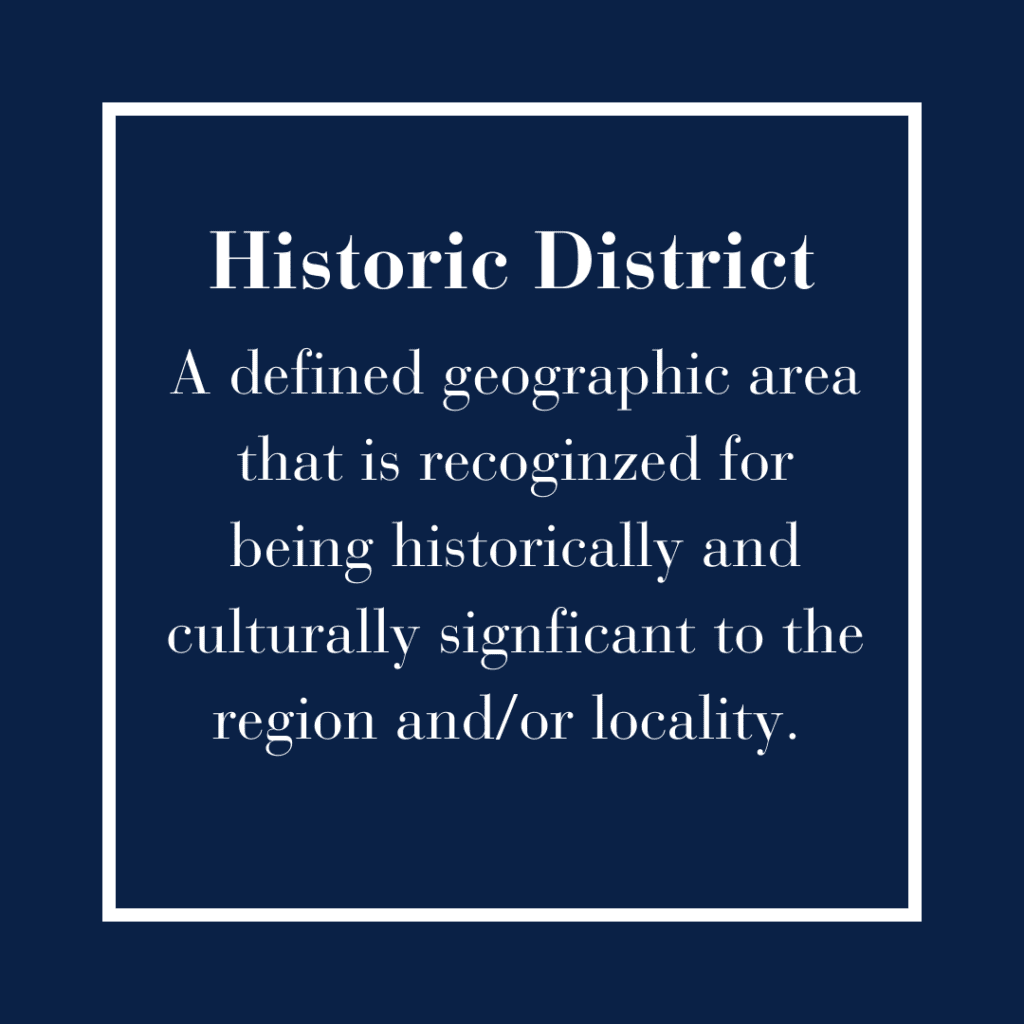
  • Historic District: a defined geographic area that is recognized for being historically and culturally significant to the region. Properties within this district can be (depending on locality and jurisdiction) subject to guidelines for preserving historic structures.
  • Historic Structures Report (HSR): a comprehensive document prepared for a historic structure that documents the history, architecture, current conditions, and significance to support further preservation work on the property.
  • Period of Significance: the recognized span of time where a property receives its’ historic significance
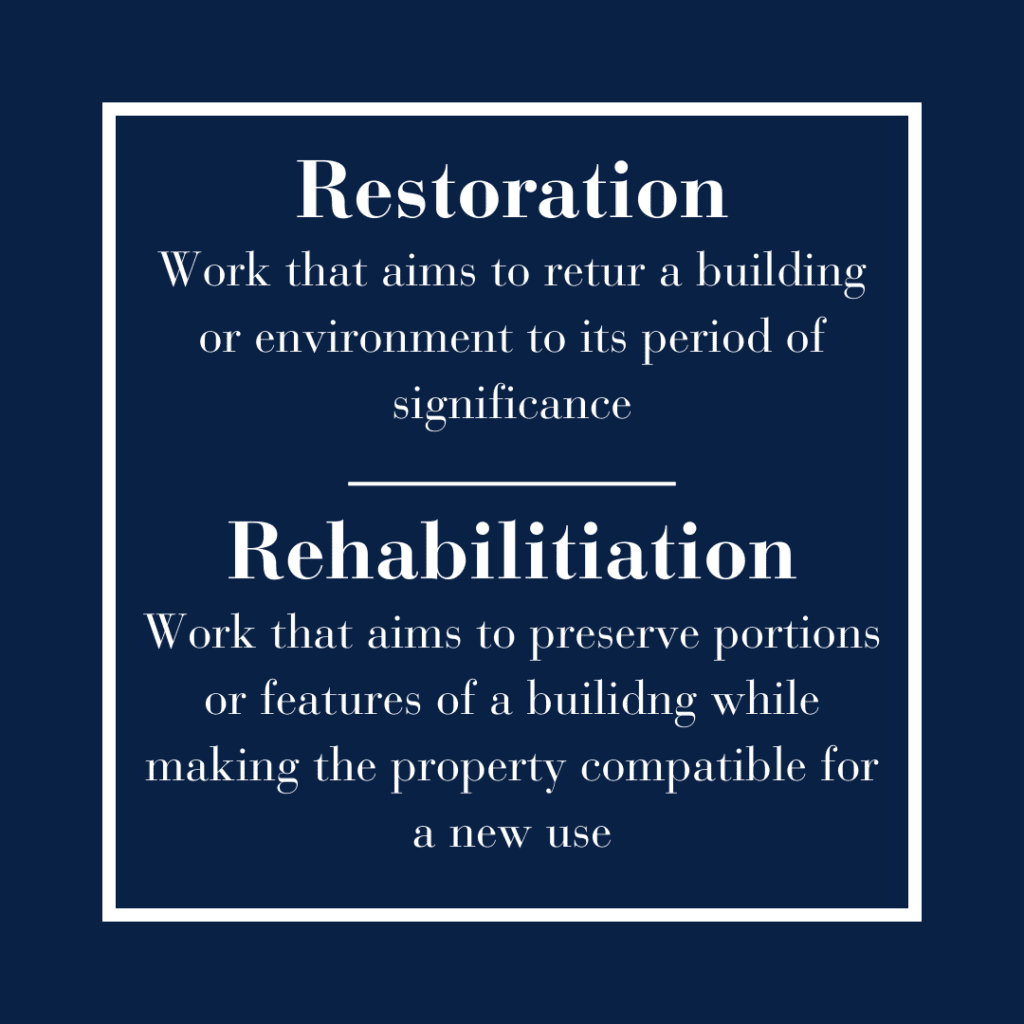
  • Rehabilitation: work that aims to preserve portions or features of a project while making the property compatible for a new use
  • Restoration: work that aims to return a building or environment to a certain period of time (period of significance)
  • Secretary of Interior Standards for the Treatment of Historic Properties: often shortened to Secretary of Interior Standards, these are the nationally recognized guidelines for historic preservation projects to follow, sorted into four categories: preservation, rehabilitation, restoration, and reconstruction. 
  • Stakeholder: a person or group with documented interest in a subject

Filed Under: Preservation Tagged With: Notes from the Preservation Desk

What is a National Historic Landmark?

January 8, 2026 by Abigail Zurfluh

When driving into the Village, you might have seen signs welcoming you to the Waterford National Historic Landmark. These signs are placed at the roads along the borders of the 1,420 acres that have been deemed the National Historic Landmark of Waterford, Virginia. You might have also seen a plaque on stones at various sites around the United States, including here in the Village of Waterford at the Village Green, marking the site as a National Historic Landmark. But what does that even mean?

What does “National Historic Landmark” mean?

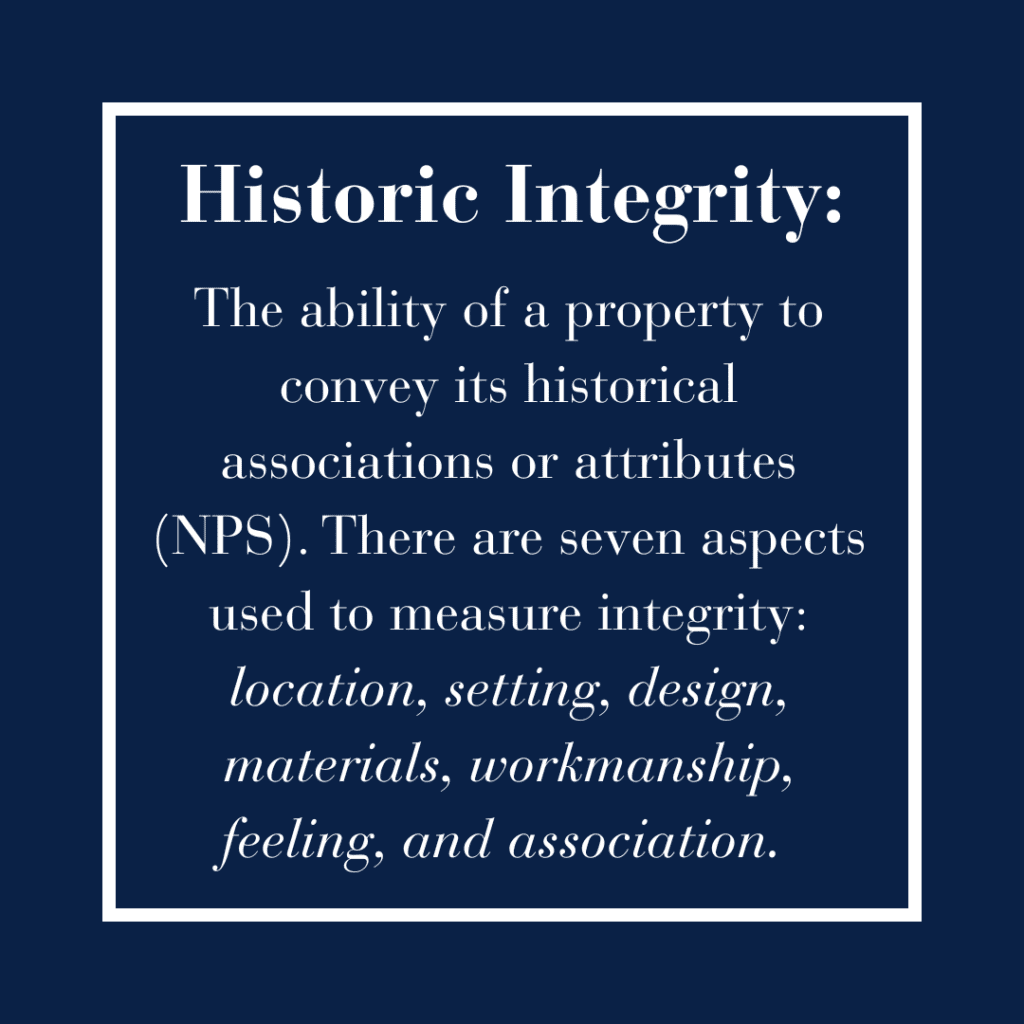
A National Historic Landmark (NHL) is a designation bestowed to places that are deemed by the Secretary of the Interior to be both (a) nationally significant in interpreting American history and/or culture and (b) possesses a high degree of historic integrity in factors such as setting, materials, craftsmanship, and feeling. It’s the highest historic designation that a place can receive- surpassing the local, state, and federal historic register designations. In short, NHLs are places that have been deemed to be incredibly preserved and integral in sharing the American story. Like the National Register of Historic Places, the program is managed by the National Park Service.

As of 2026, there are over 2,600 historic buildings, sites, structures, objects, and districts that have been designated a National Historic Landmark since the program creation in the early 1960s. Virginia alone has 126; including Mount Vernon, Monticello, Natural Bridge, Williamsburg Historic District, and of course the Waterford District. Other local NHLs you can explore include the Ball’s Bluff Battlefield, Alexandria Historic District, the General George C Marshall House, and Oatlands.

How does a National Historic Landmark get chosen?

First, the considered district, site, building, structure, or object must meet the qualifications of the NHL program. This means that the nomination must be able to exhibit and interpret American history, architecture, technology and innovation, and/or culture (this being it’s significance). The considered nomination must meet at least one of the six criteria for national significance: connected to major events in American history (EX: Ball’s Bluff), associated with individuals that have made significant contributions to American history (EX: Mount Vernon), represent a great idea or ideal of the American people, exceptional design and architectural importance (EX: Fallingwater), environmentally significant, and possesses significant archaeological potential. Secondly, the proposed nomination must also possess a high level of historic integrity (the seven aspects being location, design, setting, materials, workmanship, feeling, and association) to support the interpretation of the site. A district, site, building, structure, or object that meet these qualifications can be nominated to the National Historic Landmark program by being identified through theme or special studies (like women’s history, labor history, Civil War, or the American Revolution) conducted by the National Park Service; or through being nominated by other federal agencies, State Historic Preservation Officers (in Virginia, the Virginia Department of Historic Resources), and/or other historic agencies and individuals.

Once a complete nomination is received by the National Park Service, it is reviewed by the NPS and the National Park System Advisory Board. The Advisory Board is put together of national leaders in preservation and conservation. When they meet, they look over the nominations and make recommendations to the Secretary of the Interior on which nominations to become a National Historic Landmark. The Secretary of the Interior makes the final decisions in which of the nominations are accepted into the National Historic Landmark program.

Diving into the Waterford National Historic Landmark

In 1970, 1,420 acres including the historic village of Waterford and the surrounding forested area and farmland (known in the application as the Waterford Historic District) was designated a National Historic Landmark. It was one of the first nominations to include the surrounding landscape as part of the significance. The Waterford Historic District was determined to be nationally significant as an intact example of an early American rural industrial village and surrounding landscape. The preserved architecture, materials, setting, and feeling supported the application.

The Waterford Historic District went back in front of the National Park System Advisory Board in 2023 to update the Landmark designation. Between 1970 and 2023, the Landmark program was expanded and nomination documents became more in-depth. This update dived deeper into the history and architecture of the area to include more properties as significant to the Landmark, and to include the preservation story of Waterford as a period of significance as well. The Landmark nomination was officially updated in 2023; highlighting again the importance of the intact rural village and the history of the area, but as well the community led preservation movement of the area.

As stated in the 2023 updated Landmark nomination, “The Waterford Historic District is significant under National Historic Landmark Criteria 4 and 5 as an exceptionally well-preserved example of a common settlement type- an agricultural service village- that emerged in rural areas during the American market revolution of the first half of the nineteenth century, especially in grain-based farming regions like the Upland South. Though villages serving farm communities are common throughout the United States and still form much of its cultural fabric today, early forms of these agricultural villages, originating in the eighteenth and early nineteenth centuries and still exhibiting their architecture, setting, and layout from that era, rarely survive intact- especially without substantial later intrusions or loss of their rural settings. Waterford is exceptional for its retention of not only its village core, including its early street patterns and architecture, but also the surrounding open space and agricultural area. Waterford survives an intact agricultural service village landscape able to evoke the economic, architectural, aesthetic, and cultural patterns characteristic of America’s pre-urbanized history.

The Waterford Historic District is also nationally significant under National Historic Landmark Criterion 1, for the sustained and creative, locally-led twentieth-century historic preservation campaign that ensured its present high degree of integrity. Waterford’s remarkably intact village architecture and expansive agricultural setting survives with such high integrity due to a multipronged and intensive campaign that employed several emerging preservation approaches and a diverse set of preservation tools. Spearheaded by private citizens that, in 1943, formed the community non-profit Waterford Foundation, this decades-long collaborative effort represents a laboratory for experimental private preservation strategies that resulted in the conservation of a living landscape where most properties, unlike in a museum restoration like Colonial Williamsburg, have remained in private ownership.” (Waterford Historic District National Landmark Nomination 2023, Page Three)


Sources:
National Park Service, National Historic Landmark Program

Waterford Historic District National Historic Landmark Nomination, 2023, National Park Service: https://irma.nps.gov/DataStore/DownloadFile/702383

Filed Under: Preservation, Uncategorized Tagged With: Notes from the Preservation Desk

Adaptive Reuse of WF Properties

March 6, 2025 by Abigail Zurfluh

jump to report
jump to survey

In recent years, there has been a growing nationwide focus on adaptive reuse- the practice of repurposing historic buildings for new uses- as a key strategy for preservation. Adaptive reuse is broadly defined as modifying or using a structure to serve a different function than originally intended. Although adaptive reuse has gained popularity, it is not a new concept in the Village of Waterford, where it has long been used to preserve historic structures. For example, many former commercial properties on Main Street are now fully residential properties, and the Waterford Old School now serves as the Waterford Foundation offices and community center rather than a school. Adaptive reuse is a well-respected and documented method used by historic preservationists nationwide as it is one of the most sustainable ways to preserve historic structures long-term.

The Waterford Foundation (WF) Board of Directors has identified that the majority of the WF owned properties are not being used to their full potential in support of the WF mission to preserve the historic buildings and open spaces of the National Historic Landmark of Waterford, Virginia, and, through education, to increase the public’s knowledge of life and work in an early American rural community. Looking into how to adaptively reuse properties from what they were originally designed for to how they are best able to support Waterford now is the logical next step.

In 2023, the Historic Properties and Land Use Subcommittee was tasked with conducting a comprehensive review of all Waterford Foundation properties- excluding the Mill- to develop a preliminary report supporting the adaptive reuse of these sites. This report serves as a foundational resource, outline key information such as existing easements and zoning regulations, along with recommendations for potential modifications. It also assess the current use of each property and identifies preliminary work needed to make them viable for adaptive reuse.

Beyond individual properties, the report takes a broader look at the Village as a whole, evaluating the current needs of both residents and visitors. It examines how Foundation-owned properties can best serve these needs, ensuring that preservation efforts align with community priorities. Additionally, the report helps establish a framework for prioritizing properties for adaptive reuse, guiding future planning and resource allocation.

Report

The next step in finalizing and editing the report for adoption by the Waterford Foundation Board of Directors is to receive public input. Version 2.0. of the Draft Alternative Use Proposal is available below:

Version 2.0. of the draft alternative use proposal

Below is a detailed table of contents of Alternative Use Report highlighting where in the report that each property’s proposal is:

Introduction and PurposePage 4
ApproachPage 5
WF Property InformationPages 6-42
Observations from Full VillagePages 43- 46
Proposed Alternative Uses and Implementation Requirements GoalsPage 47
Bond Street Barn and Meadow ProposalPages 48-52
Chair Factory ProposalPages 53-55
Corner Store ProposalPage 56
Forge ProposalPages 56-59
John Wesley Community Church ProposalPages 60-64
North Meadow ProposalPage 65
Old School ProposalPage 65
Phillips Farm ProposalPages 66-67
Red Barn ProposalPages 68-70
Schooley Mill Barn and Meadow ProposalPages 71- 72
Second Street School ProposalPage 73
Water Street Meadow ProposalPage 73
Recommended Steps of ActionPages 74-76

Survey

The HPLU subcommittee is seeking public comments through an online survey available below or through this link. Thank you for taking the time to read the report and fill out the survey to put in your comments. Your comments will be taken into consideration as the Historic Properties and Land Use Subcommittee continues to refine the report for V.3. The public comment survey will be open to receive comments through Monday, May 12th.

Public comment survey

For questions about the report or if you have trouble filling out the survey, please email the Waterford Foundation historic preservation director at azurfluh@waterfordfoundation.org

Filed Under: Preservation

2024 Second Street School Painting

July 3, 2024 by Abigail Zurfluh

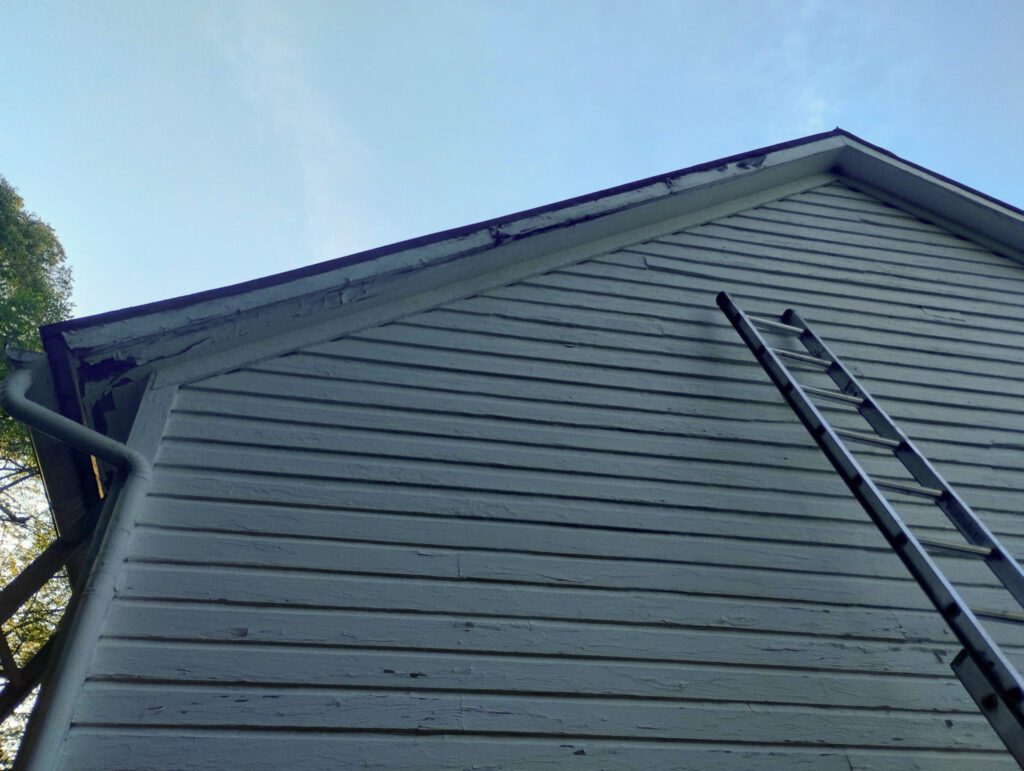
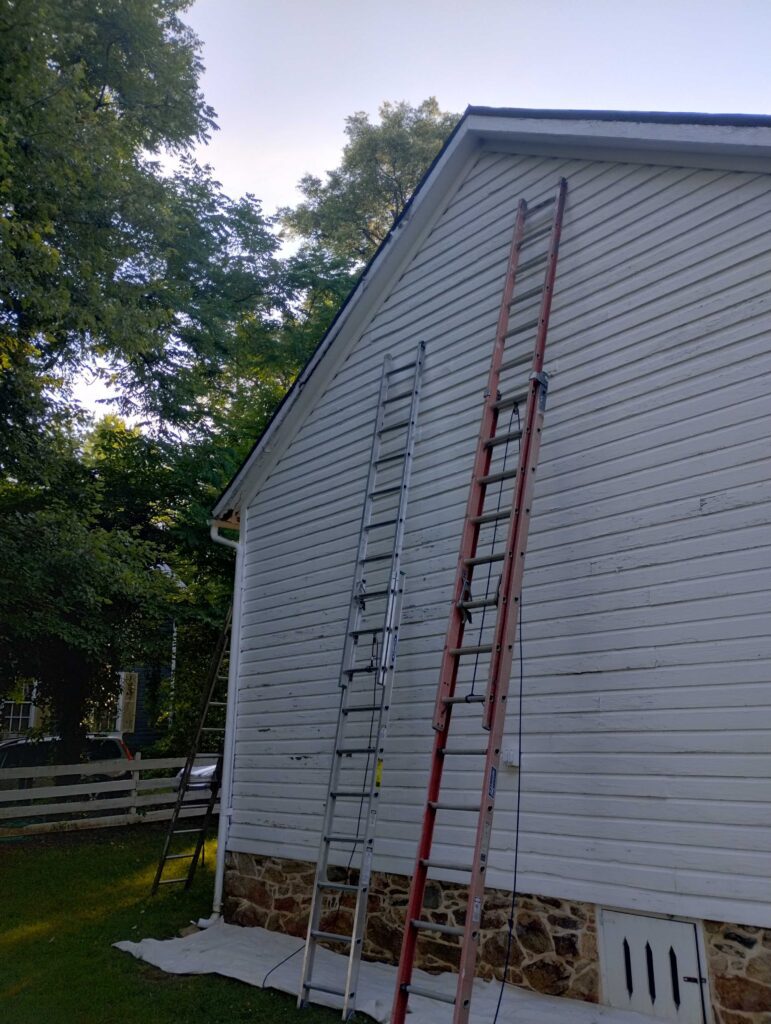
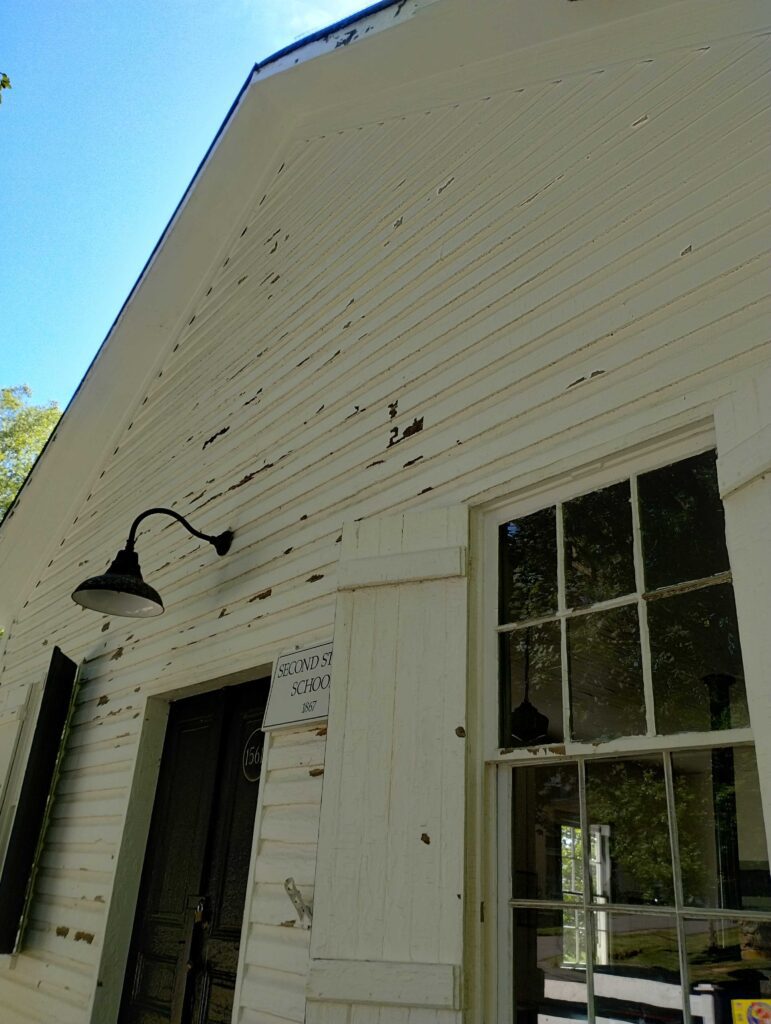
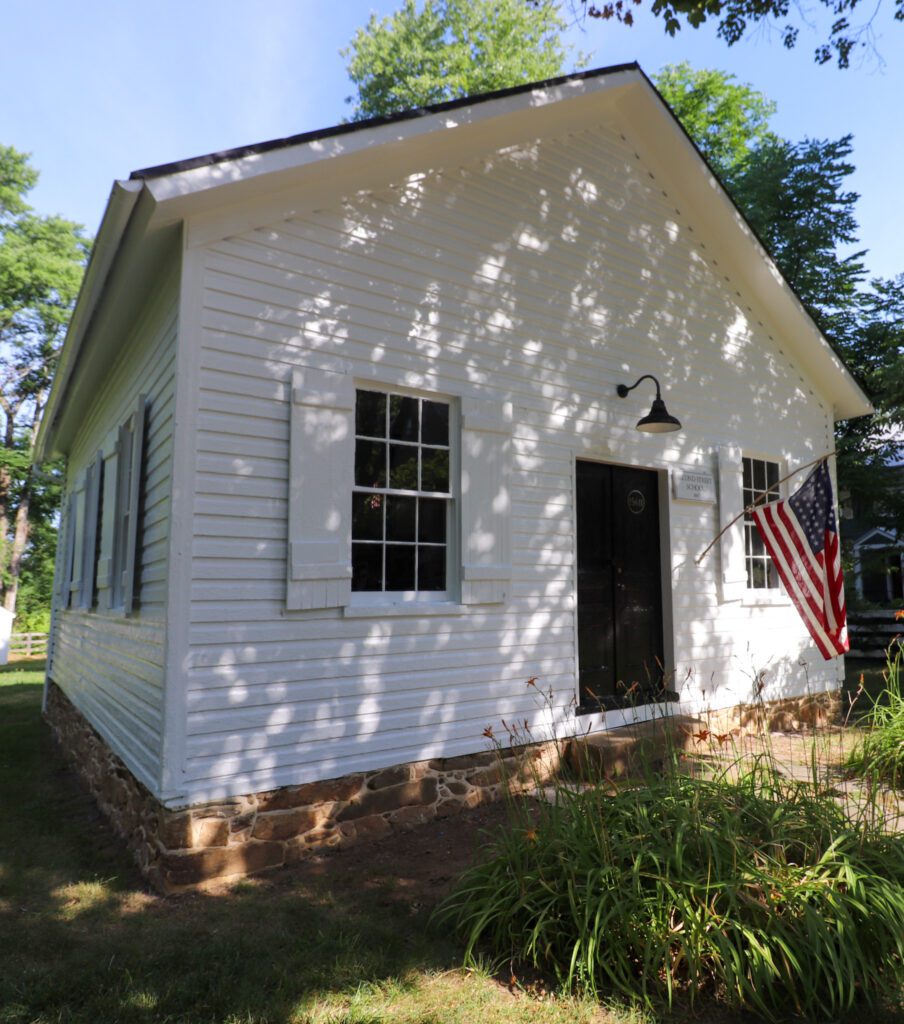
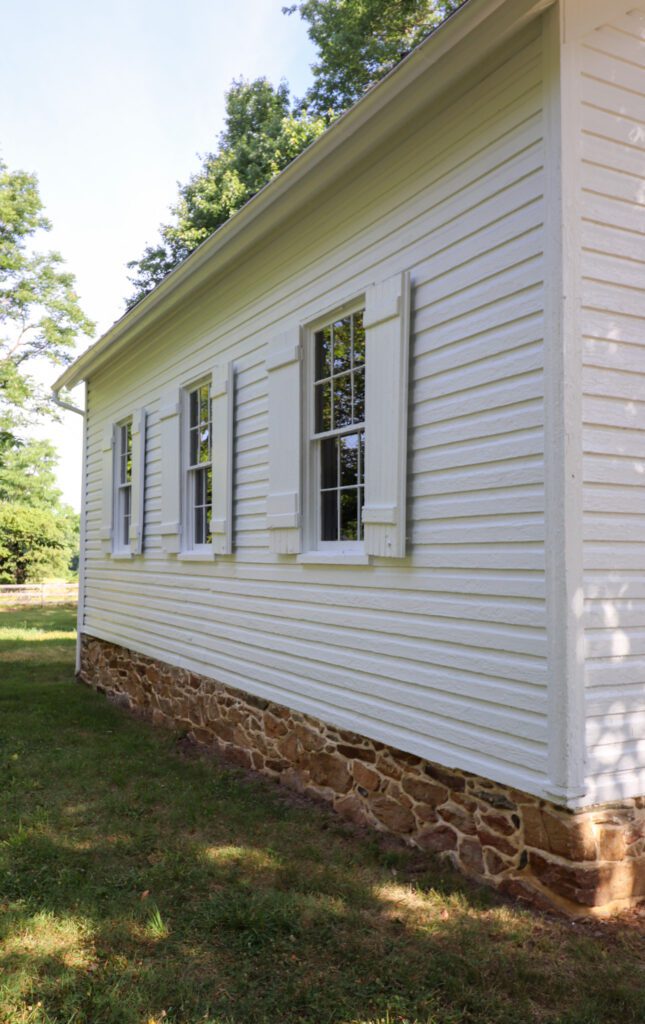
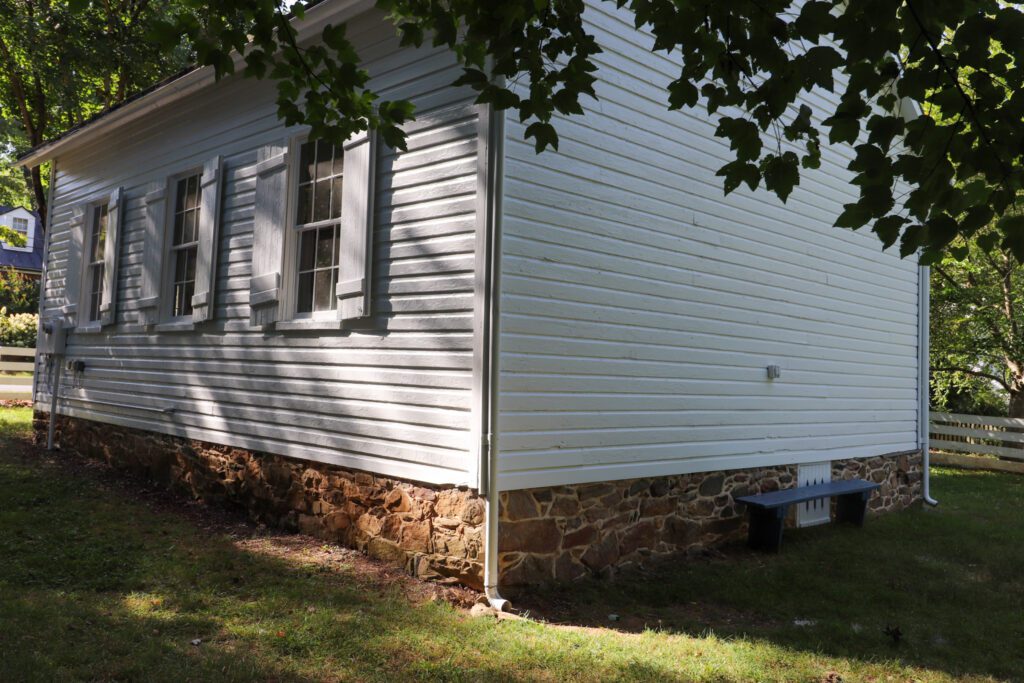
After this last busy school year, we were able to give the outside of the Second Street School some much needed TLC! Following Secretary of Interior Standards for Historic Rehabilitation, repairs were made some woodwork on the rear elevation and the building got a fresh coat of paint. Now, the Second Street School is ready to host another years worth of scholars coming to Waterford to learn about Reconstruction.

Check out below for some before and after pictures! It is thanks to generous donations to the Lantern Light Fund that the Waterford Foundation is able to preserve and educate the public about African American life here in Waterford and Loudoun County.

Before:

After:

To support work like this in the future, please consider a donation to the Lantern Light Fund, our fund that supports the artifacts, sites, and stories of Waterford’s Black community including the Second Street School and the John Wesley Community Church.

Filed Under: News, Preservation, sss

Waterford Historic District Named one of Virginia’s Most Endangered Historic Places

May 14, 2024 by Stephanie Thompson

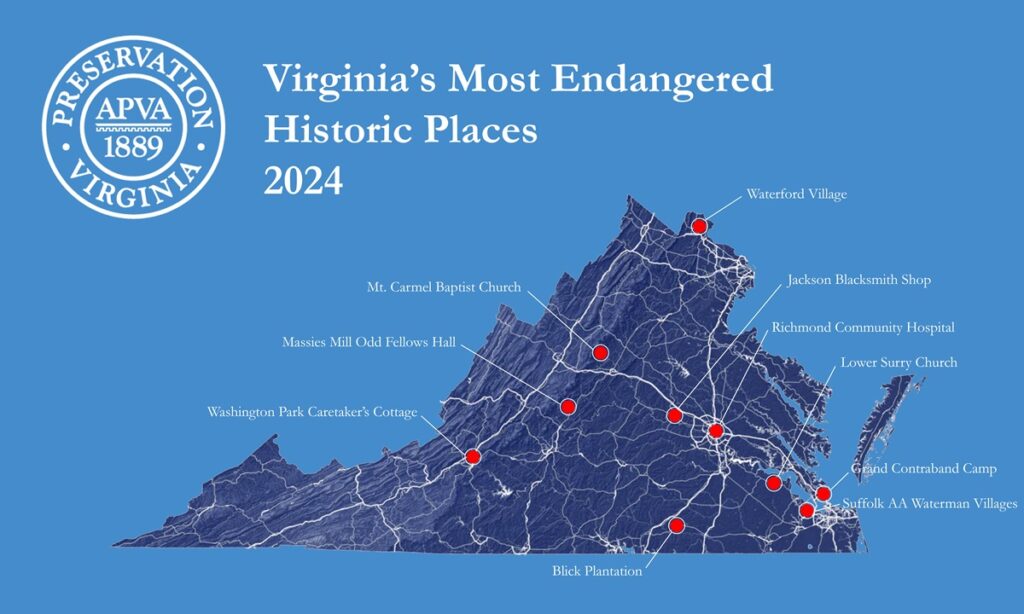
Every year during Historic Preservation Month, Preservation VA releases a list of that year’s Most Endangered Historic Sites to raise community awareness of threatened historic places. This year, the Waterford National Historic Landmark was included on the list due to the imminent threat of proposed 500kV transmission lines running through the Landmark. 

Construction of 500kV transmission lines in the Waterford National Historic Landmark would destroy the integrity of the historic and cultural viewshed of Waterford and nullify its Landmark status, a designation that the community achieved in 1970 and continues to fight for. While Waterford’s historic integrity is under threat, we are hopeful that being listed as one of Virginia’s Most Endangered Historic Places will raise awareness of this issue and help rally supporters to our cause. Endangerment does not mean the end, it means that there is a community ready and willing to put in the work to save it. The Waterford Foundation is honored to be a part of that community, and are hopeful that it will continue to grow. 

Endangerment does not mean the end, it means that there is a community ready and willing to put in the work to save it.

The Waterford Foundation thanks Preservation Virginia for its support in our work to preserve the historic buildings and open spaces of Waterford in defense of the National Historic Landmark. To learn more about the Most Endangered Historic Places designation and Waterford’s rich history of grassroots preservation, please attend our Preservation Celebration on Sunday, May 19th from 3-5pm at the Waterford Old School (40222 Fairfax Street, Waterford VA 20197). For more information about the threat of the 500kV transmission lines and what can be done, please visit the Loudoun Transmission Line Alliance’s website at www.loudountransmissionlinealliance.org.

Filed Under: News, Preservation

The Big Storm of ’94

May 2, 2024 by Stephanie Thompson

Reprinted from the 51st Waterford Fair Booklet, October 7, 1994.

On the afternoon of June 16 this year, a powerful wind storm ripped through the Waterford historic district, taking with it many 200 plus year-old trees. These trees had witnessed the development of Waterford from an 18th Century milling center to a thriving 19th Century commercial town serving the needs of the surrounding farming community. The result was a monstrous tangle of downed electric and telephone wires, broken tree limbs, and upturned tree roots as tall as a grown man. The clean-up process took days of around-the-clock work by power companies, VDOT and tree services.

The storm hit the northeast side of town, working around to the southwest. The highest points of the town and surrounding hills suffered direct hits. 

The damage to buildings was largely the result of huge trees falling on porches or roofs and ripping great gashes in the fabric of the buildings. The homes on the north side of the Big Hill and the east side of High Street felt the full impact of the storm, being vulnerable because of their location on higher ground than most of the town. Two grand Victorian style houses narrowly avoided damage as many of the very large trees between them were destroyed by the wind. One owner described how the wind and resulting internal pressure in her home sent the roof access door to their attic sailing across the garden. Likewise, at Mill End, an imposing house across from the Mill at the lower end of town, the greatest damage was suffered in the gardens surrounding the house where some 22 trees were damaged or destroyed.

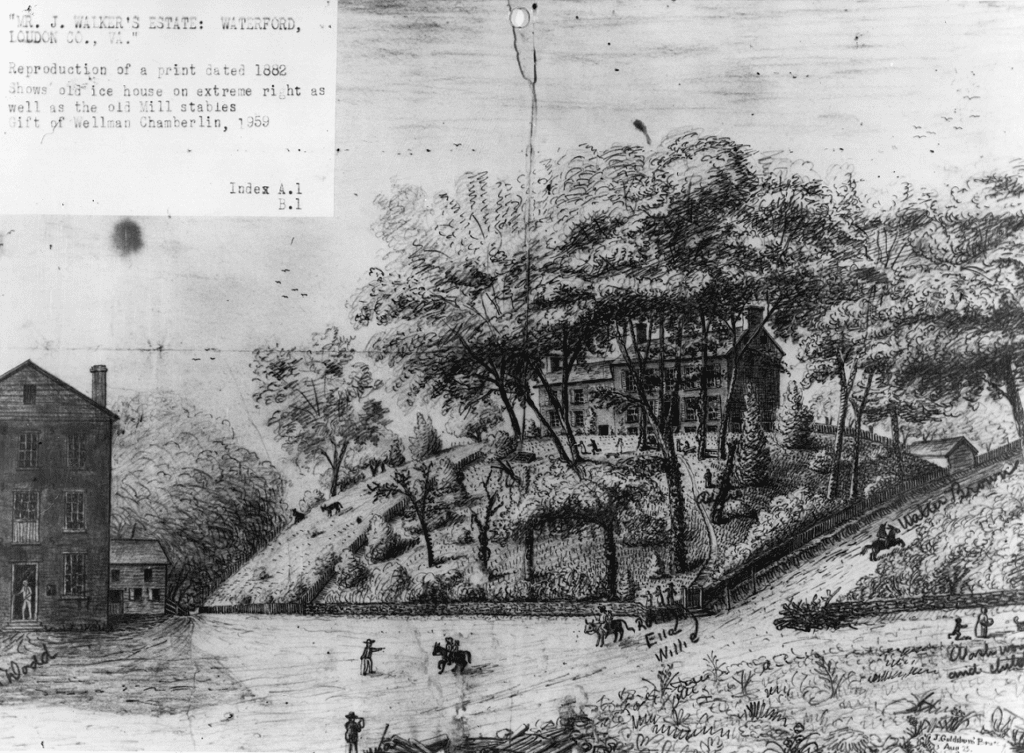
This reproduction of an 1882 sketch shows Mill End on the hill above and to the north of the Mill.

The Waterford Foundation’s Mill was a victim of a tree falling from Mill End, which is located on higher ground. The impact of the full length of the enormous tree split the tin roof and pulled the bricks loose down the north face of the two upper stories. Ironically, its location on lower ground did not save it from damage because of the height of its four stories.

Filed Under: history, News, Preservation

Call to Action: Oppose Transmission Lines Through the Waterford National Historic Landmark

December 1, 2023 by Stephanie Thompson

PJM, a regional transmission organization, has accepted a proposal for new power transmission lines that would go through Western Loudoun and directly through the Waterford National Historic Landmark to support the needs of the data center industry. The proposed 500KV lines go directly through conserved land and land under easement with the Virginia Outdoors Foundation.  These transmission lines pose a major threat to the integrity of the Landmark and the region we sit in. Our Landmark status is intrinsically linked with the unspoiled viewshed surrounding our historic village. Not only that, but every resident and business who calls Waterford home would be impacted by the construction of these power transmission lines. The Waterford Foundation stands opposed to such violation of our conservation values, and will work to oppose any impact to the integrity of Waterford’s Landmark status. 

Why is this important? Western Loudoun has remained relatively untouched by the massive growth of the data center industry in the past years. Instead, it remains a haven for farmland, open spaces, conservation, and preservation. Amongst the picturesque hills sit wonderful and profitable businesses and organizations that rely on the surrounding. It is also an area where history and past of Loudoun County can be found woven into the hustle and bustle of 21st century life. The best example of this can be found in the National Historic Landmark of Waterford. Building transmission lines through this region would impact the daily lives of residents in an unprecedented manner; damage the livelihoods of farms, businesses, and organizations that are in its path; and damage the integrity of the Waterford National Historic Landmark. This is similar to a proposal to put transmission lines through Gettysburg National Battlefield or Mount Vernon. 

We need your support to fight this threat. One thing that the Foundation has learned is the power of the Loudoun County community banding together for a common cause. Please see below for ways you can help us oppose this threat.

Stay in touch:

The Waterford Foundation is maintaining an email list for those who would like to stay informed about this issue. If you would like to be included, please email Historic Preservation Director Abigail Zurfluh here, or fill out the form at the bottom of this page.

How you can help: 

Share your concerns with decision makers:

National Interest Electric Transmission Corridor (NIETC):

  • Changes in the designation of the National Interest Electric Transmission Corridor could pose a challenge for opposing proposed transmission lines. If it is determined by the Department of Energy that Loudoun County is a NIETC, the Federal Energy Regulatory Commission could issue permits for transmission line construction even if state authorities deny applications.
  • The Department of Energy is currently accepting public input regarding NIETC designations for Phase One. In Phase Two, a preliminary list of areas being considered will be released and public comments on that list will open. In Phase Three, the DOE will develop geographic boundaries, more public comments, and go over Needs Study. Finally, in Phase Four, the DOE will release any necessary environmental documentations before final NIETC designations.
  • The Department of Energy is currently accepting public comments for phase one until February 2nd. Public comments can be emailed to NIETC@hq.doe.gov

Virginia State Corporation Commission:

  • In Virginia, the State Corporation Commission will be making the decision on the actual chosen route when application is submitted by NextEra. Watch this space for instructions on how to voice your opposition to this project to the Virginia State Corporation Commission.

Elected Officials:

  • Watch this space for ways to share information with elected representatives about transmission lines.
  • For more information about bills in the General Assembly in 2024 surrounding this issue, check out this flyer made by our collogues at the Piedmont Environmental Council

Spread the word about this issue:

  • Share social media posts from the Waterford Foundation, Piedmont Environmental County, Loudoun Wildlife Conservancy and other organizations to strengthen local opposition.
  • Tell friends, family and neighbors about this issue to broaden our base of support

Show your support by signing our online petition:

  • Sign this online petition to show your opposition to the proposed transmission lines.
  • Share the petition so that we are able to show large opposition in this region!

Donate to support the Waterford Foundation’s work to preserve the Waterford National Historic Landmark and oppose threats like this.

Donate Now!

Important Upcoming Dates and Timelines: 

February 2nd- Due Date to Submit Public Comments on Stage One of National Interest Electric Transmission Corridor to the DOE. Public comments can be submitted via email to NIETC@hq.doe.gov

February 7th at 6:30pm- Loudoun Nonprofit Leadership Summit is taking place at the Old School in Waterford. If you are a leader/staff member of a preservation, conservation, or other related organization/stakeholder in this issue, please RSVP using this link.

May/June: Possible completion of NextEra routing study

Summer 2024: Be on the look out for community open houses hosted by NextEra about the routes.

Late 2024: Possible aim for a proposal to SCC

Resources to Learn More:

Background Information: Our colleagues at Piedmont Environmental Council have been monitoring PJM’s transmission line proposals for some time. Visit their page to view a map of the proposed path and learn more about the issue. Linked here is a video made by our collogues at the Piedmont Environmental Council providing important background to this issue. Running time is roughly eight minutes.

NextEra Information: Read more about the Mid-Atlantic Resiliency link from NextEra at their website here. Specific questions, comments, or concerns can be sent to the NextEra team using the email box on the webpage. Currently, NextEra is working on the routing study through a third party.

Loudoun County Government Role: Read more about the role of the Loudoun County government in this civic alert.

National Interest Electric Transmission Corridor: Read more about the designation process here.

In the News:

  • Western Loudoun farmers say proposed power lines could put them out of business, Loudoun Times Mirror, 1/31/2024
  • Newly appointed SCC judge will recuse herself from western Loudoun transmission line case, Loudoun Times Mirror, 1/24/2024
  • General Assembly Appoints NextEra Attorney to SCC Seat, Loudoun Now, 1/24/2024
  • Concern Grows Over Data Centers, Power Lines in Loudoun, Loudoun Now, 1/23/2024
  • Department of Energy Changes Could Pose More Challenges for Power Line Opposition, Loudoun Now, 1/16/2024
  • Data Center Campus Plan Hit with Community Power Concerns, Loudoun Now, 1/11/2024
  • FERC Commissioner urges reform of federal transmission planning and financial incentives, Blue Ridge Leader and Loudoun Today, 1/3/2024
  • Company to build transmission lines in Loudoun has history of legal problems, Blue Ridge Leader and Loudoun Today, 1/3/2024
  • SCC Poised to Make Decisions on Greenway Tolls, Western Loudoun Power Lines in 2024, Loudoun Now, 1/2/2024

Opposition Letters:

  • See Waterford Foundation President Susan Manch’s letter to PJM here.
  • Waterford Citizens’ Association letter citing alternative routes.
  • Read the opposition letter from the National Park Service here.
  • Opposition Letter from the Maryland Office of People’s Counsel.
  • Opposition Letter from the Virginia Outdoors Foundation.
  • Opposition Letter from the Loudoun HRDC

Other letters:

  • November 28, 2023 letter from the Organization of PJM States (OPSI) to the PJM Board.
  • December 8, 2023 letter from NextEra Energy to PJM regarding PJM staff recommendation of the acceptance of NextEra’s MidAtlantic Resiliency Link (MARL) project and citing plans to engage with local stakeholders beginning in January 2024.
  • December 18, 2023 response letter from PJM about the proposed transmission lines to interested stakeholders.

Other Resources:

  • Executive Summary of Key Points on the NextEra Transmission Line
  • Presentation slides from the 12/7/23 Waterford Citizens’ Association meeting.
  • Meeting summary from Hamilton and Waterford Meeting provided by Board President Susan Manch.
  • Comments provided by Tom Donahue for the Federal-State Task Force on Electrical Transmission.
  • Fact Sheet provided by Tom Donahue about the NextEra Power Line
  • Tips in Writing Letters Sheet linked here

Past Milestones

December 5th, 2023: PJM Transmission Expansion Advisory Committee (TEAC) meets to review proposals for the Regional Transmission Expansion Plan (RTEP). See public comments associated with this meeting here. Thank you to those who sent letters of opposition!

December 11th, 2023: PJM Board approves the slate of proposed projects, including the proposal from NextEra to construct a new greenfield transmission line through the Waterford National Landmark. See details in the PJM whitepaper, here.

December 13th, 2023: Loudoun County Board of Supervisors met to adopt a new zoning ordinance in Loudoun County that includes new approval processes for data centers in Loudoun County.

December 17th, 2023: People gathered together in the Old School to celebrate the 20th Anniversary of Conservation on Phillips Farm. It was a fun evening full of celebration and reminiscing. Thank you to everyone who was able to attend!

Past News Articles:

  • ‘To preserve the view, you have to own it’: Waterford Foundation Marks 20 Years Since Phillips Farm Purchase, Loudoun Times Mirror, 12/27/2023
  • After Zoning Ordinance Adoption the Work Continues, Loudoun Now, 12/21/2023
  • Waterford Commemorates 20 Years of Phillips Farm Conservation, Loudoun Now, 12/18/23
  • PJM advances proposal for transmission line in Western Loudoun, Loudoun Times Mirror, 12/13/23
  • PJM Ignores Stakeholders and Approves Transmission Lines to be Built, Blue Ridge Leader and Loudoun Today, 12/12/23
  • PJM Approves Proposal for 500 kV Power Lines Across Western Loudoun, Loudoun Now, 12/12/23
  • PJM Board of Managers Approves Critical Grid Upgrades, PJM Inside Lines, 12/11/2023
  • PJM recommends transmission line be built despite overwhelming public concern, Blue Ridge Leader and Loudoun Today, 12/7/2023
  • Power Line Objections Move to PJM, Loudoun Now, 12/5/2023

Filed Under: News, Preservation, Uncategorized

  • Page 1
  • Page 2
  • Go to Next Page »

Footer

Office Manager oldschool@waterfordfoundation.org
Phone: 540-882-3018 x 2

Privacy Policy


Join Us

Copyright © 2026 · Waterford Foundation · Log in