• Skip to main content
  • Skip to footer
  • Donate
  • Become a Member
  • Volunteer With Us!
  • Cart

Waterford Foundation

  • Education
    • K-12 Education Programs
    • The Waterford Fair
    • Waterford Craft School
    • Waterford HIstory
    • Remote Learning
    • The Quakers
    • African Americans in Waterford
  • Preservation
    • Historic Buildings
    • Mill Stabilization Project (2009-2023)
    • John Wesley Community Church Restoration
    • Dashboard Map of Western Loudoun Development, 1950-2020
    • Phillips Farm
  • Shop
    • Books
    • Donate
    • Membership
    • Lantern Light Fund
  • Events
  • Weddings & Rentals
  • About
    • Contact Us
    • Meet the Staff
    • Meet the Board
    • Visit Waterford
    • Support
    • Join Us
  • News
  • Privacy Policy

Abigail Zurfluh

LTLA Member Organization Resources

May 10, 2024 by Abigail Zurfluh

This page is a list of resources for Loudoun Transmission Line Alliance Member Organization Resources. For more information or if you have any questions, please reach out to the Communications Chair azurfluh@waterfordfoundation.org

  • NIETC Fact Sheet: This fact sheet for LTLA members is designed to help with the writing of comments for the NIETC based on the LTLA statement and common messaging
  • LTLA June Appeal: A copy of the June Appeal letter emailed to members on 5/28
  • Event Supplies Request Form: Use this form to request LTLA flyers, yard signs, and table information for your next event. Please fill out this form at least one week in advance, two weeks if you need a new flyer created.
  • Canvassing Tips and Tricks: This document lists how to canvas for beginners, and some helpful tips in how to go door to door

Filed Under: Uncategorized

About the National Interest Electrical Transmission Corridor

May 8, 2024 by Abigail Zurfluh

PUBLIC COMMENTS ARE DUE ON JUNE 24 BY 5PM ET. PUBLIC COMMENTS CAN BE SENT TO NIETC@HQ.DOE.GOV.

Map of Potential NIETC Geographic Area in the Mid-Atlantic Region (Department of Energy, 5.8.2024)

On May 8th, the Department of Energy released their preliminary list of potential National Interest Electrical Transmission Corridors around the country. This comes after the completion of their information gathering phase that started in December 2023. Below are answers to common questions about the National Interest Electrical Transmission Corridor designation process, and what you can do:

What is the National Interest Electrical Transmission Corridor Designation: The National Interest Electrical Transmission Corridor (NIETC) is a designation given to geographic areas by the United States Department of Energy. This designation is designed to help the department support growing nationwide transmission line needs by streamlining approval processes in place at the state level. According to the Department of Energy, a NIETC designation allows for the Federal Energy Regulatory Commission (FERC) to issue permits for transmission line projects with the designation area under the circumstances that state authorities (in Virginia, the State Corporation Commission) do not have authority to site the line, have not acted on an application for over 1 year, or have denied an application.

Would this impact Loudoun? Yes, Loudoun was included in the Mid-Atlantic region NIETC preliminary list (see map above). A NIETC designation would NextEra Energy to build a new greenfield power corridor within a wide swath of rural Loudoun to support the Mid-Atlantic Resiliency Link project, even if the State Corporation Commission denies construction in Rural Loudoun.

Can you explain why this would be a bad thing? The Loudoun Transmission Line Alliance identified three main reasons of detrimental impact to Loudoun County supported by data collected by Piedmont Environmental Council (PEC) and PJM Interconnection:

  • This is not a long-term solution to any issues related to reliability and resilience. All of Mid-Atlantic corridors depend on aging coal fired plants that will not be around for the lifetime of the transmission lines. This is not consistent with the renewable energy policies of the U.S. Government. The proposed western transmission lines within the PJM 2022-RTEP-W3 process has already led to the extension of the life time of two coal plants (Ft. Martin and Harrison) that has been set to retire in 2030. The data centers of Northern Virginia represent the only growing sector of electricity demand that is predicted to double by 2040 when these coal-fired plants will be obsolete.
  • Virginia ratepayers will have to help cover the total cost of $4.9 billion for these inter-regional transmission lines by absorbing the cost into their utility bills. Dominion Energy already anticipates a doubling of consumer bills as a result of the need to build out the infrastructure. Communities pay to build and operate this new infrastructure and suffer the consequences of having these lines disrupt local businesses, property owners, historical landmarks, and the environment. Dominion Energy is also discussing other transmission lines to directly serve new data centers being built in Culpeper, Prince William, Fairfax, and Loudoun counties, which ratepayers will have to pay for as well. PJM’s set of recommended lines will be sent to the Board of Managers for final approval in mid-December. (Source: Piedmont Environmental Council) These lines will not support households- only data centers. It does not appear that this corridor will save anyone in Loudoun money any time soon.
  • It is correct that there is a need to expand access to power. However, as opposed to being the answer to future energy needs, the transmission line projects lock us into an old model reliant on fossil fuels. The project is an extension cord connecting power-hungry data centers to existing energy sources when we need to move into the future. (Source: Piedmont Environmental Council) When the coal-fired plants that are soon to become obsolete go offline, this huge investment in these “extension cords” will be useless, and new solutions will need to be found. There is nothing “clean” about the proposed solutions under consideration by the Department of Energy.

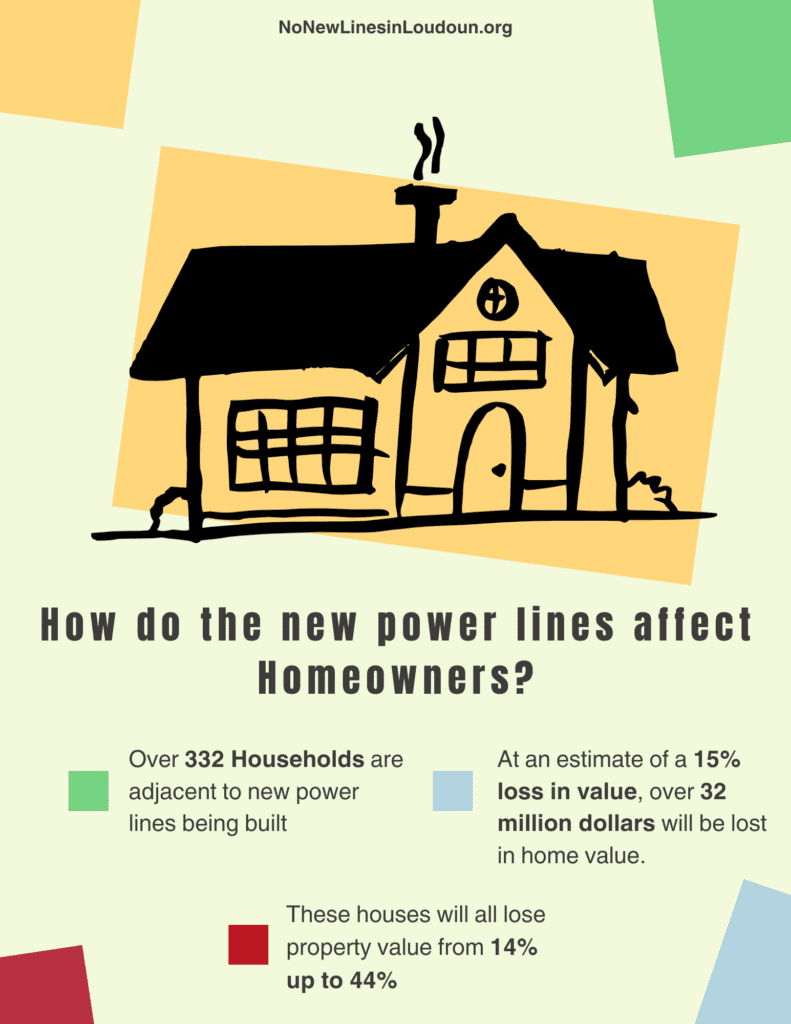
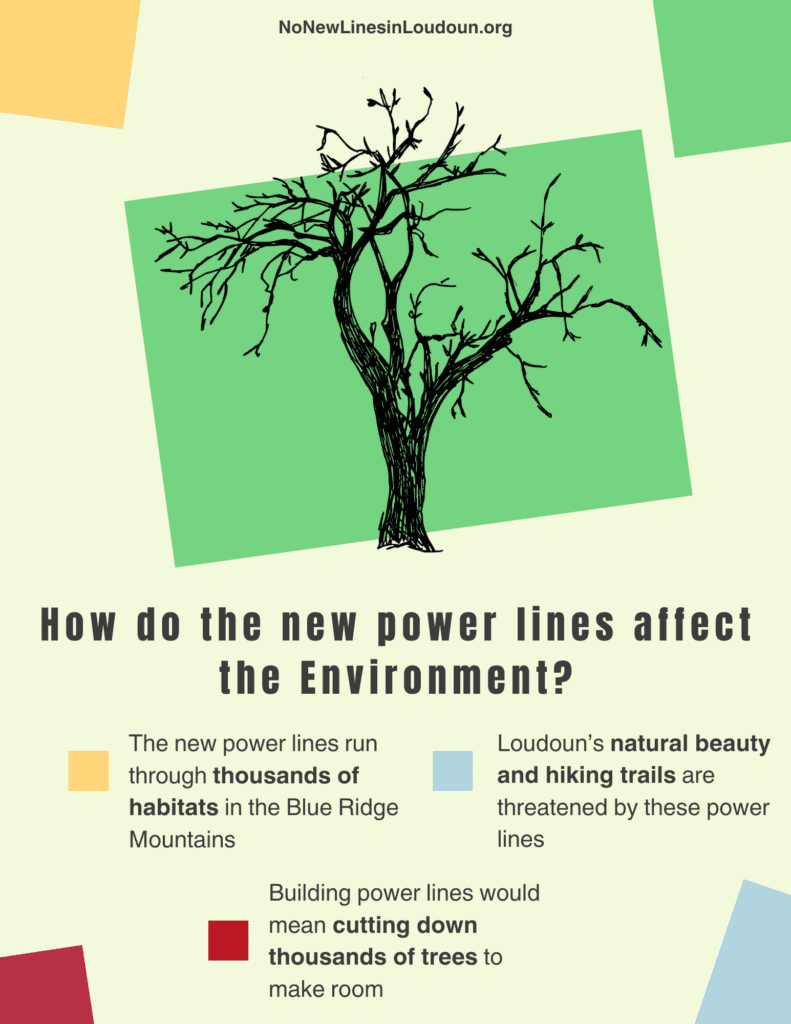
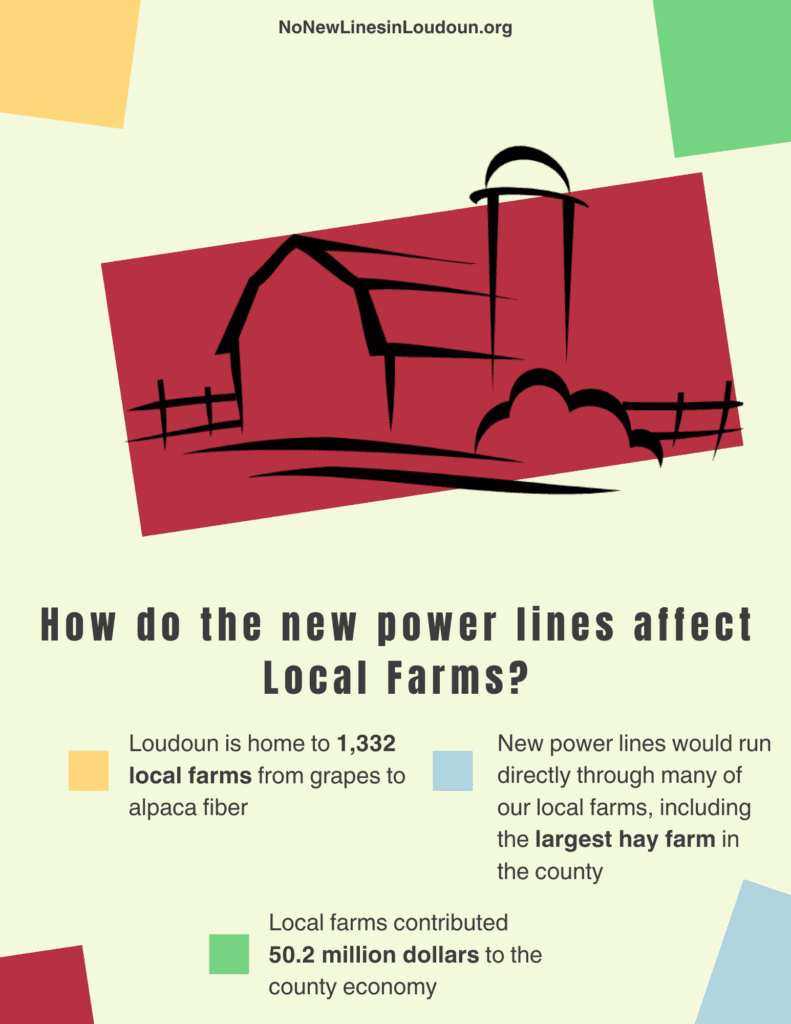
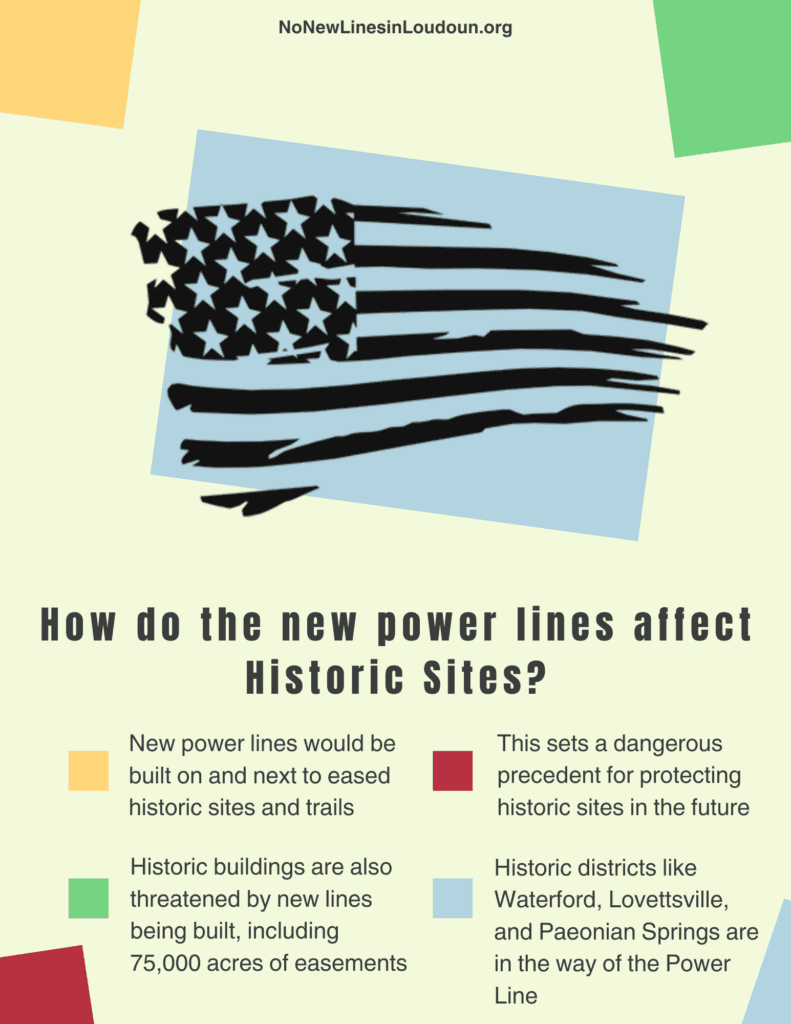
For more information about the potential adverse impact, please visit this webpage set up by the Piedmont Environmental Council. You can also check out our “Just the Facts” flyer linked here!

Map of Potential NIETC Geographic Area in the Mid-Atlantic Environmental Information (Department of Energy, 5.8.2024)

Where does the LTLA stand on this proposal? The LTLA disapproves of the decision to include Loudoun in the NIETC designation. While we understand the need for power in a growing area such as Loudoun and Northern Virginia, we do not believe it should come at the expense of the community, local businesses, agriculture, conservation, and preservation. Denoting any part of Loudoun a National Interest Electrical Transmission Corridor would meet the power needs of a few while endangering the future of an entire region.

What can I do? The Department of Energy are accepting and asking for public comments on the geographic boundaries of the moving forward designations considerations until June 24, 2024 at 5:00PM ET. Public comments can be sent to NIETC@hq.doe.gov.

Please send in comments about why Loudoun would be a bad candidate to be included in a National Interest Electrical Transmission Corridor. Public input is very important in this process to help determine national needs. Specifically, the DOE is asking the public to submit comments on:

  • Transmission needs within the potential NIETCs and associated consumer harm
  • The geographic boundaries of the potential NIETCs
  • Potential impacts on environmental, community, and other resources within the potential NIETCs

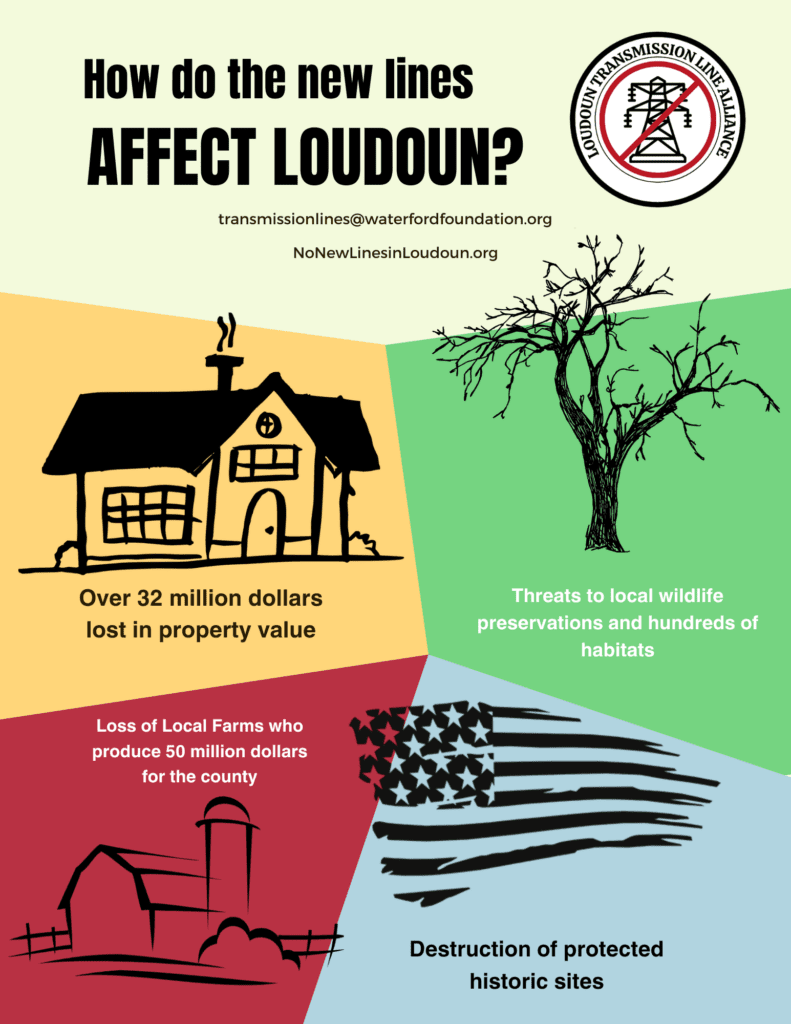
Check out the graphic below to help brainstorm what you should include!

For More Information:

  • Just the Facts NIETC Phase Two Flyer
  • Press Release on Phase Two Designations Release by the Department of Energy
  • More Information about the National Interest Electrical Transmission Corridor Designation Process
  • Link to Detailed Document from the Department of Energy (Mid-Atlantic region starts on page 18)

Filed Under: Uncategorized

Poison Hemlock Treatments

January 2, 2024 by Abigail Zurfluh

Project Completion Date: Ongoing

The presence of poison hemlock has been confirmed on approximately 11-acres of the Phillips Farm. This invasive plant is quite toxic, and while it has been present in the US since the 1800s, distribution of the plant has increased significantly in the past decade. Learn more about poison hemlock on the fact sheet at the bottom of this article.

The Phillips Farm Subcommittee (now Open Spaces Subcommittee) mapped the presence of plants that were visible in spring 2022 and locations confirmed by the Loudoun County Extension Service. These are the same locations for treatment in 2023 and 2024.

To manage this difficult invasive plant, the Waterford Foundation has retained NatureWorks (previously Sustainable Solutions) to initiate applications of an herbicide, approved by EPA for application in and around aquatic environments to the affected areas. Treatments in 2022 and 2023 made a significant impact in the distribution of the hemlock on the Farm; however, further treatment will be needed for the next several years to fully control the invasive poison hemlock.

While the Foundation has rarely used herbicides on the Farm, the approved management plan for the Phillips Farm permits the use of herbicides when absolutely necessary. Out of concern for public health and for the potential for poison hemlock to continue to spread, the Foundation elected to utilize herbicide as part of an integrated approach to invasives management that will also include mowing and cutting of flower heads before they seed and promoting the establishment of native plant species.

Filed Under: Uncategorized

  • « Go to Previous Page
  • Page 1
  • Page 2

Footer

Office Manager oldschool@waterfordfoundation.org
Phone: 540-882-3018 x 2

Privacy Policy


Join Us

Copyright © 2025 · Waterford Foundation · Log in