• Skip to main content
  • Skip to footer
  • Donate
  • Become a Member
  • Volunteer With Us!
  • Cart

Waterford Foundation

  • Education
    • K-12 Education Programs
    • The Waterford Fair
    • Waterford Craft School
    • Waterford HIstory
    • Remote Learning
    • The Quakers
    • African Americans in Waterford
  • Preservation
    • Historic Buildings
    • Mill Stabilization Project (2009-2023)
    • John Wesley Community Church Restoration
    • Dashboard Map of Western Loudoun Development, 1950-2020
    • Phillips Farm
    • Notes from the Preservation Desk
  • Shop
    • Books
    • Donate
    • Membership
    • Lantern Light Fund
  • Events
  • Weddings & Rentals
  • About
    • Contact Us
    • Meet the Staff
    • Meet the Board
    • Visit Waterford
    • Support
    • Join Us
  • News
  • Privacy Policy

Uncategorized

Call to Action: Oppose Transmission Lines Through the Waterford National Historic Landmark

December 1, 2023 by Stephanie Thompson

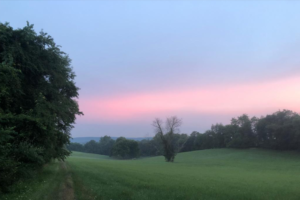
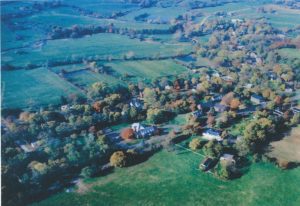
PJM, a regional transmission organization, has accepted a proposal for new power transmission lines that would go through Western Loudoun and directly through the Waterford National Historic Landmark to support the needs of the data center industry. The proposed 500KV lines go directly through conserved land and land under easement with the Virginia Outdoors Foundation.  These transmission lines pose a major threat to the integrity of the Landmark and the region we sit in. Our Landmark status is intrinsically linked with the unspoiled viewshed surrounding our historic village. Not only that, but every resident and business who calls Waterford home would be impacted by the construction of these power transmission lines. The Waterford Foundation stands opposed to such violation of our conservation values, and will work to oppose any impact to the integrity of Waterford’s Landmark status. 

Why is this important? Western Loudoun has remained relatively untouched by the massive growth of the data center industry in the past years. Instead, it remains a haven for farmland, open spaces, conservation, and preservation. Amongst the picturesque hills sit wonderful and profitable businesses and organizations that rely on the surrounding. It is also an area where history and past of Loudoun County can be found woven into the hustle and bustle of 21st century life. The best example of this can be found in the National Historic Landmark of Waterford. Building transmission lines through this region would impact the daily lives of residents in an unprecedented manner; damage the livelihoods of farms, businesses, and organizations that are in its path; and damage the integrity of the Waterford National Historic Landmark. This is similar to a proposal to put transmission lines through Gettysburg National Battlefield or Mount Vernon. 

We need your support to fight this threat. One thing that the Foundation has learned is the power of the Loudoun County community banding together for a common cause. Please see below for ways you can help us oppose this threat.

Stay in touch:

The Waterford Foundation is maintaining an email list for those who would like to stay informed about this issue. If you would like to be included, please email Historic Preservation Director Abigail Zurfluh here, or fill out the form at the bottom of this page.

How you can help: 

Share your concerns with decision makers:

National Interest Electric Transmission Corridor (NIETC):

  • Changes in the designation of the National Interest Electric Transmission Corridor could pose a challenge for opposing proposed transmission lines. If it is determined by the Department of Energy that Loudoun County is a NIETC, the Federal Energy Regulatory Commission could issue permits for transmission line construction even if state authorities deny applications.
  • The Department of Energy is currently accepting public input regarding NIETC designations for Phase One. In Phase Two, a preliminary list of areas being considered will be released and public comments on that list will open. In Phase Three, the DOE will develop geographic boundaries, more public comments, and go over Needs Study. Finally, in Phase Four, the DOE will release any necessary environmental documentations before final NIETC designations.
  • The Department of Energy is currently accepting public comments for phase one until February 2nd. Public comments can be emailed to NIETC@hq.doe.gov

Virginia State Corporation Commission:

  • In Virginia, the State Corporation Commission will be making the decision on the actual chosen route when application is submitted by NextEra. Watch this space for instructions on how to voice your opposition to this project to the Virginia State Corporation Commission.

Elected Officials:

  • Watch this space for ways to share information with elected representatives about transmission lines.
  • For more information about bills in the General Assembly in 2024 surrounding this issue, check out this flyer made by our collogues at the Piedmont Environmental Council

Spread the word about this issue:

  • Share social media posts from the Waterford Foundation, Piedmont Environmental County, Loudoun Wildlife Conservancy and other organizations to strengthen local opposition.
  • Tell friends, family and neighbors about this issue to broaden our base of support

Show your support by signing our online petition:

  • Sign this online petition to show your opposition to the proposed transmission lines.
  • Share the petition so that we are able to show large opposition in this region!

Donate to support the Waterford Foundation’s work to preserve the Waterford National Historic Landmark and oppose threats like this.

Donate Now!

Important Upcoming Dates and Timelines: 

February 2nd- Due Date to Submit Public Comments on Stage One of National Interest Electric Transmission Corridor to the DOE. Public comments can be submitted via email to NIETC@hq.doe.gov

February 7th at 6:30pm- Loudoun Nonprofit Leadership Summit is taking place at the Old School in Waterford. If you are a leader/staff member of a preservation, conservation, or other related organization/stakeholder in this issue, please RSVP using this link.

May/June: Possible completion of NextEra routing study

Summer 2024: Be on the look out for community open houses hosted by NextEra about the routes.

Late 2024: Possible aim for a proposal to SCC

Resources to Learn More:

Background Information: Our colleagues at Piedmont Environmental Council have been monitoring PJM’s transmission line proposals for some time. Visit their page to view a map of the proposed path and learn more about the issue. Linked here is a video made by our collogues at the Piedmont Environmental Council providing important background to this issue. Running time is roughly eight minutes.

NextEra Information: Read more about the Mid-Atlantic Resiliency link from NextEra at their website here. Specific questions, comments, or concerns can be sent to the NextEra team using the email box on the webpage. Currently, NextEra is working on the routing study through a third party.

Loudoun County Government Role: Read more about the role of the Loudoun County government in this civic alert.

National Interest Electric Transmission Corridor: Read more about the designation process here.

In the News:

  • Western Loudoun farmers say proposed power lines could put them out of business, Loudoun Times Mirror, 1/31/2024
  • Newly appointed SCC judge will recuse herself from western Loudoun transmission line case, Loudoun Times Mirror, 1/24/2024
  • General Assembly Appoints NextEra Attorney to SCC Seat, Loudoun Now, 1/24/2024
  • Concern Grows Over Data Centers, Power Lines in Loudoun, Loudoun Now, 1/23/2024
  • Department of Energy Changes Could Pose More Challenges for Power Line Opposition, Loudoun Now, 1/16/2024
  • Data Center Campus Plan Hit with Community Power Concerns, Loudoun Now, 1/11/2024
  • FERC Commissioner urges reform of federal transmission planning and financial incentives, Blue Ridge Leader and Loudoun Today, 1/3/2024
  • Company to build transmission lines in Loudoun has history of legal problems, Blue Ridge Leader and Loudoun Today, 1/3/2024
  • SCC Poised to Make Decisions on Greenway Tolls, Western Loudoun Power Lines in 2024, Loudoun Now, 1/2/2024

Opposition Letters:

  • See Waterford Foundation President Susan Manch’s letter to PJM here.
  • Waterford Citizens’ Association letter citing alternative routes.
  • Read the opposition letter from the National Park Service here.
  • Opposition Letter from the Maryland Office of People’s Counsel.
  • Opposition Letter from the Virginia Outdoors Foundation.
  • Opposition Letter from the Loudoun HRDC

Other letters:

  • November 28, 2023 letter from the Organization of PJM States (OPSI) to the PJM Board.
  • December 8, 2023 letter from NextEra Energy to PJM regarding PJM staff recommendation of the acceptance of NextEra’s MidAtlantic Resiliency Link (MARL) project and citing plans to engage with local stakeholders beginning in January 2024.
  • December 18, 2023 response letter from PJM about the proposed transmission lines to interested stakeholders.

Other Resources:

  • Executive Summary of Key Points on the NextEra Transmission Line
  • Presentation slides from the 12/7/23 Waterford Citizens’ Association meeting.
  • Meeting summary from Hamilton and Waterford Meeting provided by Board President Susan Manch.
  • Comments provided by Tom Donahue for the Federal-State Task Force on Electrical Transmission.
  • Fact Sheet provided by Tom Donahue about the NextEra Power Line
  • Tips in Writing Letters Sheet linked here

Past Milestones

December 5th, 2023: PJM Transmission Expansion Advisory Committee (TEAC) meets to review proposals for the Regional Transmission Expansion Plan (RTEP). See public comments associated with this meeting here. Thank you to those who sent letters of opposition!

December 11th, 2023: PJM Board approves the slate of proposed projects, including the proposal from NextEra to construct a new greenfield transmission line through the Waterford National Landmark. See details in the PJM whitepaper, here.

December 13th, 2023: Loudoun County Board of Supervisors met to adopt a new zoning ordinance in Loudoun County that includes new approval processes for data centers in Loudoun County.

December 17th, 2023: People gathered together in the Old School to celebrate the 20th Anniversary of Conservation on Phillips Farm. It was a fun evening full of celebration and reminiscing. Thank you to everyone who was able to attend!

Past News Articles:

  • ‘To preserve the view, you have to own it’: Waterford Foundation Marks 20 Years Since Phillips Farm Purchase, Loudoun Times Mirror, 12/27/2023
  • After Zoning Ordinance Adoption the Work Continues, Loudoun Now, 12/21/2023
  • Waterford Commemorates 20 Years of Phillips Farm Conservation, Loudoun Now, 12/18/23
  • PJM advances proposal for transmission line in Western Loudoun, Loudoun Times Mirror, 12/13/23
  • PJM Ignores Stakeholders and Approves Transmission Lines to be Built, Blue Ridge Leader and Loudoun Today, 12/12/23
  • PJM Approves Proposal for 500 kV Power Lines Across Western Loudoun, Loudoun Now, 12/12/23
  • PJM Board of Managers Approves Critical Grid Upgrades, PJM Inside Lines, 12/11/2023
  • PJM recommends transmission line be built despite overwhelming public concern, Blue Ridge Leader and Loudoun Today, 12/7/2023
  • Power Line Objections Move to PJM, Loudoun Now, 12/5/2023

Filed Under: News, Preservation, Uncategorized

Holiday Recollections in Early 20th Century Waterford

December 1, 2023 by Stephanie Thompson

In the early 1900s, Christmas was an occasion when Waterford residents of different congregations came together to celebrate. According to recollections by late Waterford resident John Divine (1911-1996) in When Waterford and I Were Young:

“All three churches [The Presbyterian, Methodist, and Baptist, still standing on High Street in Waterford] shared in a Wednesday evening prayer meeting and all three had Sunday School picnics. The reward for going to Sunday School was two-fold: the picnic, when ice cream flowed abundantly, and the Christmas program, when we got an orange and a small box of chocolate drops.

The Christmas program also gave all of us amateur actors a chance to perform. Any similarity between our Three Wise Men and the real Magi was purely coincidental. Only the parents enjoyed that group of squirmy little boys singing Away In A Manger off key.” 

Many holiday recollections center around special foods and feasts among family and friends. Divine remembers the special foods that came to Waterford during the holidays in the early 1900s, sold out of the meat shop operated by E. L. James and later his son Minor out of the Old Insurance office on Second Street:

“At Thanksgiving and Christmas, the meat shop handled oysters. The only time I ever ate oysters was at those two dates: at $6.00 per gallon, they were a real delicacy. Orders were placed about ten days in advance and they were received a day or two before the holiday. The gallon cans, packed in ice, were shipped up on the railroad to Paeonian Springs. Later, when Minor James got a Model T truck, he would drive to the wharf in Washington, D.C. to get them.”


When Waterford and I Were Young is available for purchase online or in person at our offices in the Old School.

Filed Under: history, News, Uncategorized, Waterford History

Phillips Farm Online Guide

June 26, 2023 by Julie Goforth

  • CATOCTIN_CREEK
    1. South Fork of Catoctin Creek

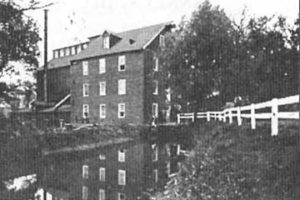
    The power potential of the South Fork of Catoctin Creek helped draw skilled Pennsylvania Quakers in the mid 1700s to settle what is now Waterford. For 200 years the stream powered grain, saw and woolen mills, including the three story brick mill still standing. But the creek was also an obstacle to transportation and dangerous to ford during high water. The current bridge is just the latest of many. A covered wooden bridge spanned the creek from the 1830s until it was swept away in the 1889 storm that caused the Johnstown Flood disaster in Pennsylvania.

  • 2. Tannery Branch

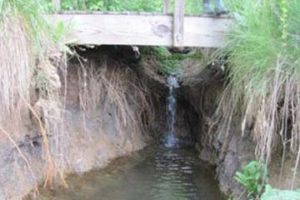
    As you look upstream, Tannery Branch flows from springs a few hundred yards to the left, beyond Bond Street. From the late 18th to late 19th centuries it supplied water to a tannery at Main and Liggett Streets that processed hides into leather for cobblers, saddlers, and harness makers. Visible in the eroded banks here are gray seams of clay. Such deposits were dug, shaped and baked into the bricks that built much of Waterford. In the mid 20th century, clay drain pipe was installed under much of the nearby floodplain to make it suitable for farming. Water still pours from pipes visible along the eroded creek bank. The modern plastic pipe you see drains water from cellars along lower Main Street.

  • 3. Monarch Butterfly

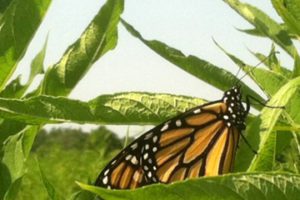
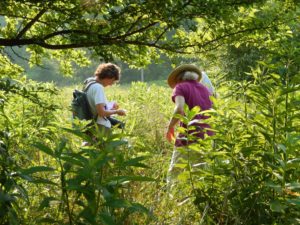
    In the summer, common milkweed is in bloom here. Female monarch butterflies will lay their eggs only on milkweed, the sole host plant for monarch caterpillars. In the fall, the adult monarchs migrate 1,900 miles from here to central Mexico, a feat of stamina and navigation unmatched in the insect world. The plentiful milkweed on the Phillips Farm has earned it formal recognition as a “Monarch Way Station” by the Monarch Watch Organization.

  • 4. Various Habitats

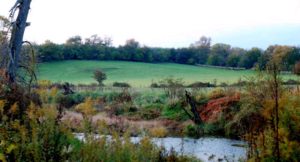
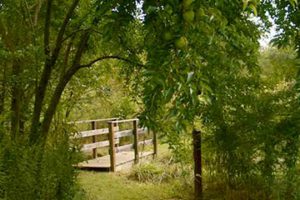
    Phillips Farm offers a wide variety of habitats for wildlife — floodplain, stream, riparian buffer, deciduous woodland, hedgerows, and meadows. Here on the floodplain, you find such water-loving plant species as the graceful river birches, willows, and the majestic sycamores. You can find over 30 species of birds, including belted kingfishers, red-winged blackbirds and great blue herons.

  • 5. Riparian Buffers

    Riparian buffers are vegetated areas along waterways that help protect the water from pollution, stabilize stream banks, and provide streamside habitat for wildlife. Water loving shrubs (such as gray and silky dogwood, buttonbush and elderberry) have recently been planted here by the Loudoun Wildlife Conservancy to restore the riparian buffer.

  • 6. The Civil War

    During the Civil War, Phillips Farm suffered. Quaker Thomas Phillips was a pacifist, but troops from both sides helped themselves to his horses and crops. A sister lamented, “. . . it is really too bad for him to be treated so.” In October 1862, after the Battle of Antietam, a Federal infantry division paused at Waterford for several days on its way south. Soldiers camped here and on nearby farms. In July 1863, after Gettysburg, thousands of Union troops poured into Waterford; many set up camps along Catoctin Creek. Quakers offered “grass for thy horses, a fine spring for thy men and beasts, and ricks of cordwood for thy cooking.” But the following year Federal troops burned the Phillips barn.

  • 7. Eroding Stream Banks

    The eroding stream banks here offer nesting habitat for northern rough-winged swallows. Please be aware that the banks are very unstable. This accelerated erosion, as well as area land use practices, impact the quality of Catoctin Creek. Volunteers assess the quality of the creek and the surrounding environment three times a year and provide the data to appropriate state agencies. Bottom-dwelling aquatic insects such as mayfly, caddisfly and stonefly larvae are biological indicators of good water quality.

  • 8. Bluebird Trail

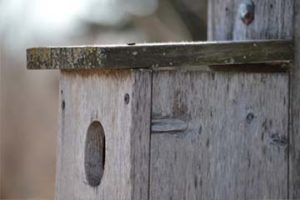
    Eastern bluebirds dwell on the Phillips Farm year round. Their numbers have declined nationwide due to habitat loss and competition from invasive bird species. If you follow the tree line along the millrace, from the mill to this point, you can see a “bluebird trail” of seven nesting boxes. The stovepipe below each box blocks climbing predators. Volunteers monitor the boxes from March through August. Ten baby bluebirds fledged from these boxes in 2008, the trail’s first year. With the help of man-made trails such as these, bluebird populations are recovering.
  • 9. Ball’s Run

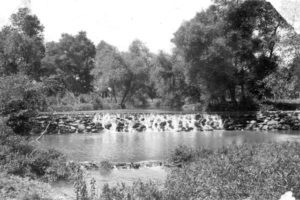
    Ball’s Run, which here joins Catoctin Creek, once powered two Waterford mills a few hundred yards up-stream. But it presented a problem for owners of the mill at the foot of Main Street, who had dug a channel or millrace to carry water from a dam farther upstream on Catoctin Creek and needed to get that water past the Run, which flowed at a lower level. In the early years they probably built a wooden trough or aqueduct to carry the water over Ball’s Run. By the early 1900s, though, they had dammed the Run to bring it up to the level of the millrace. Then, by way of sluice gates, they could divert its water into the race to augment the flow to the mill in dry seasons. The over-flow was known as “The Chute,” and below the dam was a favorite swimming hole until time and repeated floods took their toll. Today only a stone buttress or two and scattered chunks of concrete mark the site of the dam. A short path to the left takes you to the spot.

  • 10. Family Farm

    For 150 years this property flourished as a diversified family farm. In 1850 it produced wheat, corn, oats, beef, milk, butter, wool, hay, horses, pork, poultry, eggs, fruit and honey, as well as potatoes and other garden crops. The small white barn you see on the hillside shelters the machinery used today for haying the surrounding fields.

  • 11. Invasive Plants

    Invasive plants such as multiflora rose, tree of heaven, autumn olive, Japanese barberry, and Canada thistle have been encroaching into the Phillips Farm environment for some time and are overtaking habitat of native flora. The tallest tree in front of you is a tree of heaven. The Management Plan for the Phillips Farm includes efforts to control the growth of invasive species, particularly in this area.

  • 12. Millrace

    Here a small wet weather stream intersects the old hand-dug millrace, visible from the path at the left. Hikers can follow the dry bed of the race back to Ball’s Run at the site of “The Chute.” This channel, some two-thirds of a mile long, in all, was dug by hand, probably around 1760. Etched in the cement cap of the low stone containment wall here, is the date October 28, 1928, the initials of the last miller, William S. Smoot, and those of his 17-year-old helper, John E. Divine, who later helped preserve much of Waterford’s history.

  • 13. Green Ash

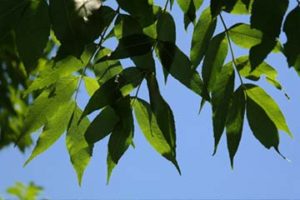
    The large tree here is a green ash, an aging survivor of the 19th century. It and other ashes on the farm face an uncertain future with the recent arrival in the Washington area of the emerald ash borer, a destructive beetle native to Asia.

  • 14. White Oak

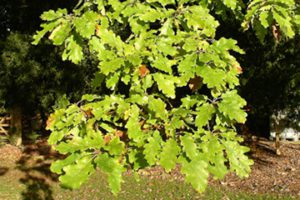
    Its long, low branches indicate that it did not grow in a forest. Local villagers have nicknamed it “Old John” in memory of John Hough (1720-1797), a Waterford Quaker who owned thousands of acres and a number of mills in Loudoun. White oaks were favored by early settlers for building, baskets, barrels, flooring, furni-ture, and many other uses. Native Americans made flour from the acorns.

  • 15. The Mill Dam

    Consider how laborers managed to collect, move, and place such large boulders with no more than human and animal muscle. The dam once stood a few feet higher—enough to raise the level of the impoundment more than 12 feet above the outflow from the wheel at the mill. In 1908 at the near end of the dam, miller William M. Fling signed his name in wet concrete he used to cap and reinforce the dam.A bit beyond the dam, in 1814, African American Benjamin Kins and wife Letitia bought two acres spanning the creek and built a house. They were among the first black families in the area to own their own land. Benjamin had been born a slave in Calvert County, Maryland, about 1770, but owner John Talbott freed him when the Quakers abol-ished the use of slaves in 1776. Talbott Farm remains today just southeast of the village.

Filed Under: Uncategorized

The 1875 Waterford Town Map: Taking a Tour of Women’s Businesses

March 2, 2023 by Elizabeth McFadden

The 1875 Waterford Town Map: Taking a Tour of Women’s Businesses

By Debbie Robison

Hanging on a wall at the Waterford Foundation offices is an artist’s interpretation of an old map of Waterford. The original map, upon which this is based, has been around for 148 years. Now at the Library of Virginia, the map was preserved all these years by the Mutual Fire Insurance Company of Loudoun County (now Loudoun Mutual Insurance Company) at their Waterford offices.

Surveyor James Oden created the map in 1875 for the Waterford Town Council when the town was incorporated after the Civil War. The map was required by the Virginia General Assembly to distinctly show the boundaries and the public streets and alleys with their width.[1]

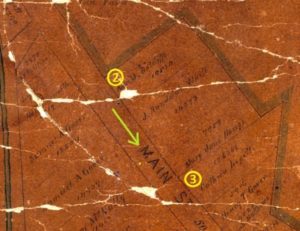
The map offers a fascinating snapshot in time. Each lot, carefully laid out along Waterford’s streets, is identified with its size and owner’s name. Yet the most interesting information can be found on the sides of the map. Here you will see hand-drawn business cards advertising a variety of businesses where Victorian-era men and women could purchase goods and services. Many of the cards publicize businesses operated by women, which gives a rare opportunity to explore where in town the female proprietors conducted their trade.

So, in honor of Women’s History Month, lets follow the map to their shops.

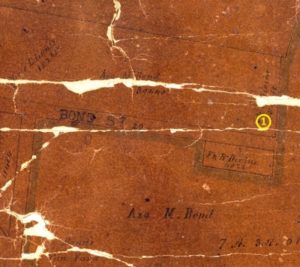
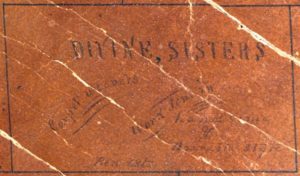
Stop 1: The Divine Sisters, Carpet Weavers

We begin on Bond Street where spinster sisters Frances and Rachel Divine manufactured and sold carpets.

DIVINE SISTERS, Carpet Weavers, Work done in handsome & Durable Style, Bond St.

The carpets were woven on a loom, possibly out of carpet wool that could be dyed a variety of colors. Frances had raised twins, Joseph and Mary – both 33 years old at the time the map was created, as an unwed mother.[2] The carpet weaving business, which was conducted in their home, provided a much-needed income for the sisters.

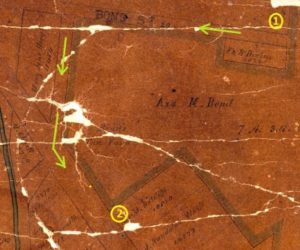
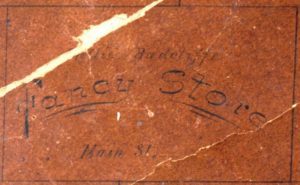
Stop 2: Sallie Radcliffe’s Fancy Store

Heading down past the tan yard to Main Street, it isn’t long before you arrive at Sallie Radcliffe’s Fancy Store where a wide variety of goods could be purchased.

Sallie Radcliffe, Fancy Store, Main St.

A Fancy Store carried fancy articles like beaded purses, dress trimmings, hosiery, corsets, laces, sun umbrellas, specialty papers for making paper flowers, hoop skirts, collars, ribbons, and occasionally writing desks, assorted China articles, and toys.[3]

Sallie, a single Quaker woman, lived with her widowed mother, Ann Ratcliffe, in the house where she operated the store. In addition to operating the store, Sallie was also a milliner.[4]

Stop 3: Catherine Leggett’s Confectionary Store

After shopping at Radcliffe’s, a visitor might walk a few doors up Main Street to stop in at the widow Catherine Leggett’s confectionary store for a sweet. Fruits, candies, and nuts were typically sold in confectionary shops.

Catharine Leggett, Confectionary, Candy, Cherries, Figs, Sweetmeats of all kinds, Main St.

Catherine Leggett (nee Rinker), who went by Kitty, purchased the house in 1860 from William Russell, who acted as guardian of the children she had with her first husband, Joseph Wright.[5] Her second husband, cabinet maker Samuel Leggett, died earlier that year.

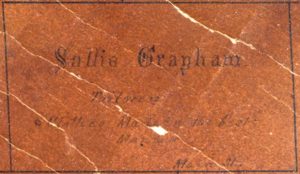
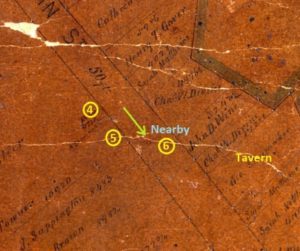
Stop 4: Amelia Rinker, Tailoress, and Stop 5: Sallie Graham, Tailoress

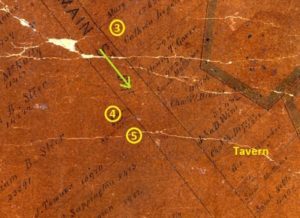
If a small town could have a garment district, then it would have been found on Waterford’s Main Street near The Loudoun Hotel (40170 Main Street, formerly Talbott’s Tavern) where a cluster of seamstresses and tailoresses offered their services.

After leaving Kitty Leggett’s confectionary store, you soon arrive two businesses for tailoresses, one run by Kitty’s sister, Amelia Rinker, and the other by Kitty’s daughter, Sallie Graham. Amelia Rinker [Stop 4] lived to the west of Amelia Sappington, a seamstress, and Sallie Graham [Stop 5] lived on the other side.[6]

Amelia Rinker, Tailoress, Main St

Sallie Graham, Tailoress


A tailoress sewed custom fitted garments, typically for men. In addition to sewing jackets, vests, and trousers, a tailoress may have also sewn shirts with detachable collars and neckties.
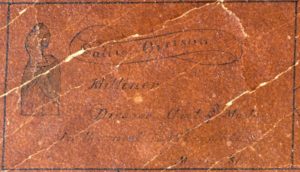
Stop 6: Sallie Orrison, Milliner and Dressmaker

The exact location of the shop that Sallie Orrison rented on Main Street is unknown, but it might have been near the tavern.[7]

Her card advertised her as a milliner (a trade that typically fashioned and sold hats and caps for women and girls), yet she promotes dressmaking:  Dresses Cut & Made In the most fashionable style.

Sallie Orrison, Milliner, Dresses Cut & Made in the most fashionable style, Main St.

Before her marriage to Townsend Orrison in 1872, Sallie was living with her family and working as a milliner.[8] In 1875, Townsend Orrison, who was financially embarrassed and unable to pay his debts, declared his intention of taking the benefit of the Homestead Act, passed by the Virginia General Assembly in 1870 to protect a debtors personal property.  Among the personal property he listed in his homestead exemption was all the stock of goods such as ribbons bonnets &c & other articles used in the millenary business now on hand in the store carried on by my wife in the Town of Waterford valued at $200.[9]

Stop 7: Ella Mount, Private School Principal

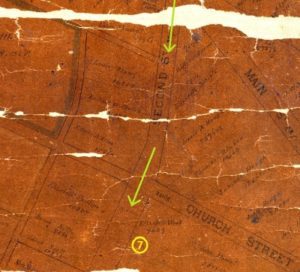
Possible Location of Ella Mount’s Private School

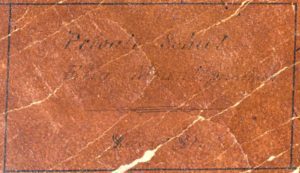
Continuing down Main Street and then up Second Street takes you to the area where Ella Mount was the principal of a private school. The exact location of her school is unknown.

Private School, Ella Mount, principal – Second St.

Ella Mount was the daughter of William T. Mount and granddaughter of John Mount, both Waterford furniture and chair makers. In 1870 John and William Mount were in a rented house on Main Street.[10] Ella’s residence is unknown. John and William Mount had a 1 ½-story cabinet-maker’s shop on Second Street.[11] It’s possible, though not confirmed, that Ella held her private school in the upper story of the shop.

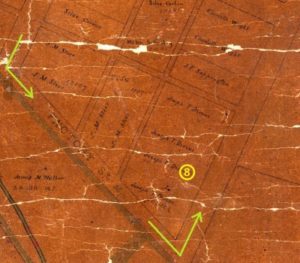
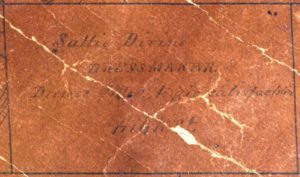
Stop 8: Sallie Divine, Dressmaker

On the far side of the village was the only other garment maker whose business card is on the map. Sallie Divine advertised her dressmaking services on High Street.

Sallie Divine, Dressmaker, Dresses fitted to give satisfaction, High St.

Sallie wed Joseph T Divine, son of Frances Divine the carpet weaver, in 1870.[12] They purchased the house on Hight Street the year the map was created.[13]

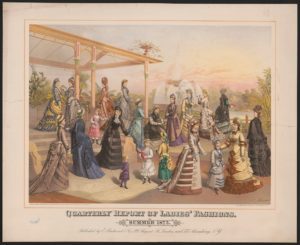
Women’s dress fashions in 1875, the year the map was drawn, sported rows of ruffles, drapes and/or pleats. Sallie may have kept up-to-date on the current styles of dress by subscribing to a dressmaking periodical, such as the popular Godey’s Ladies Book, published in Philadelphia, of Demorest’s Illustrated Monthly, a New York publication. Demorest also offered seasonal dressmaking instruction guides with a catalog of patterns available for purchase. Sallie may have also sewn undergarments and lingerie.

The following lithograph shows the latest fashion in 1875, the year the map was created.


[1] Acts and Joint Resolutions Passed by the General Assembly of the State of Virginia, at the Session of 1874-5. Richmond, R. F. Walker, Supt Public Printing, 1875, as viewed on Google books at https://www.google.com/books/edition/Acts_and_Joint_Resolutions_Passed_by_the/uhQSAAAAYAAJ?hl=en&gbpv=1&dq=1875+waterford+incorporation+virginia+general+assembly&pg=PA141&printsec=frontcover

[2] Joseph Tuinto Divine Death Certificate, Virginia Death Records, 1912-2014, as viewed on Ancestry.com; Mary Alvernon Trunnell Death Certificate, Washington, D.C., U.S., Select Birth and Christenings, 1830-1955, as viewed on Ancestry.com

[3] C. C. Berry, “Dealer in Fancy Goods & Notions of Every Description,” Alexandria Gazette, 29 May 1875, p.1; H. Baader, “Selling Out at Below Cost,” Alexandria Gazette, 14 May 1870, p. 1;

[4] 1870 Federal Census for Sallie Radcliffe, as viewed on Ancestry.com; U.S. Quaker Meeting Records, 1681-1935, Fairfax Monthly Meeting, Minutes 1843-1932, image 30 of 36, as viewed on Ancestry.com

[5] Deed from William Russell to Catherine Leggett, Loudoun County Deed Book 5T:255, August 10, 1860; Joseph H Wright Probate Account, Loudoun County Will Book 2I:415.

[6] Amelia Sappington v. Charles Sappington, Chancery Case 1872-068, image 30 of 75, Library of Virginia.

[7] In 1880 federal census Sallie Orrison is listed immediately before C. W. Divine

[8] 1870 Federal Census, Loudoun, Northern Division, Taylorstown Post Office, as viewed on Ancestry.com

[9] Townsend Orrison Homestead Exemption, Loudoun County Deed Book 6H:223, December 1, 1875.

[10] 1870 Federal Census

[11] John Mount’s Mutual Fire Insurance Company of Loudoun County application #570, January 25, 1868, Mutual Fire Insurance Company of Loudoun County Records, 1849-1954. Accession 41374. Business records collection, The Library of Virginia, Richmond, Virginia.

[12] 1870 Federal Census for Joseph and Sallie Divine

[13] Loudoun County Deed Book 6G:469, February 1, 1875.

Filed Under: history, Home-page, News, Uncategorized

Article on Waterford in the Chesapeake Bay Journal

April 24, 2018 by Waterford Foundation

[contentcards url=”https://www.bayjournal.com/article/the_past_is_alive_in_former_mill_town_of_waterford_va” target=”_blank”]

Filed Under: Uncategorized

1FIX Lantern Light Fund

September 8, 2017 by Waterford Foundation


Lloyd Curtis, former resident
of Waterford, VA.

Contribute to the Lantern Light Fund and shine a light on Waterford’s African American Heritage. Waterford’s unique history must be preserved and shared. Some facts about African-Americans in Waterford and our efforts to preserve this history…

  • Prior to the Civil War Waterford was the home of the largest free black population in Loudoun County.
  • African-Americans made up a quarter of Waterford’s households for more than 150 years.
  • Before emancipation, free and enslaved blacks lived side by side
  • Segregation existed in schools, churches, and the cemetery, while homes and business were integrated.
  • Today, the village retains several architectural treasures related to the African-American community, including a one-room school and the John Wesley Community Church.

The Lantern Light Fund honors the men and women of Waterford’s African American community, who worked by lantern light to build the John Wesley Community Church. The Fund will preserve and share the sites, stories, and artifacts of Waterford’s African American community, including:

  • Restoration & maintenance of the John Wesley Community Church
  • Restoration & maintenance of the Second Street School.
  • Operating the Second Street School Living History Program, (offered at no cost to regional elementary schools since 1984).
  • Preservation of artifacts from the African American community
  • Educational outreach including exhibits, publications, and programs.

Donations will benefit the Waterford Foundation’s Lantern Light Fund to preserve and share our African American heritage sites, stories, and artifacts.


To learn more, donate, and join our advisory council,
contact Stephanie Thompson, Executive Director.

540-882-3018 x 5
sthompson@waterfordfoundation.org

www.waterfordfoundation.org
P.O. Box 142, Waterford, VA. 20197


Filed Under: Uncategorized

  • « Go to Previous Page
  • Page 1
  • Page 2
  • Page 3

Footer

Office Manager oldschool@waterfordfoundation.org
Phone: 540-882-3018 x 2

Privacy Policy


Join Us

Copyright © 2026 · Waterford Foundation · Log in