• Skip to main content
  • Skip to footer
  • Donate
  • Become a Member
  • Volunteer With Us!
  • Cart

Waterford Foundation

  • Education
    • K-12 Education Programs
    • The Waterford Fair
    • Waterford Craft School
    • Waterford HIstory
    • Remote Learning
    • The Quakers
    • African Americans in Waterford
  • Preservation
    • Historic Buildings
    • Mill Stabilization Project (2009-2023)
    • John Wesley Community Church Restoration
    • Dashboard Map of Western Loudoun Development, 1950-2020
    • Phillips Farm
    • Notes from the Preservation Desk
  • Shop
    • Books
    • Donate
    • Membership
    • Lantern Light Fund
  • Events
  • Weddings & Rentals
  • About
    • Contact Us
    • Meet the Staff
    • Meet the Board
    • Visit Waterford
    • Support
    • Join Us
  • News
  • Privacy Policy

Elizabeth McFadden

A General History of Waterford, VA: Waterford’s Past Reflects the History of the Nation

April 7, 2023 by Elizabeth McFadden

Written by Debbie Robison; Edited by Larisa Epatko

—

The story of Waterford can be told hand-in-hand with the story of America. The impact of religious revivals, manufacturing innovations, slavery, economic depressions, and laws that governed free Black people all touched this village. The individual histories of each home, shop, barn, and outbuilding, as well as the people who lived here, are all part of a larger story. And that is, in part, what makes Waterford so special.

Establishing the village of Waterford
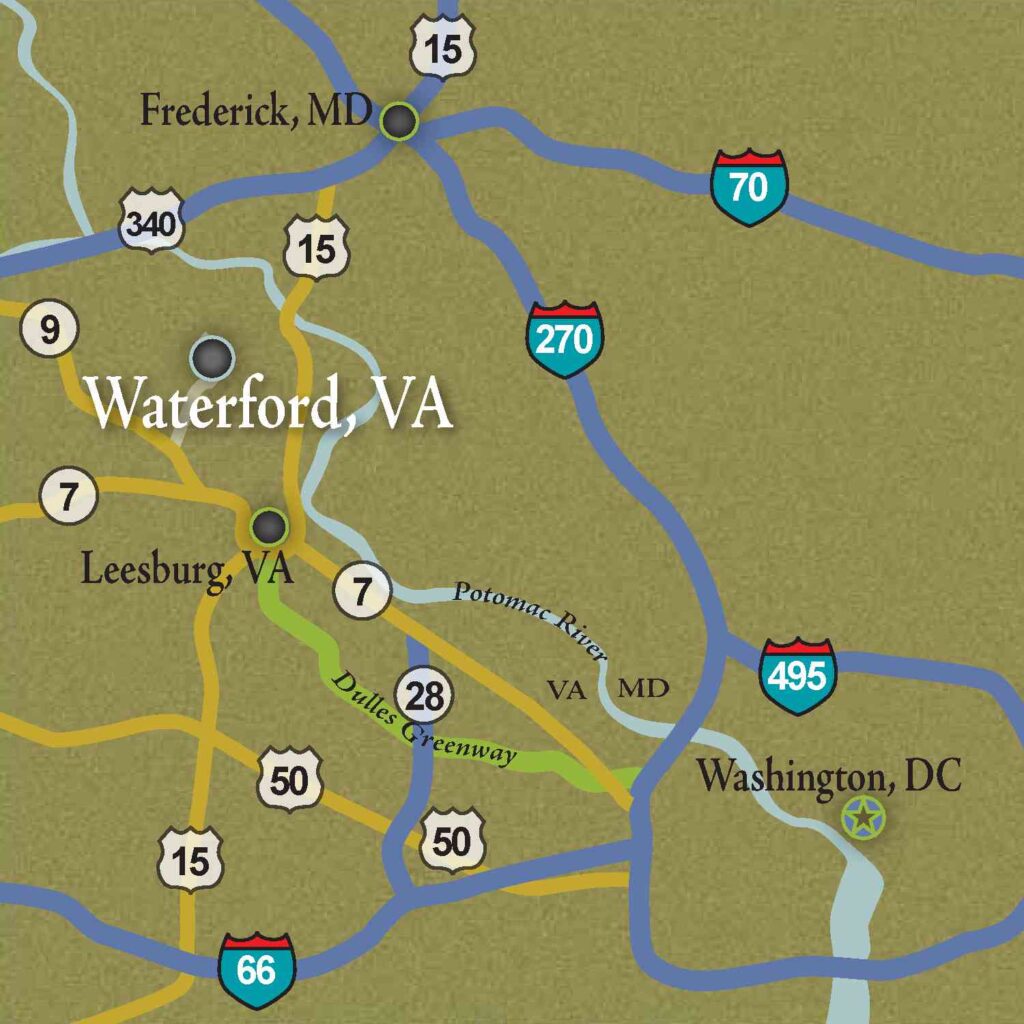
Map showing the modern ways to get to Waterford from Washington DC (WF Archives)

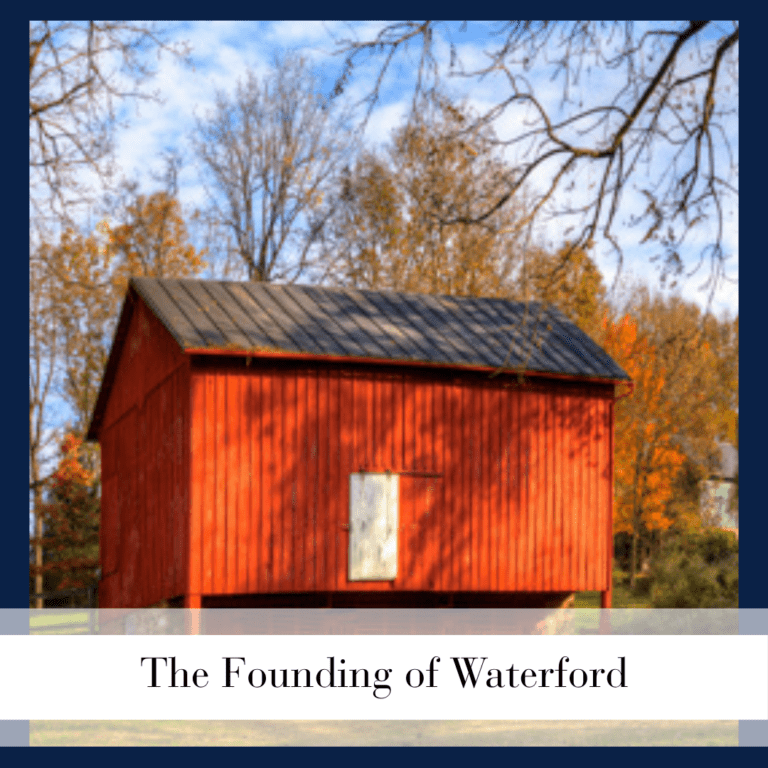
The village — located 47 miles northwest of Washington, D.C. — was founded ca. 1784 by Joseph Janney, a Quaker businessman formerly from Pennsylvania, who offered lots for sale and lease near a water-powered grist mill and sawmill. The land where the village was built was originally settled by Quakers, members of the Society of Friends, when John Mead purchased 703 acres in 1733. This was during the time of the Great Awakening, a religious revival in the 1730s and 1740s that led to an increase in religious conviction.

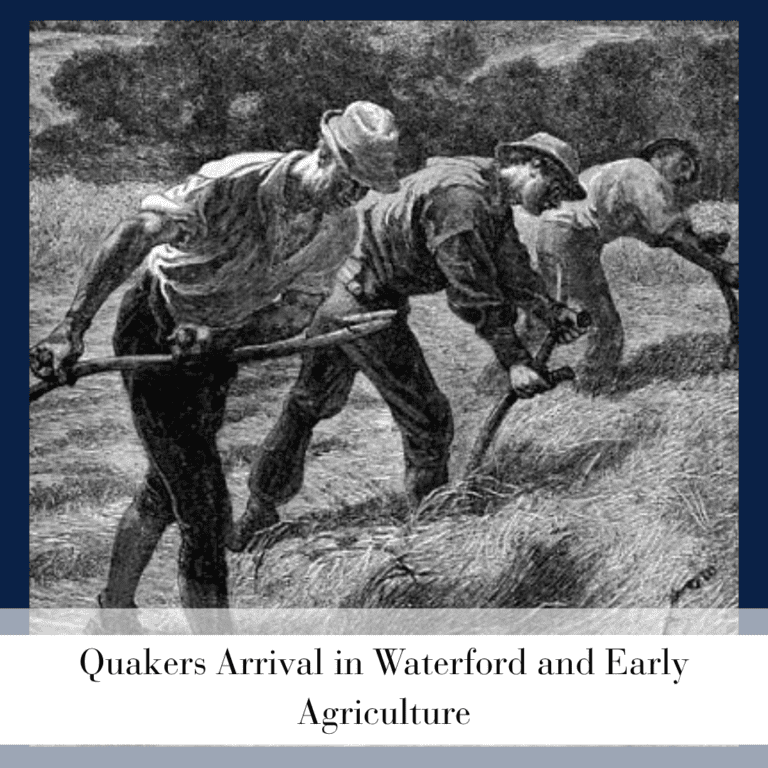
Other Quakers soon followed Mead and settled in the area where they found religious tolerance as well as fertile, well-watered soil. They farmed tobacco, raised families and established a Quaker meeting. During colonial rule, tobacco was shipped to Great Britain, which regulated and restricted trade. Once the flour trade opened to the British West Indies, grist mills were established along streams throughout the area, including the mill built by Mahlon Janney on Kittocton (now Catoctin) Creek ca. 1762.

Businesses start to take root

The village began with a dry goods store, saddlery, cabinet shop, tannery and blacksmith shop. The store did not prosper since farmers and millers, who were store patrons, struggled to find international buyers for their goods after the Revolutionary War. This was because, at the start of the new nation, America was only a confederation of states without a federal constitution to provide collective bargaining power for international trade agreements.

Despite this hurdle, the other businesses succeeded, with young apprentices providing much of the labor while learning valuable skills. In time, former apprentices and employees of these first manufacturing enterprises started their own businesses and purchased lots, along with others, in the expanding village.

Freeing the enslaved

The American Revolution heightened the ideals of religious liberty and freedom, which sparked the Virginia General Assembly to enact a law in 1782 allowing any person to emancipate his slaves. During this Second Great Awakening, a number of local Methodists, Presbyterians and Baptists freed their slaves, joining the Quakers who had disavowed slavery prior to the war.

Free Black people settled in the area, possibly attracted by job opportunities and a willingness of the Quaker population to assist them, establish store accounts and sell them lots. Some of the non-Quaker proprietors, particularly the tavern keepers, had enslaved Black people work in their establishments.

A Quaker commitment to education
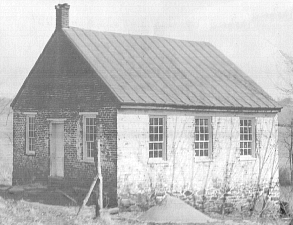
Fairfax Meeting Schoolhouse (WF Archives)

Pre-Civil War education in Waterford varied depending on if you were a White person, free Black person, or an enslaved person. Early on, some free Black children learned to read and write as part of their apprentice agreement. In 1819, Virginia outlawed allowing enslaved people to meet at schools to learn to read and write, and then made educating free Black people illegal in 1831 in response to increased abolitionism in the north.

The Quakers in town were devoted to education and had built a schoolhouse in 1805 on the meeting house grounds. In 1818, Virginia created a literary fund to pay for the education of poor students. The fund helped pay for teachers in Waterford as early as 1818 when William Adams of Waterford was teaching. In 1822, three Waterford residents were paid for teaching: Jacob Mendenhall, who operated an academy in Waterford, Robert Braden, Jr., and Ann Ball.

The village ebbs and flows
1800 Petition for Town Signatures

In 1801, the village officially became a town with the ability to lay off land into lots and streets. This enabled the town to expand beyond the existing Main Street, up what in the early days was called Federal Hill.

The town continued to grow and fill with tradesmen, tavern keepers and craftsmen who made furniture, hats, shoes, saddles and clothing. The building trade was so busy that a second water-powered sawmill was built off Balls Run to churn out even more lumber for the housing boom. Most of the new houses were constructed of brick, likely made at the brick manufactory that was established in a meadow by the mill race.

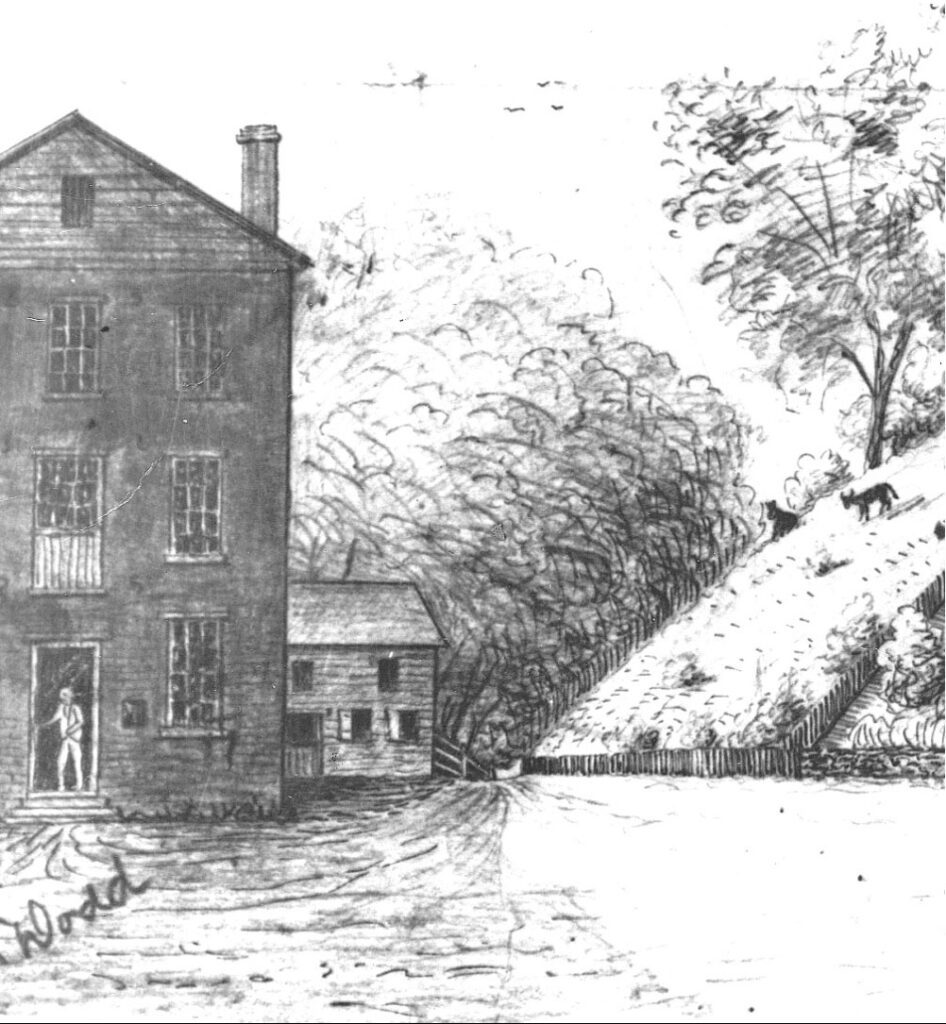
Sketch of the Waterford Mill by Dodd, c.1883 (WF Archives)

The pace of building slowed to a crawl after Thomas Jefferson enacted the Embargo of 1807 that prevented merchant ships from trading in foreign ports. This resulted in an economic depression and the financial ruin of the Waterford grist mill, which relied on foreign trade. Building in town resurged once the embargo was lifted in 1809.

Changes during the Industrial Revolution

Spurred by new innovations in America’s first Industrial Revolution, a woolen factory was established at the south end of town. This corner of Waterford would come to be a manufacturing hub where blacksmiths, carriage makers, wheelwrights and machinists worked at their anvils. Down the street, the nearby sawmill operation added machinery for a plaster mill and clover mill to foster increased local agricultural yields.

After the War of 1812, the town greatly expanded around new streets and alleys laid out in a grid pattern during America’s 1815-1819 economic speculative boom. To support the growth, a bank was established briefly in Waterford before the state required it to close.

Brick dwellings were constructed in the “New Addition,” the grist mill was replaced with a larger three-story brick mill, and a commodious three-story brick house with a lower-level store was built in the center of town – – right before everything came to a halt with the 1819 banking panic and years-long depression.

The proprietors of the Waterford Mill and the large stone tavern were forced to sell their businesses to meet their financial obligations. The long economic recovery, recession, and depression that followed stalled most growth in the town, though industrial manufacturing of agricultural implements continued to evolve.

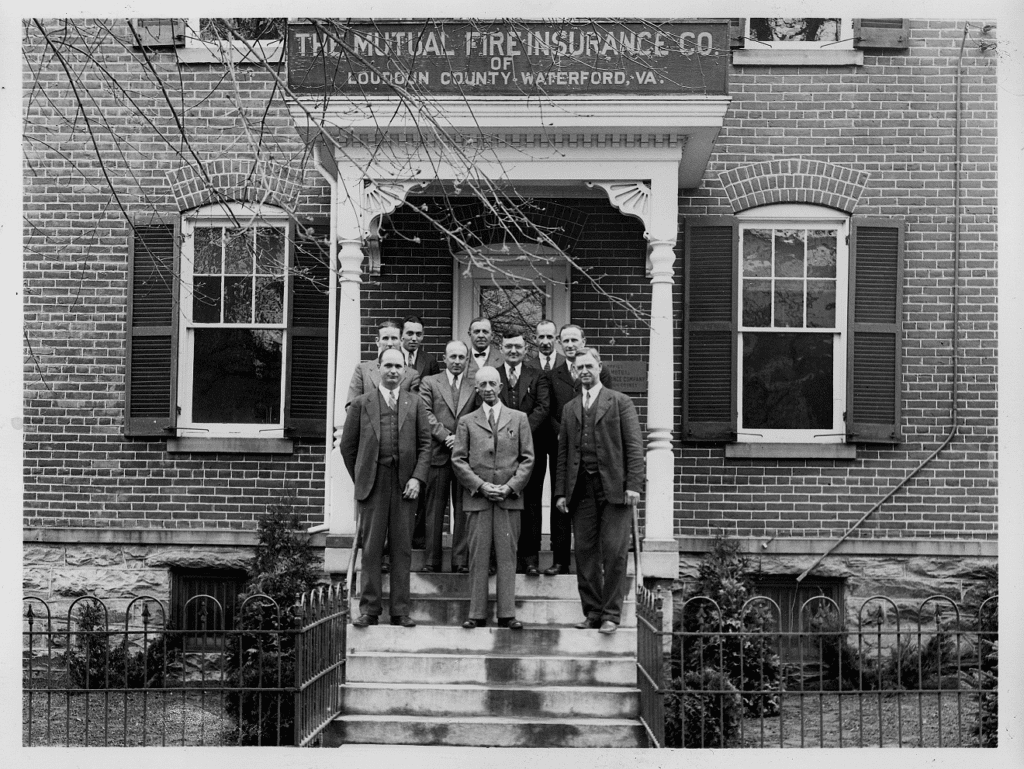
Mutual Fire Insurance Company Photo in the 20th Century (WF Archives)

A period of American business expansion from 1844-1856 included the establishment of a fire insurance company and construction of a few more houses and the Baptist Church edifice in Waterford. A fraternal benevolent association, Evergreen Lodge No. 51 of the Independent Order of Odd Fellows, was organized in 1847. They purchased a three-story brick house on Main Street where they held meetings and transacted business.

The Civil War and Reconstruction

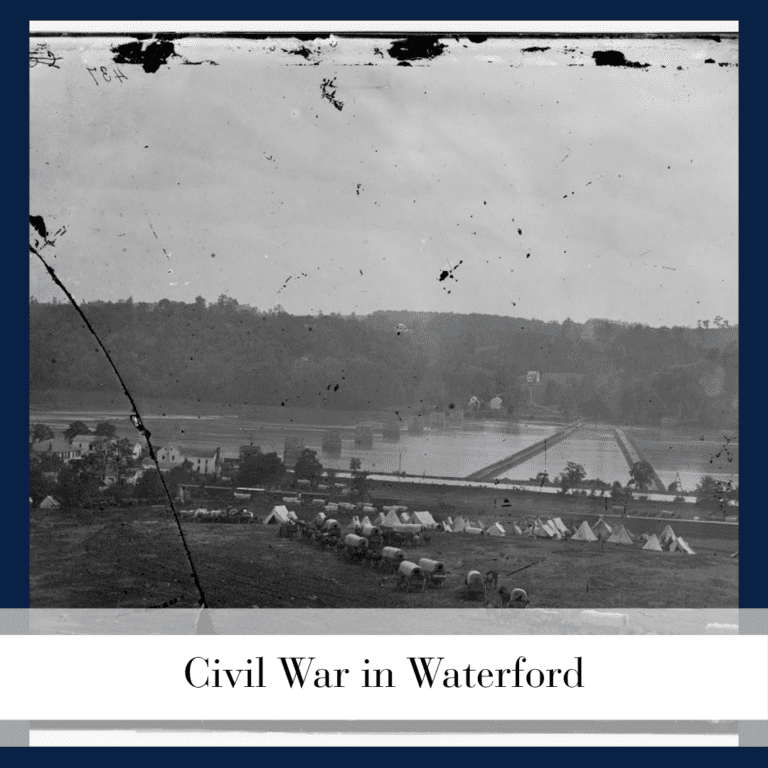
But soon, the Civil War commenced. Men from Waterford and other strongly Unionist areas of north Loudoun formed the Independent Loudoun Virginia Rangers, a federal cavalry company under the leadership of local miller Samuel C. Means. At least one free Black man from Waterford joined the 55th Massachusetts Volunteer Infantry Regiment, while a few more served in other Union units, sometimes informally. A handful of White residents voted for secession, though, and several fought for the Confederacy. The town was beset by raids, including a bloody skirmish at the Baptist Church, and intermittent occupation by Confederate troops.

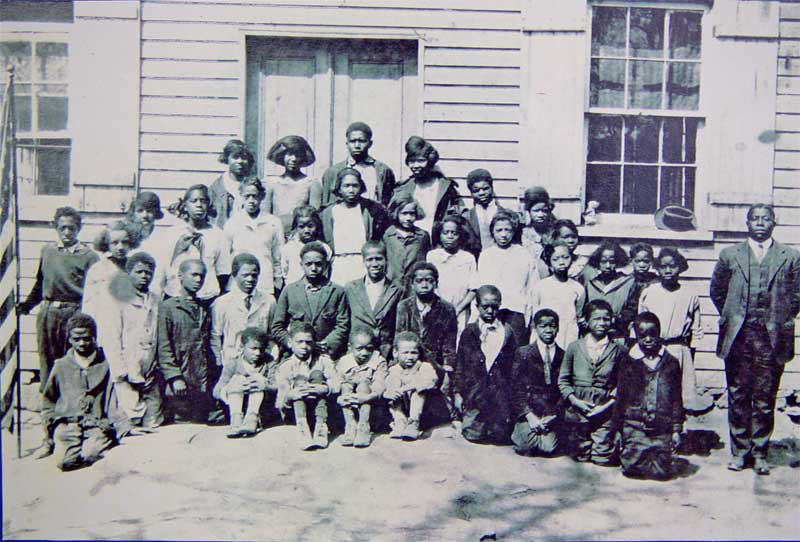
Class Photo at the Second Street School, or Colored School A (WF Archives)

Post-war reconstruction benefited the Black population when they constructed a school for their children, aided by the federal Freedman’s Bureau and a Philadelphia Quaker society.

Little growth followed until, bit-by-bit, Waterford started to shake off its stagnant economy. In 1867, passenger railroad service from Alexandria arrived at nearby Clarke’s Gap station, and two years later, a daily stage line ran between Waterford and the depot. This benefited Waterford homeowners who earned additional funds by boarding urban-area residents in the summer months.

Waterford gets on the map

In 1875, the town of Waterford was reincorporated and a map of the town was created that advertised businesses, including several women-owned establishments. The new charter allowed the town to collect a town tax, make public improvements and have use of the county jail.

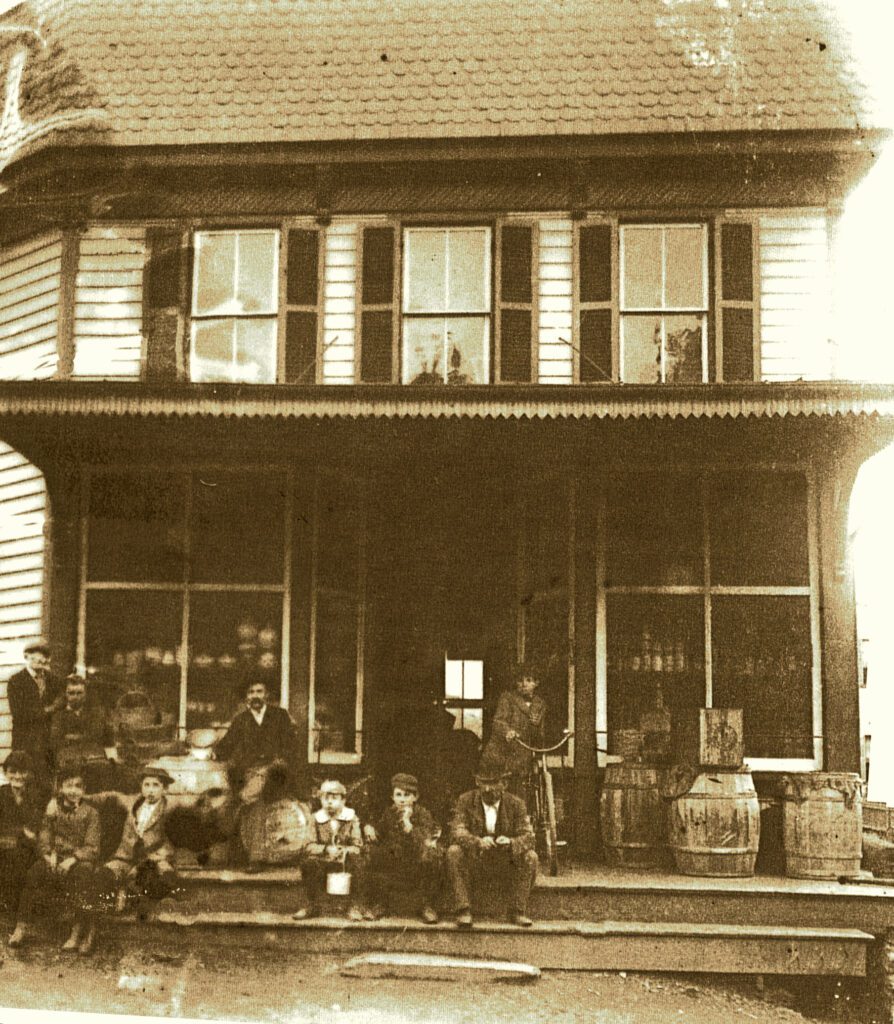
“Corner Store Hangout”, 1900 (WF Archives)

By the time industries fueled America’s business expansion from 1879-1893, Waterford carpenters were already quite busy. New types of specialty stores, such as grocery stores, drug stores, and tin shops opened; several in new buildings. And several Victorian-style homes were constructed on available town lots to house the shopkeepers and clerks.

This period of growth coincided with the Third Great Awakening. Increases in church attendance resulted in the return of a Presbyterian congregation to Waterford and construction of a Methodist church edifice for White congregants on the hill and for Black congregants near the mill.

The temperance movement, which sought to limit and then ban the consumption of alcoholic beverages, found new life in Waterford. Advocates met in the Temperance Hall above the Chair Factory. Other community activities at the time included attendance at literary society meetings held in local homes.

Electricity use and innovation
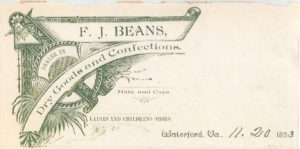
FJ Beans operated his store in the Waterford Market

Waterford saw remarkable changes during the Second Industrial Revolution. In 1884 you could place a telephone call at Dr. Connell’s store in Waterford to Clarke’s Gap after lines were run between the two places. Or you could receive electric therapy treatment from Dr. Connell with the use of his Electric Battery apparatus. Mr. J. F. Dodd improved the Waterford Mill by putting in machinery for making roller process flour. And in 1914, E. H. Beans, Waterford’s enterprising liveryman, acquired an automobile.

The type of employment available in Waterford also changed. By 1910, there were no longer any Waterford craftsmen making chairs, furniture, saddles, or shoes, which by then were made in urban factories. However, there was a stenographer, electrician, and a “phone girl” working in the Central office.

The impact of urbanization

The Industrial Revolution led to an increase in the pace of urbanization. The population of cities swelled as employment opportunities in factories and department stores rapidly grew. Farmers began converting fields into dairy farms to supply milk to local creameries that made butter for the burgeoning Washington, D. C. market.

Kingsley Creamery built a creamery on the Waterford town lot in 1885, but its duration was short-lived. Local creameries were made obsolete by new inventions that allowed city factories to obtain cream directly from farmers.

Local water-powered grist mills were also declining. Engineering advances in mill technology enabled large flour factories to be built on more substantial and reliable waterways.

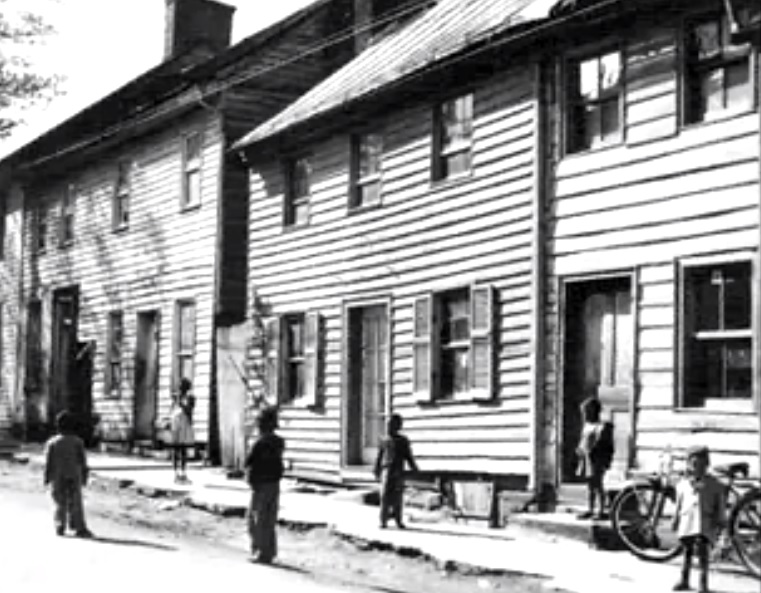
Kids Playing on Main Street, n.d. (WF Archives)

Because of urbanization and changes in manufacturing, both White and Black residents of Waterford moved to cities, notably Washington, D.C. When they left, many of the older structures on Main Street were purchased by Black families, greatly increasing home ownership for Waterford’s Black residents.

During the Great Depression, buildings were purchased by wealthy preservationists who wanted to revive Waterford into a “Little Williamsburg.” Colonial-revival fever struck Waterford. Buildings were stabilized, altered, and “restored” with hand-hewn beams and colonial-style door hardware.

Preserving the village of Waterford

The Waterford Foundation, an early preservation organization, was formed in 1943 to encourage interest in restoring the town to an earlier period. Fundraising fairs featured early crafts made by local artisans and home tours. The village and tour buildings were provided with histories, often with dates erring on the side of the colonial period, never mind that Waterford was founded after the American Revolutionary War.

In time, White families began moving to Waterford in search of post-World War II housing, while the Black population dwindled as the younger generation sought opportunities elsewhere.

The national historic preservation movement took hold after the enactment of the National Historic Preservation Act in 1966 that established funding and guidelines for preservation programs. Waterford was listed on the National Register of Historic Places in 1969 and designated a National Historic Landmark in 1970. Many of Waterford’s historic structures were placed under easements with the state in the 1970s to ensure appropriate preservation treatment.

The Waterford Foundation continues its work to preserve historic the historic properties, including those owned by the Foundation, and to further the understanding of the history of the village in support of its education mission.


Debbie Robison writes about Northern Virginia history. You can read more of her articles on her website.

Want to learn more about the history of Waterford? Check out these articles below!

Check out more of Waterford's history!

How the Civil War Divided Waterford

How the Civil War Divided Waterford

ByAbigail Zurfluh history,Waterford History June 23, 2026
Written by Debbie Robison; Edited by Larisa Epatko — Although Quakers were the original…
Read More
Quakers Arrive, an Agricultural Community Thrives

Quakers Arrive, an Agricultural Community Thrives

ByAbigail Zurfluh history,Waterford History June 23, 2026
Written by Debbie Robison; Edited by Larisa Epatko — The region between the Catoctin and Blue…
Read More
The Founding of Waterford

The Founding of Waterford

ByAbigail Zurfluh history,Waterford History June 23, 2026
Written by Debbie Robison; Edited by Larisa Epatko — The village of Waterford was founded in…
Read More

Filed Under: Black History, history, Home-page, News, quaker, Waterford History

The 1875 Waterford Town Map: Taking a Tour of Women’s Businesses

March 2, 2023 by Elizabeth McFadden

The 1875 Waterford Town Map: Taking a Tour of Women’s Businesses

By Debbie Robison

Hanging on a wall at the Waterford Foundation offices is an artist’s interpretation of an old map of Waterford. The original map, upon which this is based, has been around for 148 years. Now at the Library of Virginia, the map was preserved all these years by the Mutual Fire Insurance Company of Loudoun County (now Loudoun Mutual Insurance Company) at their Waterford offices.

Surveyor James Oden created the map in 1875 for the Waterford Town Council when the town was incorporated after the Civil War. The map was required by the Virginia General Assembly to distinctly show the boundaries and the public streets and alleys with their width.[1]

The map offers a fascinating snapshot in time. Each lot, carefully laid out along Waterford’s streets, is identified with its size and owner’s name. Yet the most interesting information can be found on the sides of the map. Here you will see hand-drawn business cards advertising a variety of businesses where Victorian-era men and women could purchase goods and services. Many of the cards publicize businesses operated by women, which gives a rare opportunity to explore where in town the female proprietors conducted their trade.

So, in honor of Women’s History Month, lets follow the map to their shops.

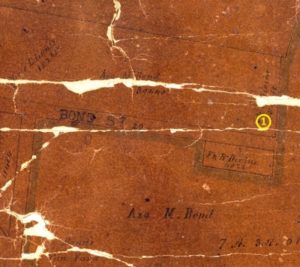
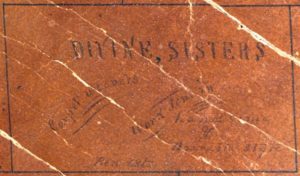
Stop 1: The Divine Sisters, Carpet Weavers

We begin on Bond Street where spinster sisters Frances and Rachel Divine manufactured and sold carpets.

DIVINE SISTERS, Carpet Weavers, Work done in handsome & Durable Style, Bond St.

The carpets were woven on a loom, possibly out of carpet wool that could be dyed a variety of colors. Frances had raised twins, Joseph and Mary – both 33 years old at the time the map was created, as an unwed mother.[2] The carpet weaving business, which was conducted in their home, provided a much-needed income for the sisters.

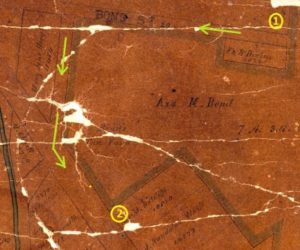
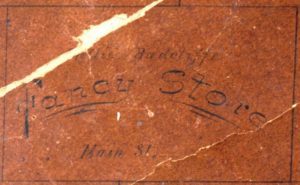
Stop 2: Sallie Radcliffe’s Fancy Store

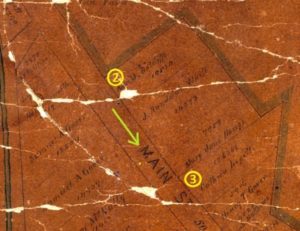
Heading down past the tan yard to Main Street, it isn’t long before you arrive at Sallie Radcliffe’s Fancy Store where a wide variety of goods could be purchased.

Sallie Radcliffe, Fancy Store, Main St.

A Fancy Store carried fancy articles like beaded purses, dress trimmings, hosiery, corsets, laces, sun umbrellas, specialty papers for making paper flowers, hoop skirts, collars, ribbons, and occasionally writing desks, assorted China articles, and toys.[3]

Sallie, a single Quaker woman, lived with her widowed mother, Ann Ratcliffe, in the house where she operated the store. In addition to operating the store, Sallie was also a milliner.[4]

Stop 3: Catherine Leggett’s Confectionary Store

After shopping at Radcliffe’s, a visitor might walk a few doors up Main Street to stop in at the widow Catherine Leggett’s confectionary store for a sweet. Fruits, candies, and nuts were typically sold in confectionary shops.

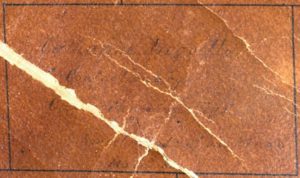
Catharine Leggett, Confectionary, Candy, Cherries, Figs, Sweetmeats of all kinds, Main St.

Catherine Leggett (nee Rinker), who went by Kitty, purchased the house in 1860 from William Russell, who acted as guardian of the children she had with her first husband, Joseph Wright.[5] Her second husband, cabinet maker Samuel Leggett, died earlier that year.

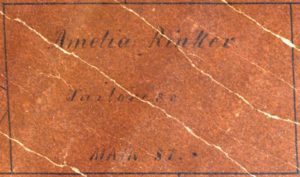
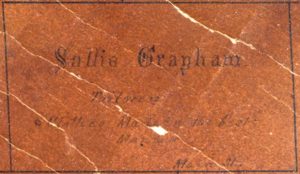
Stop 4: Amelia Rinker, Tailoress, and Stop 5: Sallie Graham, Tailoress

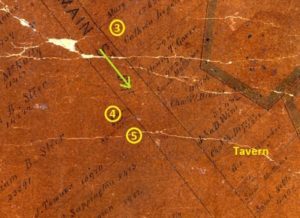
If a small town could have a garment district, then it would have been found on Waterford’s Main Street near The Loudoun Hotel (40170 Main Street, formerly Talbott’s Tavern) where a cluster of seamstresses and tailoresses offered their services.

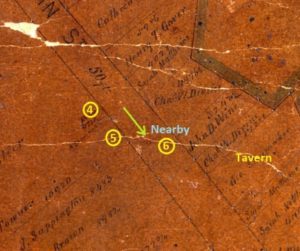
After leaving Kitty Leggett’s confectionary store, you soon arrive two businesses for tailoresses, one run by Kitty’s sister, Amelia Rinker, and the other by Kitty’s daughter, Sallie Graham. Amelia Rinker [Stop 4] lived to the west of Amelia Sappington, a seamstress, and Sallie Graham [Stop 5] lived on the other side.[6]

Amelia Rinker, Tailoress, Main St

Sallie Graham, Tailoress


A tailoress sewed custom fitted garments, typically for men. In addition to sewing jackets, vests, and trousers, a tailoress may have also sewn shirts with detachable collars and neckties.

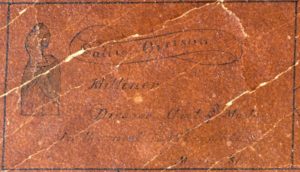
Stop 6: Sallie Orrison, Milliner and Dressmaker

The exact location of the shop that Sallie Orrison rented on Main Street is unknown, but it might have been near the tavern.[7]

Her card advertised her as a milliner (a trade that typically fashioned and sold hats and caps for women and girls), yet she promotes dressmaking:  Dresses Cut & Made In the most fashionable style.

Sallie Orrison, Milliner, Dresses Cut & Made in the most fashionable style, Main St.

Before her marriage to Townsend Orrison in 1872, Sallie was living with her family and working as a milliner.[8] In 1875, Townsend Orrison, who was financially embarrassed and unable to pay his debts, declared his intention of taking the benefit of the Homestead Act, passed by the Virginia General Assembly in 1870 to protect a debtors personal property.  Among the personal property he listed in his homestead exemption was all the stock of goods such as ribbons bonnets &c & other articles used in the millenary business now on hand in the store carried on by my wife in the Town of Waterford valued at $200.[9]

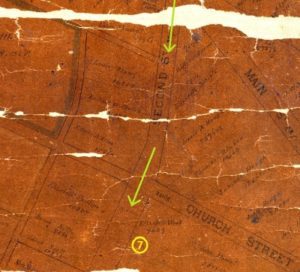
Stop 7: Ella Mount, Private School Principal

Possible Location of Ella Mount’s Private School

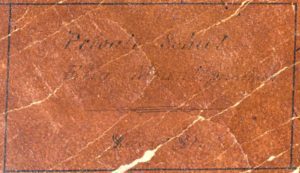
Continuing down Main Street and then up Second Street takes you to the area where Ella Mount was the principal of a private school. The exact location of her school is unknown.

Private School, Ella Mount, principal – Second St.

Ella Mount was the daughter of William T. Mount and granddaughter of John Mount, both Waterford furniture and chair makers. In 1870 John and William Mount were in a rented house on Main Street.[10] Ella’s residence is unknown. John and William Mount had a 1 ½-story cabinet-maker’s shop on Second Street.[11] It’s possible, though not confirmed, that Ella held her private school in the upper story of the shop.

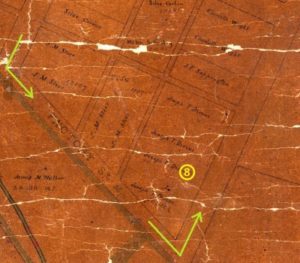
Stop 8: Sallie Divine, Dressmaker

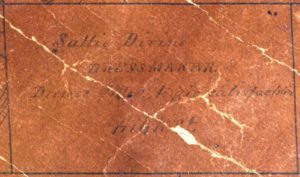
On the far side of the village was the only other garment maker whose business card is on the map. Sallie Divine advertised her dressmaking services on High Street.

Sallie Divine, Dressmaker, Dresses fitted to give satisfaction, High St.

Sallie wed Joseph T Divine, son of Frances Divine the carpet weaver, in 1870.[12] They purchased the house on Hight Street the year the map was created.[13]

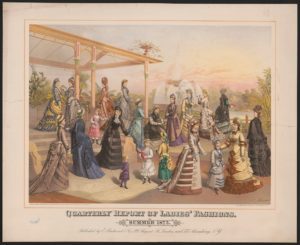
Women’s dress fashions in 1875, the year the map was drawn, sported rows of ruffles, drapes and/or pleats. Sallie may have kept up-to-date on the current styles of dress by subscribing to a dressmaking periodical, such as the popular Godey’s Ladies Book, published in Philadelphia, of Demorest’s Illustrated Monthly, a New York publication. Demorest also offered seasonal dressmaking instruction guides with a catalog of patterns available for purchase. Sallie may have also sewn undergarments and lingerie.

The following lithograph shows the latest fashion in 1875, the year the map was created.


[1] Acts and Joint Resolutions Passed by the General Assembly of the State of Virginia, at the Session of 1874-5. Richmond, R. F. Walker, Supt Public Printing, 1875, as viewed on Google books at https://www.google.com/books/edition/Acts_and_Joint_Resolutions_Passed_by_the/uhQSAAAAYAAJ?hl=en&gbpv=1&dq=1875+waterford+incorporation+virginia+general+assembly&pg=PA141&printsec=frontcover

[2] Joseph Tuinto Divine Death Certificate, Virginia Death Records, 1912-2014, as viewed on Ancestry.com; Mary Alvernon Trunnell Death Certificate, Washington, D.C., U.S., Select Birth and Christenings, 1830-1955, as viewed on Ancestry.com

[3] C. C. Berry, “Dealer in Fancy Goods & Notions of Every Description,” Alexandria Gazette, 29 May 1875, p.1; H. Baader, “Selling Out at Below Cost,” Alexandria Gazette, 14 May 1870, p. 1;

[4] 1870 Federal Census for Sallie Radcliffe, as viewed on Ancestry.com; U.S. Quaker Meeting Records, 1681-1935, Fairfax Monthly Meeting, Minutes 1843-1932, image 30 of 36, as viewed on Ancestry.com

[5] Deed from William Russell to Catherine Leggett, Loudoun County Deed Book 5T:255, August 10, 1860; Joseph H Wright Probate Account, Loudoun County Will Book 2I:415.

[6] Amelia Sappington v. Charles Sappington, Chancery Case 1872-068, image 30 of 75, Library of Virginia.

[7] In 1880 federal census Sallie Orrison is listed immediately before C. W. Divine

[8] 1870 Federal Census, Loudoun, Northern Division, Taylorstown Post Office, as viewed on Ancestry.com

[9] Townsend Orrison Homestead Exemption, Loudoun County Deed Book 6H:223, December 1, 1875.

[10] 1870 Federal Census

[11] John Mount’s Mutual Fire Insurance Company of Loudoun County application #570, January 25, 1868, Mutual Fire Insurance Company of Loudoun County Records, 1849-1954. Accession 41374. Business records collection, The Library of Virginia, Richmond, Virginia.

[12] 1870 Federal Census for Joseph and Sallie Divine

[13] Loudoun County Deed Book 6G:469, February 1, 1875.

Filed Under: history, Home-page, News, Uncategorized

  • « Go to Previous Page
  • Page 1
  • Page 2

Footer

Email: oldschool@waterfordfoundation.org
Phone: 540-882-3018

Privacy Policy

Join Our Email List and Stay Connected!

Copyright © 2026 · Waterford Foundation · Log in