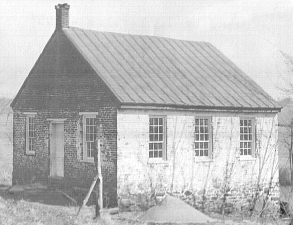
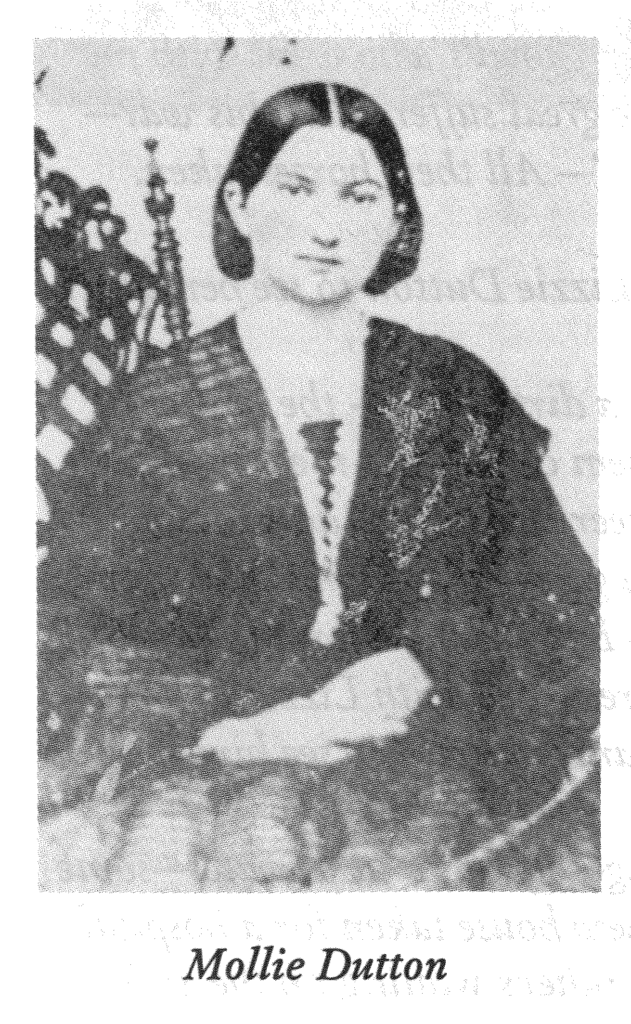
In 1856, Mary Frances “Mollie” Dutton [1840-1933] was a girl of 16, writing a letter home to her parents from Springdale School in nearby Goose Creek (now Lincoln), about 10 miles southwest of Waterford. Mollie likely would have begun her studies in one of several small schools in Waterford, such as the small brick schoolhouse adjacent to the Friends’ meeting house on Loyalty Road. Quakers highly valued education, and Mollie’s parents sent her to boarding school at Springdale once she had completed her studies in the local schools. In Mollie’s letter below, excerpted from “To Talk is Treason”, we get a glimpse into the life of a young Quaker woman in the mid-nineteenth century.
Springdale 4th day noon
Dear Mother and Father
It has been some time since I last wrote home and feel as though I could say a great deal to you now about matters & things.
I expect you would like to know how I spend my time visiting and if I got anything good to eat. I went home with Maggie and never had a more pleasant time away from home. Mag lives with her Aunt Phebe Gregg a very feeble old lady. There was no one there but her, and an old housekeeper who was as kind as she could be and gave me everything good she could find.
7th day after dinner we went to Joseph Nichols and staid until after supper and then rode home. The next morning we did not go to meeting but spent the morning reading, talking & eating bell-flower apples. For dinner we had roast chicken and mince pie beside all the appurtenances which everybody has at common & uncommon times.
At 3 we started for old Springdale and it was near suppertime when we reached there. Social meeting did not begin until after supper and I hurried over my lessons for morning & would not have missed them for anything if it could have been helped, for Cousin Henry would have attributed it to us visiting.
I have got along very well so far this week and do hope I shall continue to do so the remainder of it. I received Sister Lidy’s letter on First Day and was very glad to get it. I will answer as soon as I can. I always write when I think I can well spare my time from my books.
What do you think of my character, I am glad to tell you that my hundreds were not lost as I thought, but we were not examined in that study where 100 is omitted. I was so glad to hear it, for I did not think I had ever missed but one and think that was doing fairly well for 9 months. It was more than any of the rest done but Thammy Janney, hers was perfect.
Supper is over, our supper of bread, butter and molasses, and now comes study hour in a few minutes. Do you ever think of me working over my sums–little Sis Anna does, I expect. Never mind, when I come home I will learn her and Lidy how to work problems, and do hard sums.
I think Cousin Lizzie is very much pleased with my drawing. I am getting on better than any of the scholars. Perhaps when I come home I may know sufficient about it to set up a drawing class, then Sister Lizzie would teach school and we could have fine times, Anna should come to me certain, and the way we would cut up would be a caution to good fellows.
Mother, have we had much company lately or does thee trot about so much they cannot come? Now Lewis is gone, Sis is at home more, I expect, and gives thee an opportunity to leave home. I think she might write to me–it has been some time since I heard from her ladyship, tell her. She left her shoes here, and I have been trying to get an opportunity to send them to her but have not yet succeeded. She will have to come for them herself and spend 2 or 3 days. I should be very glad to have her, but she should not spend all 7th day morning in the sitting room chatting with a certain Springdale student, making someone else so uneasy. I have laughed so much over that.
Father, Cousin Henry told me to ask thee if thee needs any of his sympathy now. He also sends his warmest regards to thee and Mother and all enquiring friends. I have not had an answer from Han[nah?] yet; she promised me to write immediately. When do Uncle William and Aunt Louisa [Steer] start south. Give my love to them please and to all my friends if they enquire after me. Some of the girls want me to petition to Cousin Henry for spelling school tonight. The last one we had, Maggy and I chose up sides and had so much fun choosing the boys.
Oh I have so much to tell you but can not say more now. I hope you are all enjoying good health and getting along first rate. Give my love to Brother, Sisters and retain a large portion for yourselves. I remain your affectionate daughter.
Mary F. Dutton
Notes:
Springdale School was established in 1839 by a Goose Creek Quaker, Samuel M. Janney, as a Friends boarding school for girls. Local boys attended as day students.
To avoid using the pagan-derived common names for months and days of the week, Quakers adopted their own nomenclature for dates. Thus January is “First Month” and Sunday, “First Day.”
Find this and other stories from Mollie’s life in To Talk is Treason: Quakers of Waterford, Virginia on Life, Love, Death & Water in the Southern Confederacy, available online here.
Personal letters and journals can yield a wealth of information about everyday life during significant periods of history, such as in Waterford during the Civil War. Discovering a trove of correspondence is a boon for historians, as described in the About This Book section of To Talk Is Treason: Quakers of Waterford, Virginia on Live, Love, Death & War in the Southern Confederacy:
This account of Waterford’s Quakers during the Civil War came together unexpectedly in the summer of 1996. While several long-time residents of the village had been familiar with the outlines of the story, many of the details were unknown–and the village had lost touch with descendants of those who had lived through the conflict.
One of those descendants, Miss Phebe Haviland Steer, has miraculously provided the key to unlocking that past. From her home in California, she enquired if anyone in Waterford would be interested in a box of old letters and journals that had belonged to her grandmother, Mary Frances Dutton Steer. They had just been rescued from being discarded by a well-meaning friend.
Miss Steer, three years earlier, had generously given the Waterford Foundation an extraordinary patchwork quilt pieced–in the manner Mollie Dutton herself has described–from the silk wedding dress her great-grandmother Emma Schooley Dutton had worn in 1838. The cover of this book reproduces two colors of that quilt.
Waterford is forever in debt of these women. For it turned out that Mollie had preserved a rich record of the past, keeping not only her own wartime letters, but also meticulously copying a large volume of correspondence and other writings of family and friends from the early 19th century to the end of her life. Among those treasures is Rebecca Williams’ poignant diary of the war years.
These writings in turn provided clues to other sources. Dutton descendants in New Jersey generously shared period photographs of Lizzie and Lida and Mollie, as well as additional details of their times. A library in Michigan furnished a list in Lida’s hand of Union soldiers who had passed through Waterford. There is every reason to expect that more information will be discovered; it is our hope that this first telling of the stories will spur the search…
In the end what makes this narrative compelling are Waterford’s remarkable Quakers themselves. When disaster struck those peaceful, capable people met the challenge without flinch or compromise. We are grateful that their care in recording their history has given us a chance to know them and their times. May we do as well to preserve what they have left us.
John E. Divine, Bronwen C. Souders, John M. Souders, September 1996
To Talk Is Treason: Quakers of Waterford, Virginia on Life, Love, Death and War in the Southern Confederacy, 1996, WAterford Foundation
The Waterford Foundation maintains an institutional Archives as well as a Local History Collection. If you may be interested in donating documents, photos or artifacts from Waterford’s past, please reach out to our staff for further information via phone (540-882-3018, x2) or email.
Written by Robert Dabney Trussell. This article first appeared in the 50th Annual Waterford Homes Tour and Crafts Exhibit Booklet, October 1-3, 1993.
The American Civil War–it has been described variously as the war between the states; the conflict that pitted brother against brother; the battle for freedom or slavery.
It was a war of extreme points of view where the middle ground of rationality was razor thin or lost in the bloodletting. It was a war of opposing armies marching, foraging, camping and fighting over the rolling fields and idyllic towns of a new republic. The war involved every community in some way and likewise touched every citizen in the nation.
While most Americans both North and South marched to the cadences of their causes, Quakers in both regions struggled to heed their consciences. For the most part, members of the Society of Friends believed that both governments were wrong to use violence to settle their differences. Quakers opposed slavery as the vilest form of human degradation, superseded only by the act of killing.
Friends generally stood against a war that most Americans, religious denominations and political organizations of the time regarded as a righteous war. How could Quakers take such a stand?
The simplest reason stemmed from a primary precept of the Quaker faith that the light of God burns within every man, woman and child. Therefore, the sacredness of life was not to be violated in any manner. This moral stance had a secular human rights component that faulted both the Union and the Confederate governments. Friends found the federal government’s brutal policy toward Native Americans to be as inhuman as the South’s institution of slavery. Also, Quakers openly decried the North’s abolitionist propaganda while its manufacturers profited greatly from raw goods derived from slave labor.
At the same time, the Civil War altered the traditional isolationism of the Friends and thrust many Quakers into the turmoil of the time.
Even before the war, some Quakers risked their lives as participants of the “Underground Railroad” which provided a route to freedom for thousands of slaves. Quakers, even in the South, attacked slavery through newspaper articles, tracts, and nationally published Quaker journals. When hostilities did break out in 1861, numerous Quakers struggled greatly with their consciences, left their meetings for worship and took up arms against the Confederacy.
Quakers in the South and thereby in Loudoun County, found themselves at particular risk. This population of Friends was sizable, influential and prosperous. Following the land migrations of the 17th and 18th Centuries, Quakers settled throughout Virginia. More than 60 meeting houses were built in the Commonwealth and several Quaker communities were well established in Loudoun County. The town of Waterford became a major center for Quaker education and commerce, as well as the location of the Fairfax meeting.
This whole community of Friends was threatened by the war. Whereas Quaker pacifism was protected in the North (Abraham Lincoln’s great-grandfather was a Pennsylvania Quaker), being a Quaker in the wartime South was a liability.
Quaker men who refused to enlist or answer the draft were frequently imprisoned and ridiculed. One Waterford Quaker objector was even abducted from his home, forced to march with an infantry unit and cruelly placed without defense in the front line of an attack during a battle. Somehow he survived that ordeal only to die from disease in a Confederate prison. The Fairfax Friends’ opposition to slavery left them vulnerable to discrimination or at least shunned by fellow Southerners. Rebel armies would target Quaker farms in the area for food and shelter. Farmers and merchants suffered great loss of property and business. Also the war cut off Quakers from their friends and relatives in the North.
Through it all, Friends in Loudoun County kept their faith and traditions alive and struggled to follow Christ’s words “to do unto others”. A poignant example of this belief is found in a letter written in 1863 by Susan Walker, a Waterford Quaker.
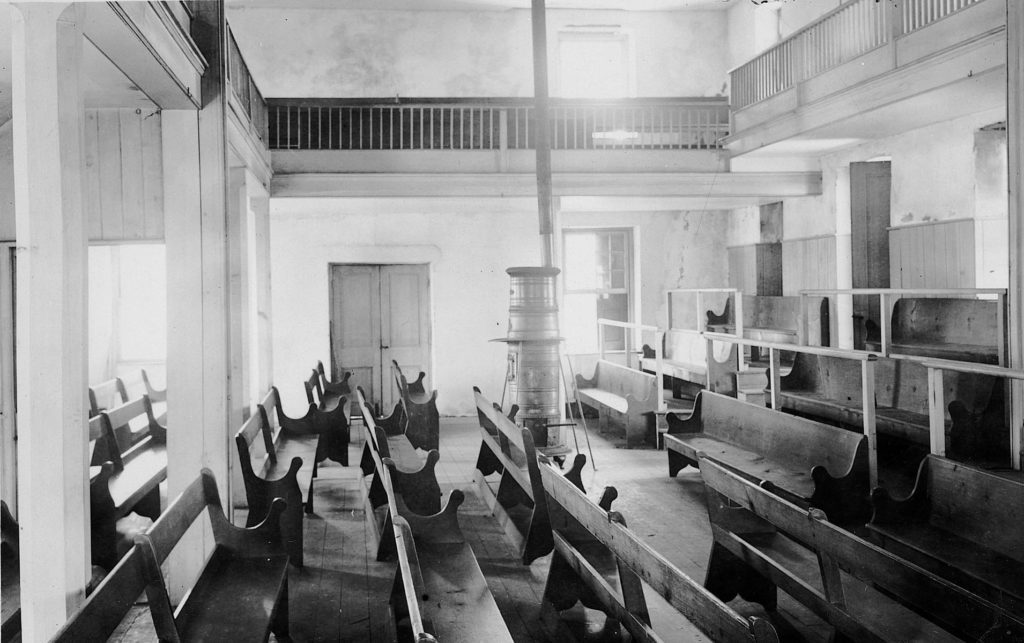
Susan Walker described an event that occurred early in the war. On Sunday, Friends of the Fairfax meeting arrived for worship to discover a company of Confederate regulars billeted in the stone meeting house. Both the house and the yard were strewn with stacks of rifles, flags and campaign gear. Soldiers relaxed on the meeting house benches and slept up in the gallery. As the Quakers entered, some soldiers rose to meet them with jokes about their plain attire and taunts about their anti-slavery beliefs.
Interior of Fairfax Meeting House
But the Quakers were resolved to worship that day; a quick compromise was reached with the commanding officer. A portion of the meeting room was partitioned off with tenting allowing the Quakers a place to quietly wait upon God. The Quakers then invited the soldiers to worship with them. Curious about “how Quakers prayed”, several of the company joined them. During the silence, an elderly woman, moved by God’s presence, stood and spoke to the odd assembly. In a strong voice she prayed “God bless all here and that the wings of peace might return to our prosperous country and peace be with the strangers in our midst”.
With this the woman sat. So moved by her words, the soldiers wept openly: “…great tears coursed each other down their sun-burned cheeks”, wrote Susan Walker.
The year was 1861. Four long and bloody years of the Civil War still remained before peace finally returned to the Quakers of Waterford and the Nation.
Contributor: Robert Dabney Trussell who attends Goose Creek meeting in Loudoun County. Mr. Trussell lives in Rosemont, Maryland and works for the AFL-CIO in Washington, D.C.
Written by Debbie Robison; Edited by Larisa Epatko
—
The story of Waterford can be told hand-in-hand with the story of America. The impact of religious revivals, manufacturing innovations, slavery, economic depressions, and laws that governed free Black people all touched this village. The individual histories of each home, shop, barn, and outbuilding, as well as the people who lived here, are all part of a larger story. And that is, in part, what makes Waterford so special.
Establishing the village of Waterford
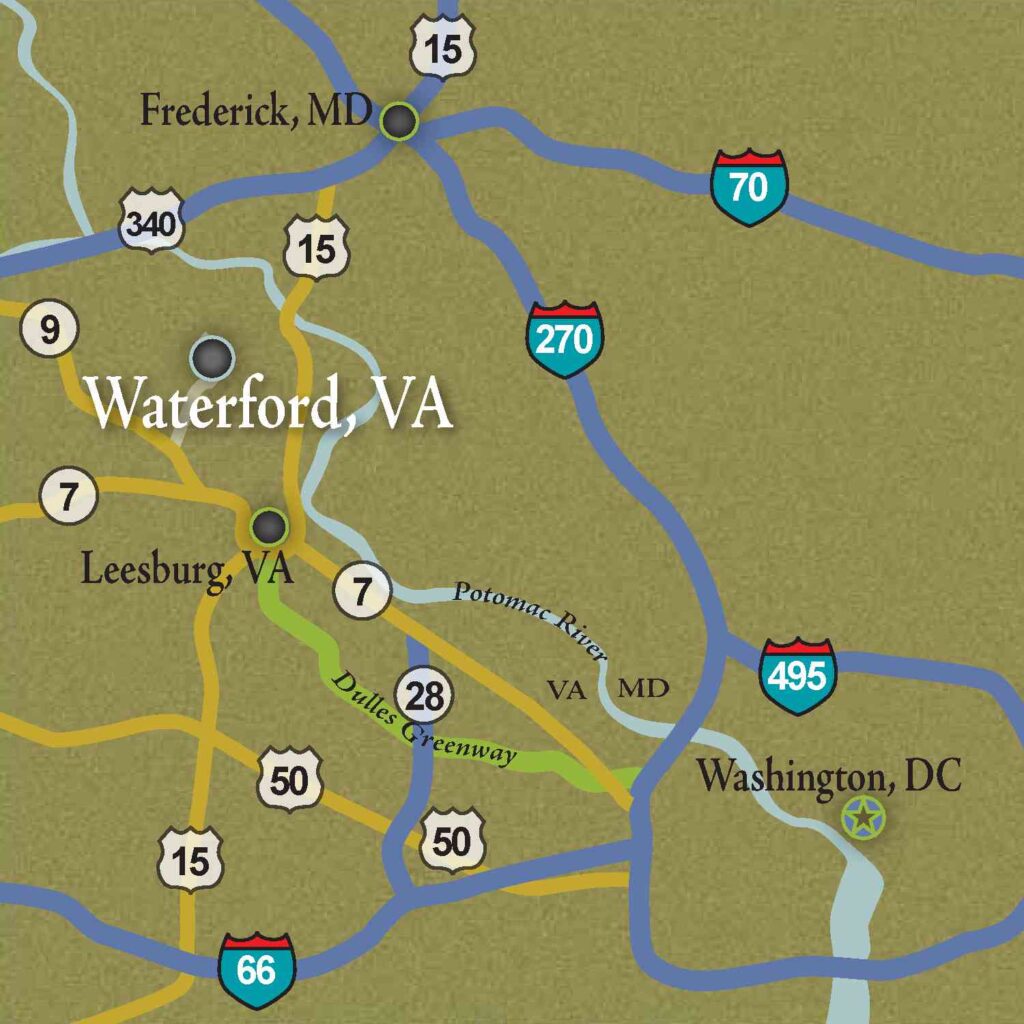
Map showing the modern ways to get to Waterford from Washington DC (WF Archives)
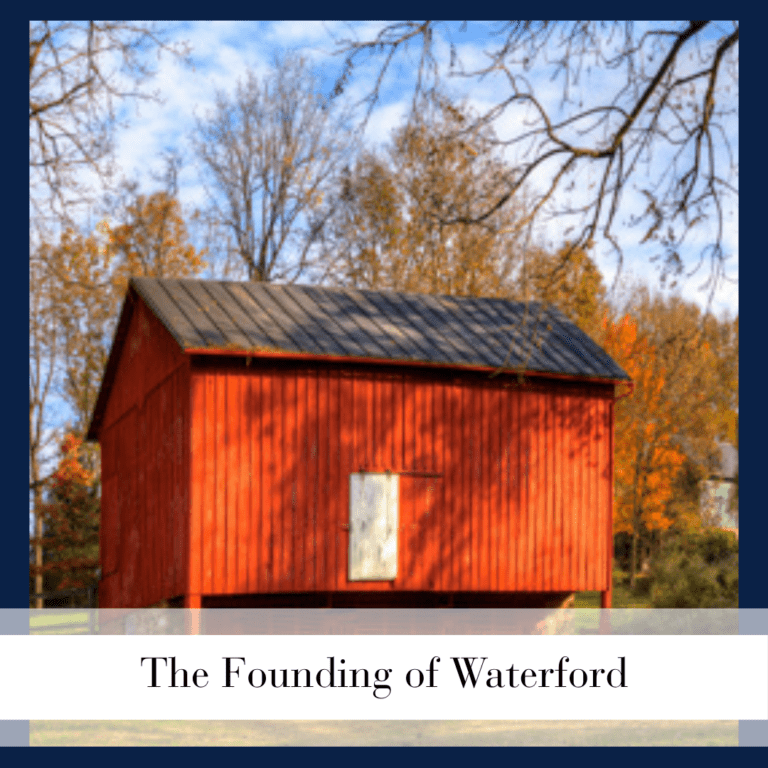
The village — located 47 miles northwest of Washington, D.C. — was founded ca. 1784 by Joseph Janney, a Quaker businessman formerly from Pennsylvania, who offered lots for sale and lease near a water-powered grist mill and sawmill. The land where the village was built was originally settled by Quakers, members of the Society of Friends, when John Mead purchased 703 acres in 1733. This was during the time of the Great Awakening, a religious revival in the 1730s and 1740s that led to an increase in religious conviction.
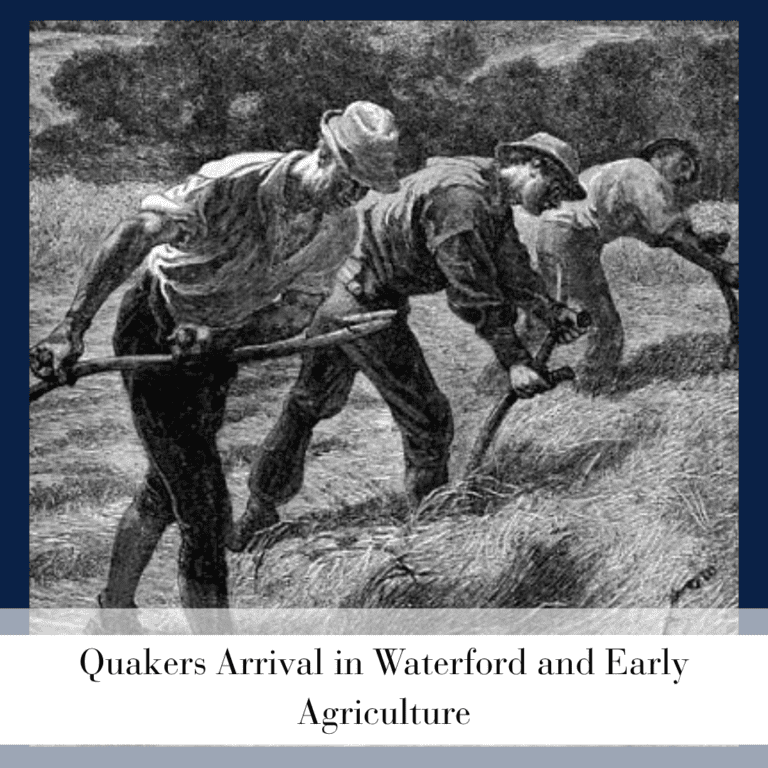
Other Quakers soon followed Mead and settled in the area where they found religious tolerance as well as fertile, well-watered soil. They farmed tobacco, raised families and established a Quaker meeting. During colonial rule, tobacco was shipped to Great Britain, which regulated and restricted trade. Once the flour trade opened to the British West Indies, grist mills were established along streams throughout the area, including the mill built by Mahlon Janney on Kittocton (now Catoctin) Creek ca. 1762.
Businesses start to take root
The village began with a dry goods store, saddlery, cabinet shop, tannery and blacksmith shop. The store did not prosper since farmers and millers, who were store patrons, struggled to find international buyers for their goods after the Revolutionary War. This was because, at the start of the new nation, America was only a confederation of states without a federal constitution to provide collective bargaining power for international trade agreements.
Despite this hurdle, the other businesses succeeded, with young apprentices providing much of the labor while learning valuable skills. In time, former apprentices and employees of these first manufacturing enterprises started their own businesses and purchased lots, along with others, in the expanding village.
Freeing the enslaved
The American Revolution heightened the ideals of religious liberty and freedom, which sparked the Virginia General Assembly to enact a law in 1782 allowing any person to emancipate his slaves. During this Second Great Awakening, a number of local Methodists, Presbyterians and Baptists freed their slaves, joining the Quakers who had disavowed slavery prior to the war.
Free Black people settled in the area, possibly attracted by job opportunities and a willingness of the Quaker population to assist them, establish store accounts and sell them lots. Some of the non-Quaker proprietors, particularly the tavern keepers, had enslaved Black people work in their establishments.
A Quaker commitment to education
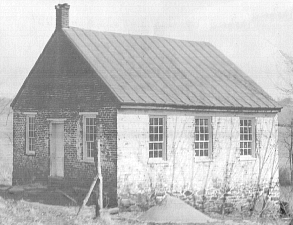
Fairfax Meeting Schoolhouse (WF Archives)
Pre-Civil War education in Waterford varied depending on if you were a White person, free Black person, or an enslaved person. Early on, some free Black children learned to read and write as part of their apprentice agreement. In 1819, Virginia outlawed allowing enslaved people to meet at schools to learn to read and write, and then made educating free Black people illegal in 1831 in response to increased abolitionism in the north.
The Quakers in town were devoted to education and had built a schoolhouse in 1805 on the meeting house grounds. In 1818, Virginia created a literary fund to pay for the education of poor students. The fund helped pay for teachers in Waterford as early as 1818 when William Adams of Waterford was teaching. In 1822, three Waterford residents were paid for teaching: Jacob Mendenhall, who operated an academy in Waterford, Robert Braden, Jr., and Ann Ball.
The village ebbs and flows
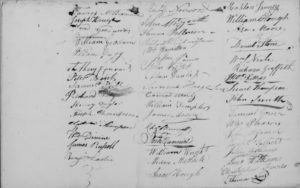
1800 Petition for Town Signatures
In 1801, the village officially became a town with the ability to lay off land into lots and streets. This enabled the town to expand beyond the existing Main Street, up what in the early days was called Federal Hill.
The town continued to grow and fill with tradesmen, tavern keepers and craftsmen who made furniture, hats, shoes, saddles and clothing. The building trade was so busy that a second water-powered sawmill was built off Balls Run to churn out even more lumber for the housing boom. Most of the new houses were constructed of brick, likely made at the brick manufactory that was established in a meadow by the mill race.
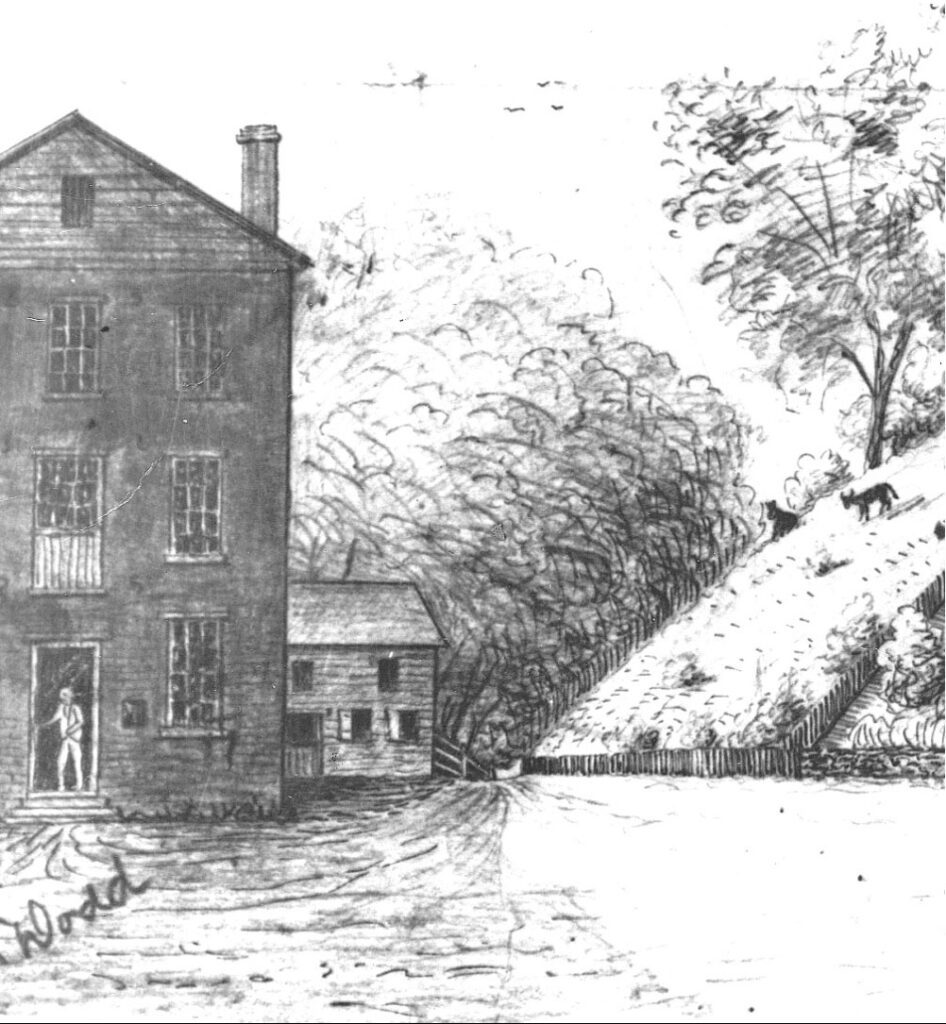
Sketch of the Waterford Mill by Dodd, c.1883 (WF Archives)
The pace of building slowed to a crawl after Thomas Jefferson enacted the Embargo of 1807 that prevented merchant ships from trading in foreign ports. This resulted in an economic depression and the financial ruin of the Waterford grist mill, which relied on foreign trade. Building in town resurged once the embargo was lifted in 1809.
Changes during the Industrial Revolution
Spurred by new innovations in America’s first Industrial Revolution, a woolen factory was established at the south end of town. This corner of Waterford would come to be a manufacturing hub where blacksmiths, carriage makers, wheelwrights and machinists worked at their anvils. Down the street, the nearby sawmill operation added machinery for a plaster mill and clover mill to foster increased local agricultural yields.
After the War of 1812, the town greatly expanded around new streets and alleys laid out in a grid pattern during America’s 1815-1819 economic speculative boom. To support the growth, a bank was established briefly in Waterford before the state required it to close.
Brick dwellings were constructed in the “New Addition,” the grist mill was replaced with a larger three-story brick mill, and a commodious three-story brick house with a lower-level store was built in the center of town – – right before everything came to a halt with the 1819 banking panic and years-long depression.
The proprietors of the Waterford Mill and the large stone tavern were forced to sell their businesses to meet their financial obligations. The long economic recovery, recession, and depression that followed stalled most growth in the town, though industrial manufacturing of agricultural implements continued to evolve.
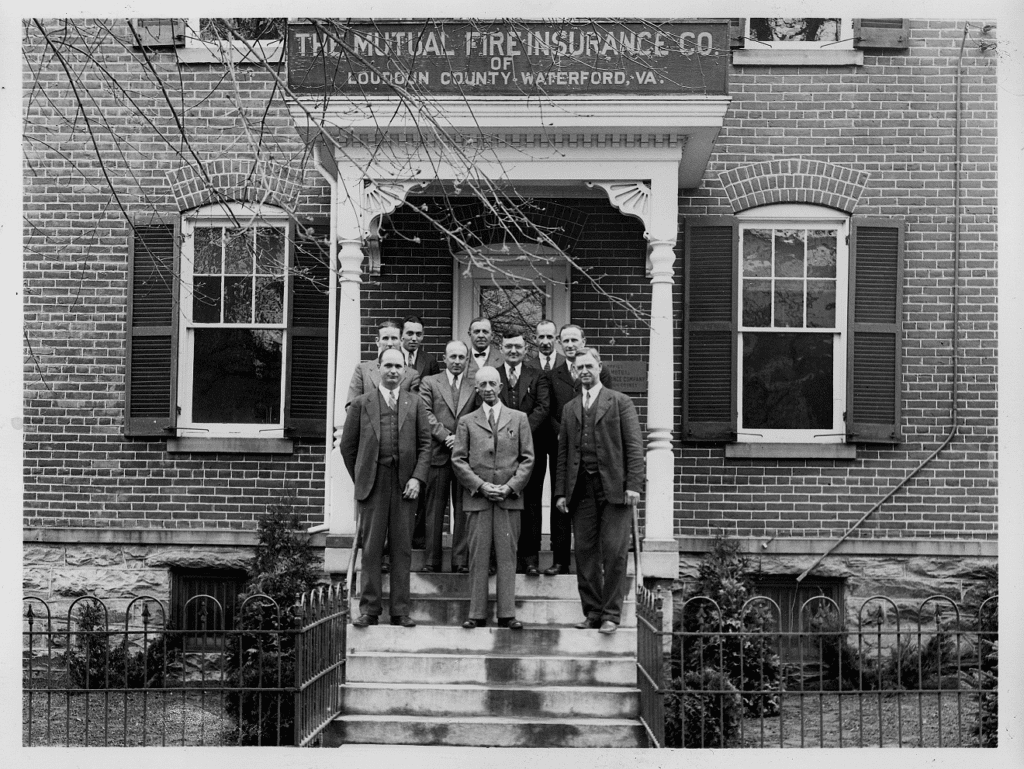
Mutual Fire Insurance Company Photo in the 20th Century (WF Archives)
A period of American business expansion from 1844-1856 included the establishment of a fire insurance company and construction of a few more houses and the Baptist Church edifice in Waterford. A fraternal benevolent association, Evergreen Lodge No. 51 of the Independent Order of Odd Fellows, was organized in 1847. They purchased a three-story brick house on Main Street where they held meetings and transacted business.
The Civil War and Reconstruction
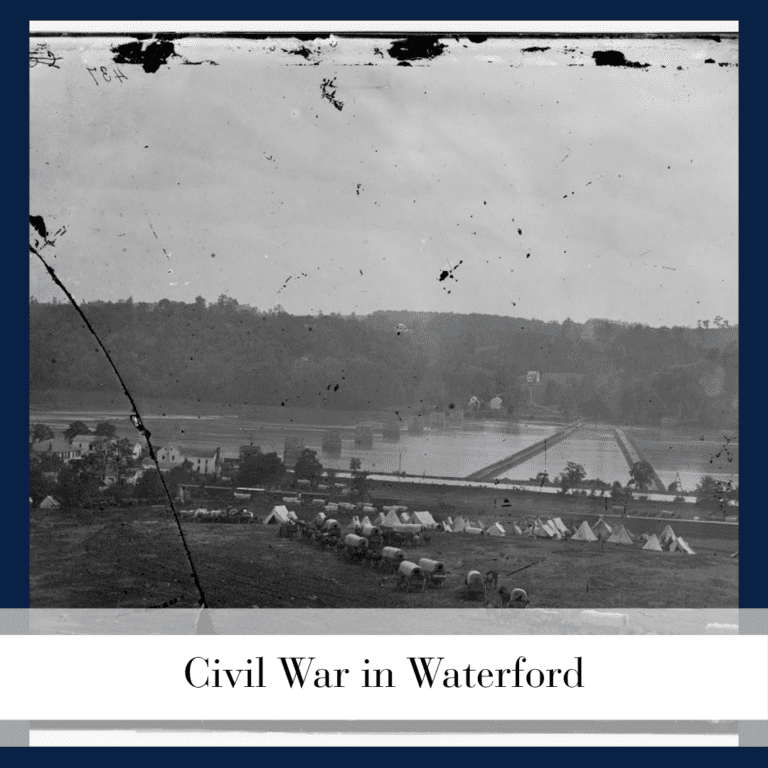
But soon, the Civil War commenced. Men from Waterford and other strongly Unionist areas of north Loudoun formed the Independent Loudoun Virginia Rangers, a federal cavalry company under the leadership of local miller Samuel C. Means. At least one free Black man from Waterford joined the 55th Massachusetts Volunteer Infantry Regiment, while a few more served in other Union units, sometimes informally. A handful of White residents voted for secession, though, and several fought for the Confederacy. The town was beset by raids, including a bloody skirmish at the Baptist Church, and intermittent occupation by Confederate troops.
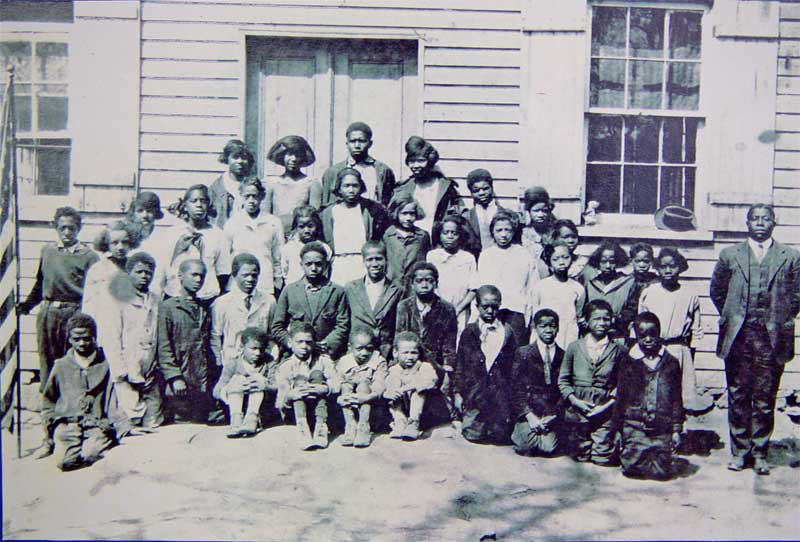
Class Photo at the Second Street School, or Colored School A (WF Archives)
Post-war reconstruction benefited the Black population when they constructed a school for their children, aided by the federal Freedman’s Bureau and a Philadelphia Quaker society.
Little growth followed until, bit-by-bit, Waterford started to shake off its stagnant economy. In 1867, passenger railroad service from Alexandria arrived at nearby Clarke’s Gap station, and two years later, a daily stage line ran between Waterford and the depot. This benefited Waterford homeowners who earned additional funds by boarding urban-area residents in the summer months.
Waterford gets on the map
In 1875, the town of Waterford was reincorporated and a map of the town was created that advertised businesses, including several women-owned establishments. The new charter allowed the town to collect a town tax, make public improvements and have use of the county jail.
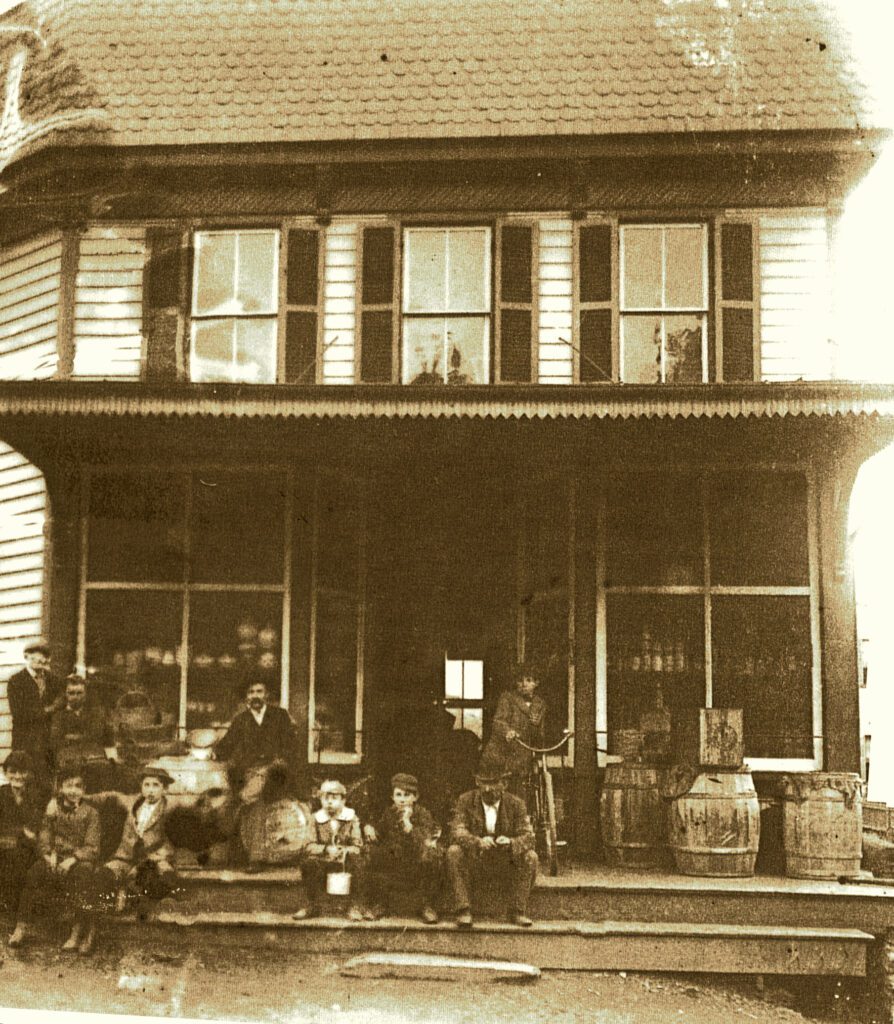
“Corner Store Hangout”, 1900 (WF Archives)
By the time industries fueled America’s business expansion from 1879-1893, Waterford carpenters were already quite busy. New types of specialty stores, such as grocery stores, drug stores, and tin shops opened; several in new buildings. And several Victorian-style homes were constructed on available town lots to house the shopkeepers and clerks.
This period of growth coincided with the Third Great Awakening. Increases in church attendance resulted in the return of a Presbyterian congregation to Waterford and construction of a Methodist church edifice for White congregants on the hill and for Black congregants near the mill.
The temperance movement, which sought to limit and then ban the consumption of alcoholic beverages, found new life in Waterford. Advocates met in the Temperance Hall above the Chair Factory. Other community activities at the time included attendance at literary society meetings held in local homes.
Electricity use and innovation
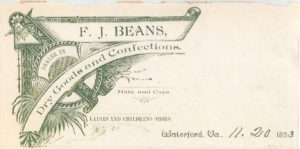
FJ Beans operated his store in the Waterford Market
Waterford saw remarkable changes during the Second Industrial Revolution. In 1884 you could place a telephone call at Dr. Connell’s store in Waterford to Clarke’s Gap after lines were run between the two places. Or you could receive electric therapy treatment from Dr. Connell with the use of his Electric Battery apparatus. Mr. J. F. Dodd improved the Waterford Mill by putting in machinery for making roller process flour. And in 1914, E. H. Beans, Waterford’s enterprising liveryman, acquired an automobile.
The type of employment available in Waterford also changed. By 1910, there were no longer any Waterford craftsmen making chairs, furniture, saddles, or shoes, which by then were made in urban factories. However, there was a stenographer, electrician, and a “phone girl” working in the Central office.
The impact of urbanization
The Industrial Revolution led to an increase in the pace of urbanization. The population of cities swelled as employment opportunities in factories and department stores rapidly grew. Farmers began converting fields into dairy farms to supply milk to local creameries that made butter for the burgeoning Washington, D. C. market.
Kingsley Creamery built a creamery on the Waterford town lot in 1885, but its duration was short-lived. Local creameries were made obsolete by new inventions that allowed city factories to obtain cream directly from farmers.
Local water-powered grist mills were also declining. Engineering advances in mill technology enabled large flour factories to be built on more substantial and reliable waterways.
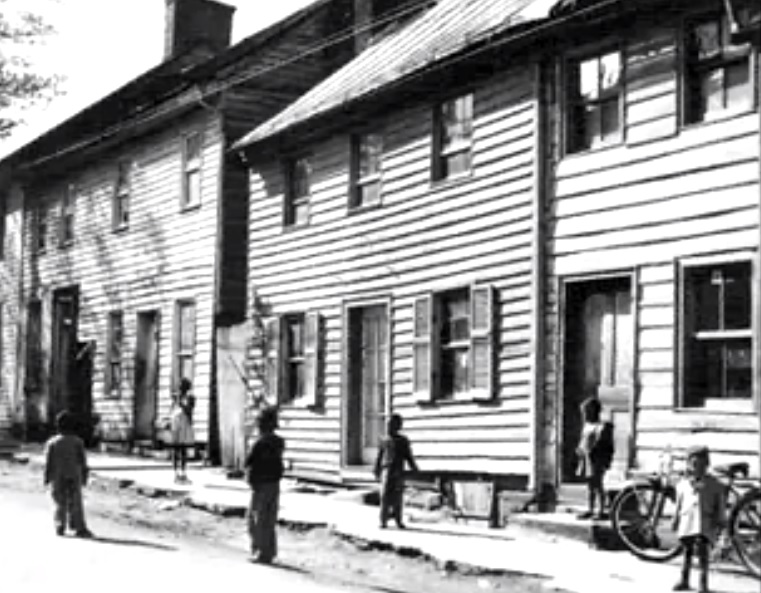
Kids Playing on Main Street, n.d. (WF Archives)
Because of urbanization and changes in manufacturing, both White and Black residents of Waterford moved to cities, notably Washington, D.C. When they left, many of the older structures on Main Street were purchased by Black families, greatly increasing home ownership for Waterford’s Black residents.
During the Great Depression, buildings were purchased by wealthy preservationists who wanted to revive Waterford into a “Little Williamsburg.” Colonial-revival fever struck Waterford. Buildings were stabilized, altered, and “restored” with hand-hewn beams and colonial-style door hardware.
Preserving the village of Waterford
The Waterford Foundation, an early preservation organization, was formed in 1943 to encourage interest in restoring the town to an earlier period. Fundraising fairs featured early crafts made by local artisans and home tours. The village and tour buildings were provided with histories, often with dates erring on the side of the colonial period, never mind that Waterford was founded after the American Revolutionary War.
In time, White families began moving to Waterford in search of post-World War II housing, while the Black population dwindled as the younger generation sought opportunities elsewhere.
The national historic preservation movement took hold after the enactment of the National Historic Preservation Act in 1966 that established funding and guidelines for preservation programs. Waterford was listed on the National Register of Historic Places in 1969 and designated a National Historic Landmark in 1970. Many of Waterford’s historic structures were placed under easements with the state in the 1970s to ensure appropriate preservation treatment.
The Waterford Foundation continues its work to preserve historic the historic properties, including those owned by the Foundation, and to further the understanding of the history of the village in support of its education mission.
Debbie Robison writes about Northern Virginia history. You can read more of her articles on her website.
Want to learn more about the history of Waterford? Check out these articles below!
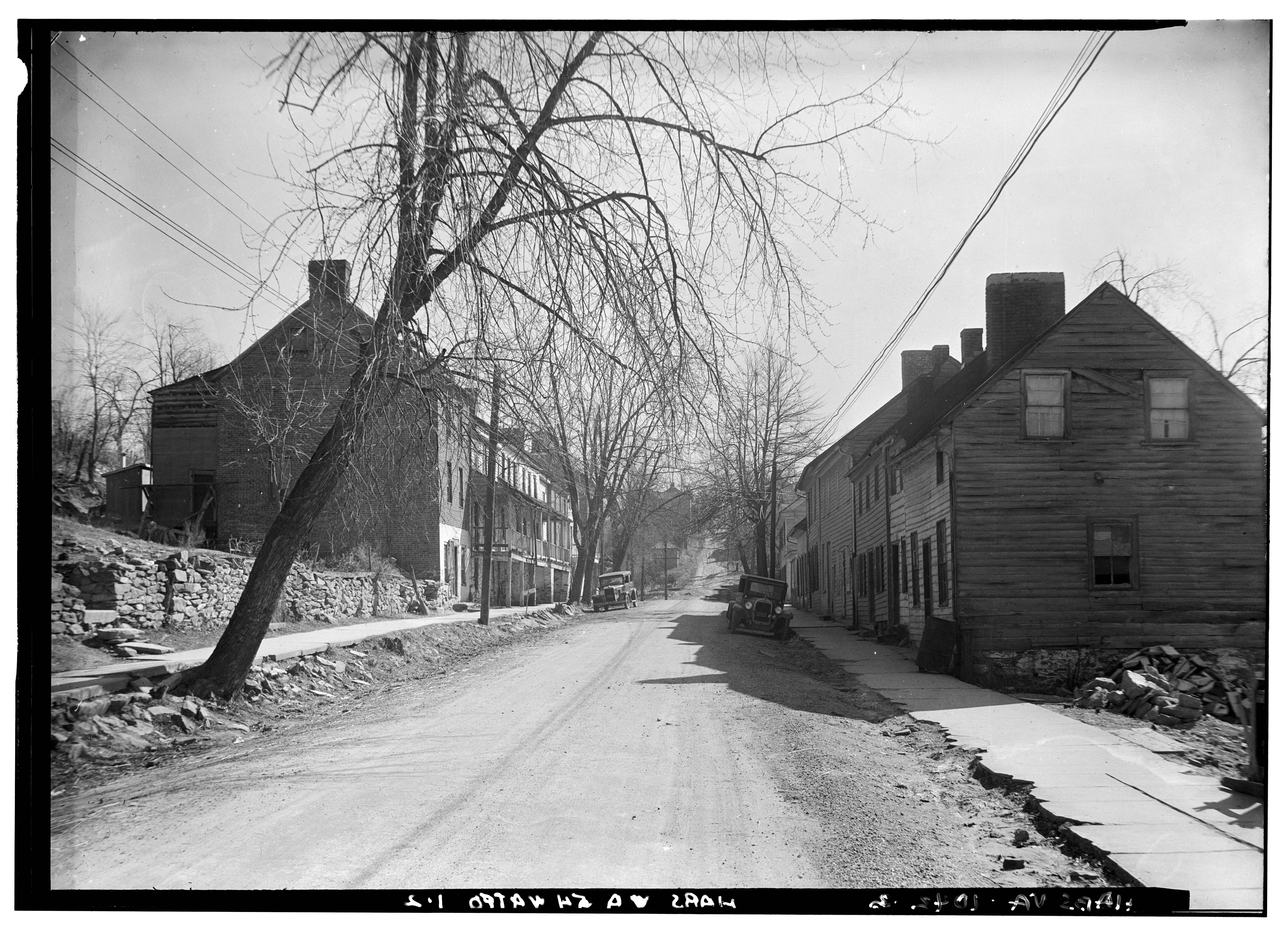
African-American James Lewis (born circa 1800) probably erected this house around 1850. In 1865 Quakers Frank and Mary “Mollie” Dutton Steer bought it, then sold it to Joseph Divine (1841-1933) in 1875. Divine ran a wheelwright shop across the street for many years; he apprenticed with Reuben Schooley before joining the Union Army and did not retire until he was 83. Early in the Civil War he interrupted his long career to join the Loudoun Rangers, a locally raised federal cavalry unit. The home has been substantially enlarged in recent years.
Excerpt from Walk With Us a walking tour of Waterford
President Abraham Lincoln’s first Supreme Court appointee attended school in Waterford?
Noah Haynes Swayne (1804-1884) a Frederick County, Virginia, Quaker, was sent to Jacob Mendenhall’s Academy in Waterford in 1817 because of the school reputation for excellence.
Swayne left Virginia in 1824 for the free state of Ohio because of his deep opposition to slavery. Supreme Court records indicate Swayne’s appointment “satisfied Lincoln’s criteria for appointment: commitment to the Union, slavery opponent, geographically correct.”
Courtesy of the Waterford Foundation Archives and Local history collection.