• Skip to main content
  • Skip to footer
  • Donate
  • Become a Member
  • Volunteer With Us!
  • Cart

Waterford Foundation

  • Education
    • K-12 Education Programs
    • The Waterford Fair
    • Waterford Craft School
    • Waterford HIstory
    • Remote Learning
    • The Quakers
    • African Americans in Waterford
  • Preservation
    • Historic Buildings
    • Mill Stabilization Project (2009-2023)
    • John Wesley Community Church Restoration
    • Dashboard Map of Western Loudoun Development, 1950-2020
    • Phillips Farm
    • Notes from the Preservation Desk
  • Shop
    • Books
    • Donate
    • Membership
    • Lantern Light Fund
  • Events
  • Weddings & Rentals
  • About
    • Contact Us
    • Meet the Staff
    • Meet the Board
    • Visit Waterford
    • Support
    • Join Us
  • News
  • Privacy Policy

Stephanie Thompson

Position Statements by the Loudoun Transmission Line Alliance:

February 29, 2024 by Stephanie Thompson

Statement on the 8/8/2024 Vote by PJM Board of Managers

The Loudoun Transmission Line Alliance is Encouraged by the PJM Board of Managers Vote on Updates on the Regional Transmission Expansion Plan

The Loudoun Transmission Line Alliance is pleased that on 7 August the PJM Board of Managers approved a change in scope for the 2022 RTEP W3 plan that avoids the construction of a new greenfield power transmission line through western Loudoun County by instead making use of existing rights-of-way. We thank all the organizations, communities, HOAs, farmers, businesses, churches, residents, visitors, and individuals from within Loudoun County and beyond whose massive support helped make this goal a reality. We are especially grateful for the critical unwavering support of our Loudoun County Board of Supervisors, County Attorney Leo Rogers, Virginia State Senator Russett Perry, and Virginia State Delegate Geary Higgins.

However, our collective effort is far from complete. The transmission line must still go through the region’s state regulators. In addition, with the continued unprecedented scale and pace of load growth by the data centers and the expected decommissioning of older power generation, PJM in July initiated a new expansion window seeking yet more transmission capacity in Virginia and the surrounding states. Those plans will begin to take shape as early as October. Virginia must also consider new power generation capacity, understanding that new plants in most cases will require new transmission or other forms of energy infrastructure. In the coming year, we will need to focus on new related legislative initiatives.

We will all need to stay engaged in these County, Commonwealth, and regional stakeholder discussions. Technology might be key to future prosperity in the region, but implementation of new infrastructure must include transparent planning and the best available methods and technologies to ensure preservation of our rural communities and businesses, our historical legacy and environment, and our way of life.

####

Statement on the 5/8/2024 NIETC Phase Two Announcement by the Department of Energy

The Loudoun Transmission Line Alliance Disapproves of the Department of Energy’s Decision to Include Loudoun’s Potential NextEra Route in NIETC Designation

The Loudoun Transmission Line Alliance (LTLA) finds the Department of Energy’s (DOE) decision to include rural Loudoun as a Potential NIETC Designation Geographic Area- an area part of the proposed NextEra transmission line- alarming and detrimental to residents of Loudoun County.

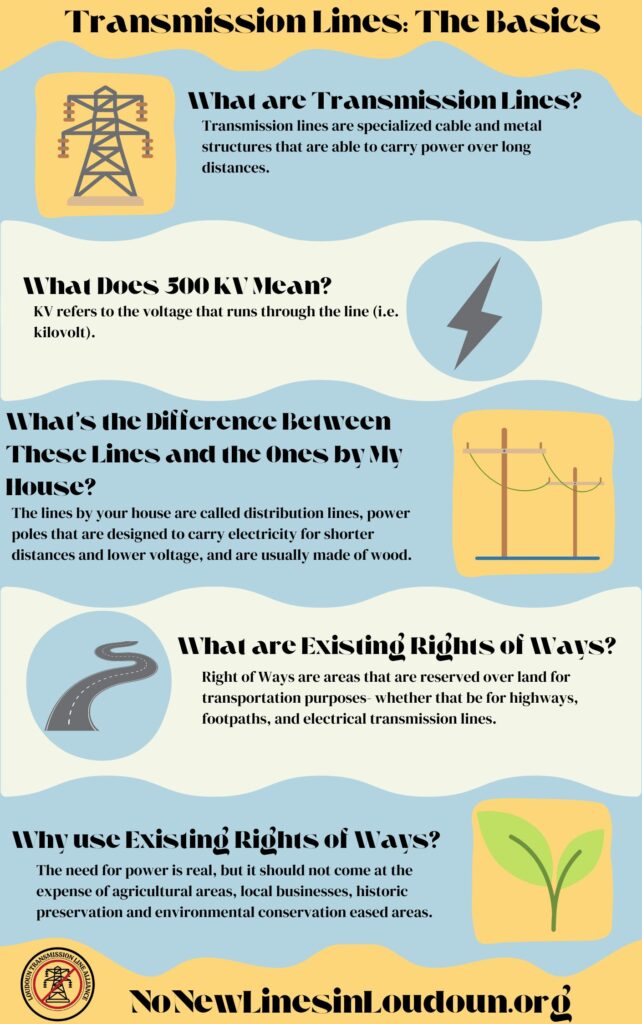
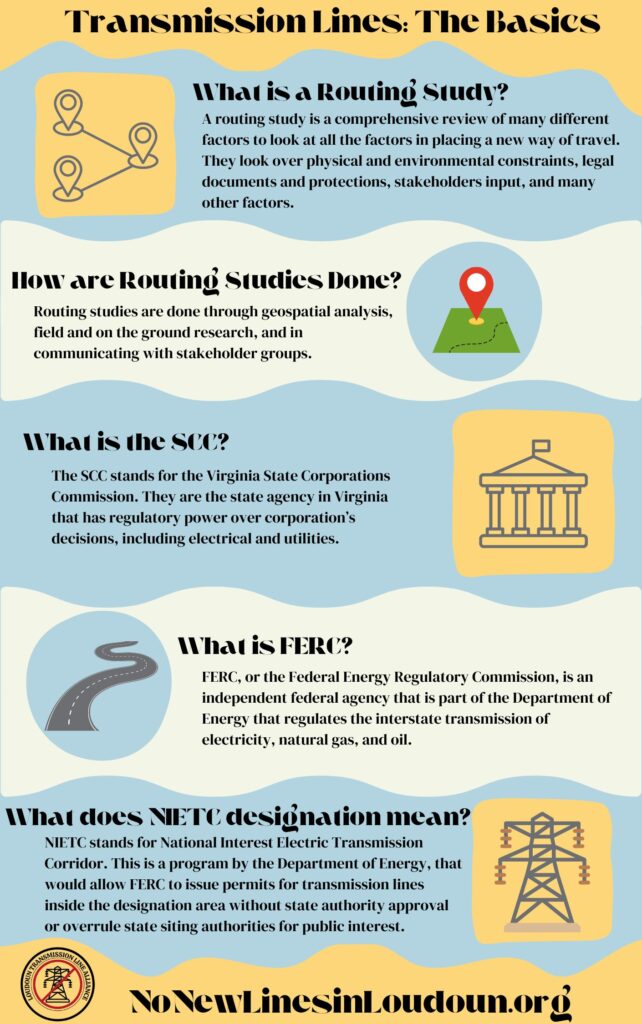
Today, the Department of Energy released Potential National Interest Electric Transmission Corridor (NIETC) Designations Geographic Areas moving forward to Phase Two. This includes Loudoun County, and the NextEra proposed line in Rural Loudoun. According to the Department of Energy, a “NIETC designation also allows the Federal Energy Regulatory Commission (FERC) to issue permits for the siting of transmission lines within the NIETC under circumstances where state siting authorities do not have authority to site the line, have not acted on an application for over one year, or have denied an application.” This would allow NextEra to build a greenfield power corridor within the wide swath in the geographic area of Rural Loudoun to support the Mid-Atlantic Resiliency Link project, even if the State Corporation Commission (SCC) denies construction.

While we understand the need for power in a growing area such as Loudoun and Northern Virginia, we do not believe that it should come at the expense of the community, local businesses, agriculture, conservation, and preservation. Denoting Loudoun a National Interest Electric Transmission Corridor would meet the power needs of a few while endangering the future of an entire region. The Alliance continues to call upon NextEra to withdraw their plan, and build within existing right-of-ways. The current trajectory of NextEra’s proposal in Rural Loudoun, and its application for a NIETC designation, would put Loudoun County’s economy, environment, and historic legacy at grave risk.

Phase two public comment period has opened, and will close on June 24, 2024 at 5:00PM ET. We encourage the Loudoun Community to send comments to NIETC@hq.doe.gov. Accordingly, the LTLA will respond to DOE within this period with a clear and complete report of local impacts on Rural Loudoun for its further consideration.

For more information about the NIETC designation and how it would impact our community, please visit our website at loudountransmissionlinealliance.org.

####

Statement on the April 16, 2024 Board of Supervisors Resolution

The Loudoun Transmission Line Alliance Commends the Loudoun County Board of Supervisors’ No New Route in Western Loudoun Resolution

The Loudoun Transmission Line Alliance (LTLA) applauds the Loudoun County Board of Supervisors’ resolution opposing the Western Loudoun Route for the proposed 500kV electrical transmission lines proposed by NextEra Energy.

On April 16th, the Loudoun County Board of Supervisors voted 9-0 to approve a resolution encouraging NextEra to use an existing electrical transmission right-of-way instead.

LTLA is elated to have the support of the Board of Supervisors. “We applaud the Loudoun County Board of Supervisors for leading the way, insiting that pristine and hsitoric greenspace and economic drivers of Rural Loudoun be preserved intact,” said Susan Manch, President of the Board of Directors for the Waterford Foundation, Inc.

Building a new transmission line through Western or Rural Loudoun would be severly detrimental to all residents and impact the past, present, and future of Loudoun County. While the LTLA understands the need for power in a growing county like Loudoun, it believes it should not come at the cost of agriculture, tourism, local businesses, the community, conservation, and preservation. “For NextEra, this is a commercial decision, but for Loudoun it’s existential,” said Jim Hanna, Loudoun Transmission Line Alliance member, quoting the Declaration on the NextEra MARL Project.

The LTLA continues to call upon NextEra Energy to reconsider its plan and build within the existing right of ways. The current trajectory in Rural Loudoun would put all of us, our environment, and our historic legacy at risk.

####

Pre-Loudoun Transmission Line Alliance Opposition Letters:

Opposition Letters (2023):

  • See Waterford Foundation President Susan Manch’s letter to PJM here.
  • Waterford Citizens’ Association letter citing alternative routes.
  • Read the opposition letter from the National Park Service here.
  • Opposition Letter from the Maryland Office of People’s Counsel.
  • Opposition Letter from the Virginia Outdoors Foundation.
  • Opposition Letter from the Loudoun HRDC

Other letters:

  • November 28, 2023 letter from the Organization of PJM States (OPSI) to the PJM Board.
  • December 8, 2023 letter from NextEra Energy to PJM regarding PJM staff recommendation of the acceptance of NextEra’s MidAtlantic Resiliency Link (MARL) project and citing plans to engage with local stakeholders beginning in January 2024.
  • December 18, 2023 response letter from PJM about the proposed transmission lines to interested stakeholders.
Filed Under: MARL

Frequently Asked Questions

February 29, 2024 by Stephanie Thompson

Do you have any more questions about the MARL proposal? Fill out the form with the question below and someone will get back to you!

ltla contact form

Filed Under: MARL

About the Mid-Atlantic Resiliency Link

February 29, 2024 by Stephanie Thompson

The Mid-Atlantic Resiliency Link (MARL) is a collection of new and upgraded power transmission lines aimed at meeting the current and future power needs of the Mid-Atlantic region with improved resiliency against outages and other power interruptions. A portion of the MARL project was awarded to NextEra Energy by PJM Interconnection, the regional transmission authority responsible for regulating energy providers in the Mid-Atlantic region.

The NextEra portion of the MARL project includes a proposed new line through rural parts of Loudoun County from the Daubs substation south of Leesburg, around Leesburg to the west through communities including Hamilton, Waterford, and Lovettsville before connecting to upgraded lines through existing rights-of-way in Maryland.

Project Timeline (Approximate)

DateMilestone
January 2024Contract awarded to NextEra Energy; Routing Study Begins
May 2024Routing Study Complete
June 2024Stakeholder Meetings and Public Input Sessions
late 2024NextEra Proposal Submission to Virginia State Corporation Commission

Additional Resources

See NextEra’s project page here.

See an interactive map of the preliminary proposed line here, which includes the proposed NIETC Designation Corridor. (Created by Piedmont Environmental Council, thank you!)

  • Executive Summary of Key Points on the NextEra Transmission Line
  • Presentation slides from the 12/7/23 Waterford Citizens’ Association meeting.
  • Meeting summary from Hamilton and Waterford Meeting provided by Board President Susan Manch.
  • Comments provided by Tom Donahue for the Federal-State Task Force on Electrical Transmission.
  • Fact Sheet provided by Tom Donahue about the NextEra Power Line
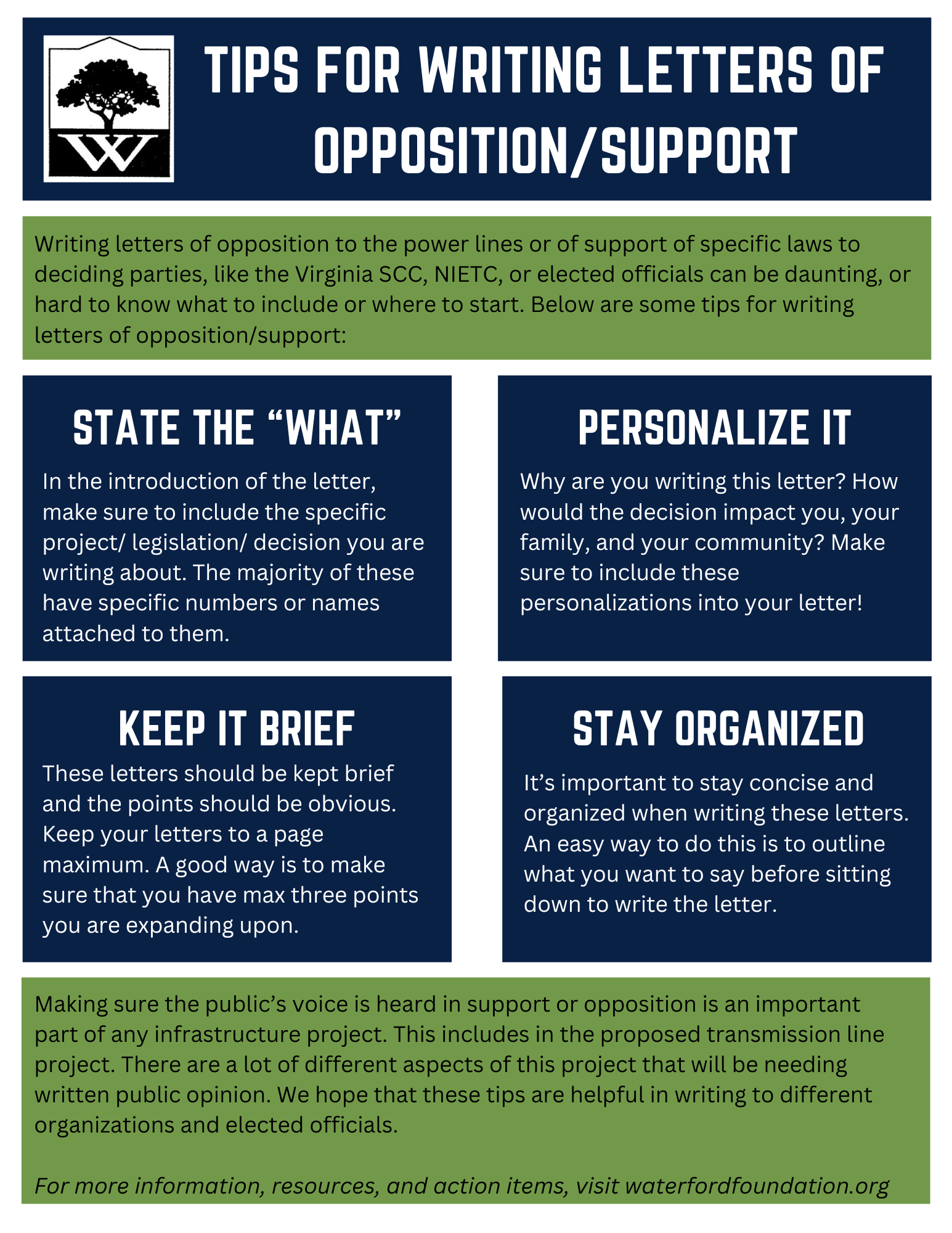
  • Tips in Writing Letters Sheet linked here

Filed Under: MARL

About the Alliance

February 29, 2024 by Stephanie Thompson

In January 2024, representatives from Loudoun nonprofit organizations, community and neighborhood associations, business organizations and other interested parties gathered at the Old School in Waterford, Virginia to coordinate efforts to oppose the proposed greenfield transmission lines of the Mid-Atlantic Resiliency Link contract awarded to NextEra Energy by PJM Interconnection. Instead, the Alliance believes that all transmission lines should be built in existing power corridors The members of the alliance developed and agreed to the following Declaration to clarify their common purpose (link to PDF Version)–

Sign the Declaration by the Loudoun Transmission Line Alliance on the NextEra MARL Proposal using this link!

Declaration by the Loudoun Transmission Line Alliance on the NextEra MARL Proposal:

We, the undersigned stakeholders, representing business, preservation, agricultural, environmental, and community organizations in Loudoun County, Virginia, call upon NextEra Energy to avoid building a new power corridor through rural Loudoun County, in view of the negative impact of such construction on the agricultural community, local economy, heritage and natural resources, and residents of the region. 

We strenuously oppose construction of new “greenfield” lines in rural areas of the County.  All new transmission lines should be located within existing power corridors – which we understand would be acceptable to PJM.

  • We also request that NextEra utilize existing rights of way and alternative methods, such as advanced conductors and the use of underground lines in highly populated areas, in order to meet the power needs of Loudoun’s data center industry.

As currently configured, the proposed route will cause major collateral damage to existing local businesses, notably in the agricultural and tourism sectors, as well as to residential valuations.  Power corridors must be sited to minimize the impact on existing businesses, including those dependent on intact open landscapes.

  • Loudoun County remains a thriving agricultural region, with 1,332 farms accounting for $50 million in sales in 2022 alone. Moreover, Loudoun’s thriving equine industry has an annual economic impact of $180 million.
  • The proposed lines also threaten Loudoun’s $4 billion tourism industry, including $400+ million in agritourism alone.  Surveys show that the County’s landscapes, farms, wineries, breweries, and historic sites are a major draw for visitors.
  • NextEra must account for its damage to these vital sectors of the economy. 

Historic and environmental sites, including landscapes, define the distinctive heritage of Loudoun County.  In no instance should power corridors transit through or near National Historic Landmarks, historic districts, and other properties under conservation or preservation easements.

  • Loudoun boasts six National Historic Landmarks, seven county historic districts, and 4,426 easements that safeguard important environmental and historic sites.
  • Conservation and historic preservation easements are legal deed restrictions that in Loudoun, are very site-specific and hence cannot be exchanged for uneased property.  Easement holders will vigorously defend these protections as any plan ignoring these protections will undermine the sanctity of easements state-wide.
  • A noteworthy example of local, state, and federal historic and environmental protections at risk is the Waterford National Historic Landmark.  Waterford’s 1,420 acres are a rare instance of a fully intact 19th century community with scores of protected historic properties, agricultural land, natural habitats, and open spaces.
  • New transmission corridors in rural Loudoun would directly threaten a number of eased sites, as well as prime farmland, waterways, habitats, open spaces, and historic properties.

For NextEra, this is a commercial decision, but for Loudoun it’s existential.  We call for no new power corridors in rural Loudoun!

See who all have signed the Declaration here! This Declaration is a living document, and signers are consistently updated. Please consider signing on to support our stance!


Who do I contact in the Loudoun Transmission Line Alliance?

Our communications and outreach team can be reached out transmissionlines@waterfordfoundation.org. You can also find them during Foundation office hours from 10am-2pm Tuesday-Friday at 40222 Fairfax Street, Waterford VA 20197, around the county during travelling office hours, or available for appointments.

Abigail Zurfluh- Communications Chair

Abigail is also the Historic Preservation Director for the Waterford Foundation. She has been involved with the Alliance since the beginning meetings at the Waterford Old School. She has a degree in historic preservation and geography from the University of Mary Washington. In her free time, she loves to explore all of what Loudoun County has to offer, playing games (especially board games, card games, or trivia) with friends and family, and line dancing. Her favorite part about Rural Loudoun is the balance of the built and natural environments achieved through historic preservation and environmental conservation.

Alexander Newton- Field Operations Director

Alex joined the communication and outreach team as the Field Operations Director in June 2024. After graduating with a Master’s Degree in History Education from Virginia Tech, he moved back to Loudoun and started teaching at John Champe High School. In his free time, Alex enjoys visiting local businesses, painting miniatures, reading historical nonfiction, and wildlife photography. His favorite part of Rural Loudoun is the local community he is a part of. He loves participating in local events like Oktoberfest in Lovettsville and the Waterford Fair.

Filed Under: Uncategorized

John Dutton’s January 1864 Visitor

January 3, 2024 by Stephanie Thompson

Excerpt from Reb and Yank, A Civil War History of Northern Loudoun County, Virginia by Taylor M. Chamberlin and John M. Souders

Chapter 26: Blockaded; January-February 1864

The New Year found Capt. Albert M. Hunter of Cole’s Cavalry stranded deep in “Mosby’s Confederacy.” Two days earlier, with orders to scout to Rectortown in Fauquier County, he had led sixty men out of his battalion’s winter camp on Loudoun Heights, opposite Harpers Ferry. They started on the road to Hillsboro in late afternoon but, aware that Rebels maintained lookouts atop outcrops on the Short Hill and Blue Ridge, Hunter disguised his plans by cutting back across country after dark to seek shelter among Lovettsville’s Unionists. 

Leaving the German Settlement on the last day of December, the Marylanders pushed on through sleet and snow to a farm two miles outside Upperville, where they spent their second night. A brief skirmish the following morning confirmed that the enemy knew of their presence, but Hunter felt compelled by his orders to proceed into Fauquier. Riders shadowed his movements along the way and, after sending an advance party to briefly reconnoiter Rectortown, the apprehensive captain ordered his men to return directly to Harpers Ferry.

His concern was warranted. Although Mosby was out on a scout, a subordinate, Capt. William R. Smith (Co. B, 43rd Va. Cav.), sounded the alarm for the partisans to assemble. Their number surpassed 35 by the time they reached Rectortown, but the Yankees had already left. Galloping off in pursuit, the Rebels caught up with their quarry at a crossroads four miles to the north. A running fight ensued that continued almost to Middleburg, where Hunter’s troopers broke ranks and began to flee in confusion. At this point the captain was thrown from his saddle and taken prisoner. Left unattended while his captors went to retrieve his horse and equipment, he concealed himself in the underbrush and escaped detection on their return.1 

The captain emerged from hiding that afternoon and set off on foot toward the Union lines along the Potomac, thirty miles away. His first obstacle, Goose Creek, was so swollen with slush and ice that he could not wade across. Skirting its banks, Hunter stopped at a small log cabin after dark, where he obtained food and an old hat to ward off the bitter cold. But no amount of persuasion, or offers of payment, would induce the fearful tenant farmer to guide him to safety. “I dare not do it, my boss would know before sundown tomorrow and I would have to go into the army.”

Armed with directions from his reluctant host, Hunter pressed on alone to Pot House, a crossroads north of Middleburg, where he spotted a horse tied to a gatepost. Concluding it safer to “play infantry” than ride, he passed by – a fortunate decision he later learned, as the steed belonged to Mosby himself. As the night wore on, Hunter lost his way and again risked seeking help rather than freeze to death. This time, he walked up a lane to a substantial house that signified a well-to-do farmer. Things got off to an inauspicious start when the door was opened by “an old negro woman,” who answered “No sah,” when asked whether her master was  Union man. Still there appeared to be no choice but to identify himself when the owner appeared and explain his predicament. Like the man in the cabin, his new host knew about the fight earlier in the day and informed Hunter that not more than half of his men had managed to escape, “which was the truth, as [the captain] afterward learned.” The secessionist farmer agreed to provide directions to the Goose Creek Meeting House, but only if the officer would sign an order enabling him to purchase supplies at Point of Rocks. An agreement was reached, and Hunter filled out the necessary authorization, while his host outlined the best way to reach the Quaker community.

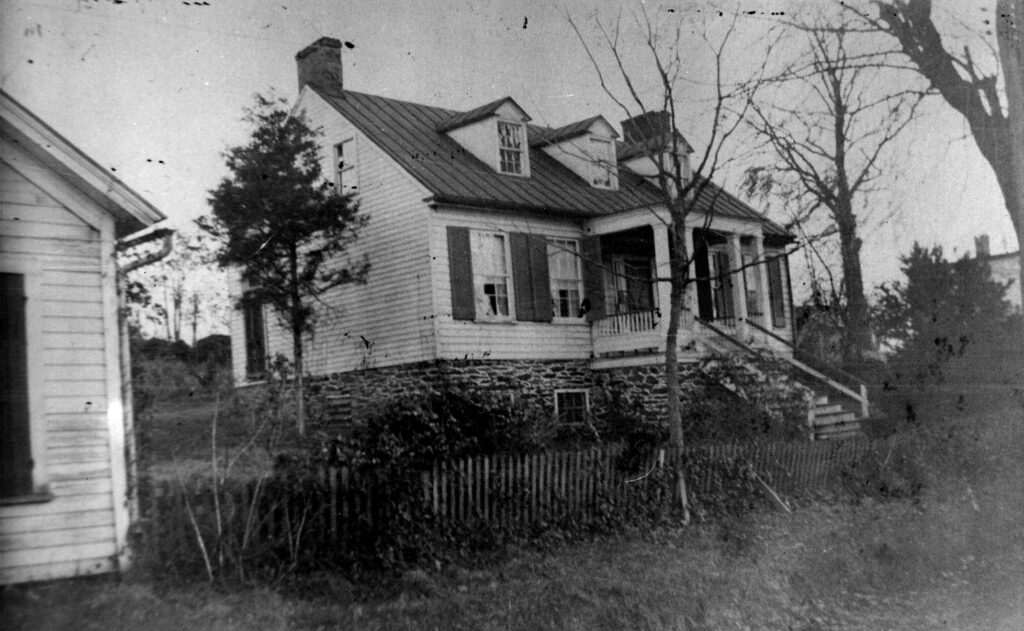
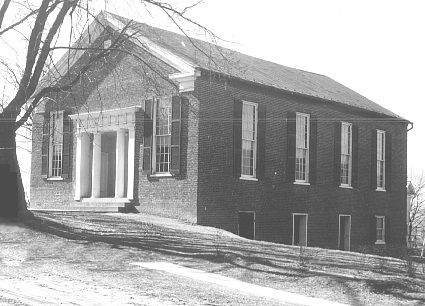
Sunnyside, home of John B. Dutton and family, pictured in 1937.

The weary Yank finally staggered into Goose Creek at sun-up, seeking refuge in the first house he came to. Although put off by his scruffy appearance, a Quaker woman allowed him to enter and take some breakfast. The captain then fell into a deep sleep until roused in the afternoon by a man named Steer, who offered to drive him to Waterford. To hide his uniform, Hunter was given gum overshoes and an old gray overcoat, which along with his battered hat, gave the appearance of a common laborer catching a ride. At Hunter’s suggestion, Steer drove him to John Dutton’s home in Waterford. The exiled shopkeeper had returned to spend the New Year with his family and was well acquainted with the captain. Once, the two had tried to skate on the canal from the Point to Georgetown, only to be forced back by rough ice. Even so, Dutton did not recognize the strange-looking man in the carriage until Steer identified him. Seeing an opportunity to play a joke on his family, he invited the two in, but told Steer to introduce his companion, still in disguise, merely as a “friend.” The visitors were in the parlor conversing with the family for a half hour before the youngest daughter (11-year-old Annie) finally recognized their guest. After supper and a night’s rest at the Duttons’, Hunter resumed his disguise and was driven to the Point by Steer. Not wanting to offend his benefactor by offering money, the captain presented him with his spurs and left a fine pocket knife in the carriage. His arrival by train at Harpers Ferry caused quite a stir, as he had been reported wounded in the fight at Middleburg.2

  1. Albert M. Hunter, “Account of the War Between the States,” part II; Mewborn, In Mosby’s Command, 14-7; Maj. Mosby’s report 4Jan64, OR, 33:9; and Keen and Mewborn, 43rd Battalion, 98-9. Hunter mistakenly placed the initial skirmish at Middleburg. He also recalled losing half of his 60 men, whereas Mosby estimated Hunter’s force at 78, of whom 58 were casualties, a figure Mewborn reduces to 39. ↩︎
  2. The driver was probably William B. Steer, 69, an abolitionist elder of Fairfax Meeting and husband of Quaker minister Louisa Steer. Hunter was fortunate to reach safety; three of his men were captured near Waterford on 2 January, while making their way back to Maryland (Williamson, Mosby’s Rangers, 118-9). ↩︎

Read more from Captain Hunter at the Emmitsburg Area Historical Society website.

Filed Under: history, News, Waterford History

Call to Action: Oppose Transmission Lines Through the Waterford National Historic Landmark

December 1, 2023 by Stephanie Thompson

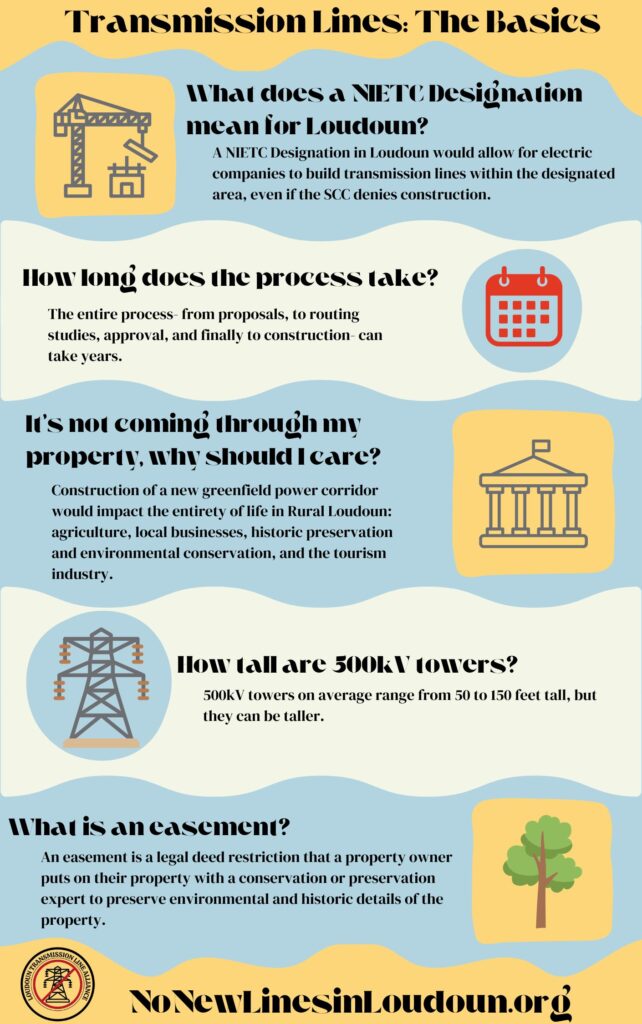
PJM, a regional transmission organization, has accepted a proposal for new power transmission lines that would go through Western Loudoun and directly through the Waterford National Historic Landmark to support the needs of the data center industry. The proposed 500KV lines go directly through conserved land and land under easement with the Virginia Outdoors Foundation.  These transmission lines pose a major threat to the integrity of the Landmark and the region we sit in. Our Landmark status is intrinsically linked with the unspoiled viewshed surrounding our historic village. Not only that, but every resident and business who calls Waterford home would be impacted by the construction of these power transmission lines. The Waterford Foundation stands opposed to such violation of our conservation values, and will work to oppose any impact to the integrity of Waterford’s Landmark status. 

Why is this important? Western Loudoun has remained relatively untouched by the massive growth of the data center industry in the past years. Instead, it remains a haven for farmland, open spaces, conservation, and preservation. Amongst the picturesque hills sit wonderful and profitable businesses and organizations that rely on the surrounding. It is also an area where history and past of Loudoun County can be found woven into the hustle and bustle of 21st century life. The best example of this can be found in the National Historic Landmark of Waterford. Building transmission lines through this region would impact the daily lives of residents in an unprecedented manner; damage the livelihoods of farms, businesses, and organizations that are in its path; and damage the integrity of the Waterford National Historic Landmark. This is similar to a proposal to put transmission lines through Gettysburg National Battlefield or Mount Vernon. 

We need your support to fight this threat. One thing that the Foundation has learned is the power of the Loudoun County community banding together for a common cause. Please see below for ways you can help us oppose this threat.

Stay in touch:

The Waterford Foundation is maintaining an email list for those who would like to stay informed about this issue. If you would like to be included, please email Historic Preservation Director Abigail Zurfluh here, or fill out the form at the bottom of this page.

How you can help: 

Share your concerns with decision makers:

National Interest Electric Transmission Corridor (NIETC):

  • Changes in the designation of the National Interest Electric Transmission Corridor could pose a challenge for opposing proposed transmission lines. If it is determined by the Department of Energy that Loudoun County is a NIETC, the Federal Energy Regulatory Commission could issue permits for transmission line construction even if state authorities deny applications.
  • The Department of Energy is currently accepting public input regarding NIETC designations for Phase One. In Phase Two, a preliminary list of areas being considered will be released and public comments on that list will open. In Phase Three, the DOE will develop geographic boundaries, more public comments, and go over Needs Study. Finally, in Phase Four, the DOE will release any necessary environmental documentations before final NIETC designations.
  • The Department of Energy is currently accepting public comments for phase one until February 2nd. Public comments can be emailed to NIETC@hq.doe.gov

Virginia State Corporation Commission:

  • In Virginia, the State Corporation Commission will be making the decision on the actual chosen route when application is submitted by NextEra. Watch this space for instructions on how to voice your opposition to this project to the Virginia State Corporation Commission.

Elected Officials:

  • Watch this space for ways to share information with elected representatives about transmission lines.
  • For more information about bills in the General Assembly in 2024 surrounding this issue, check out this flyer made by our collogues at the Piedmont Environmental Council

Spread the word about this issue:

  • Share social media posts from the Waterford Foundation, Piedmont Environmental County, Loudoun Wildlife Conservancy and other organizations to strengthen local opposition.
  • Tell friends, family and neighbors about this issue to broaden our base of support

Show your support by signing our online petition:

  • Sign this online petition to show your opposition to the proposed transmission lines.
  • Share the petition so that we are able to show large opposition in this region!

Donate to support the Waterford Foundation’s work to preserve the Waterford National Historic Landmark and oppose threats like this.

Donate Now!

Important Upcoming Dates and Timelines: 

February 2nd- Due Date to Submit Public Comments on Stage One of National Interest Electric Transmission Corridor to the DOE. Public comments can be submitted via email to NIETC@hq.doe.gov

February 7th at 6:30pm- Loudoun Nonprofit Leadership Summit is taking place at the Old School in Waterford. If you are a leader/staff member of a preservation, conservation, or other related organization/stakeholder in this issue, please RSVP using this link.

May/June: Possible completion of NextEra routing study

Summer 2024: Be on the look out for community open houses hosted by NextEra about the routes.

Late 2024: Possible aim for a proposal to SCC

Resources to Learn More:

Background Information: Our colleagues at Piedmont Environmental Council have been monitoring PJM’s transmission line proposals for some time. Visit their page to view a map of the proposed path and learn more about the issue. Linked here is a video made by our collogues at the Piedmont Environmental Council providing important background to this issue. Running time is roughly eight minutes.

NextEra Information: Read more about the Mid-Atlantic Resiliency link from NextEra at their website here. Specific questions, comments, or concerns can be sent to the NextEra team using the email box on the webpage. Currently, NextEra is working on the routing study through a third party.

Loudoun County Government Role: Read more about the role of the Loudoun County government in this civic alert.

National Interest Electric Transmission Corridor: Read more about the designation process here.

In the News:

  • Western Loudoun farmers say proposed power lines could put them out of business, Loudoun Times Mirror, 1/31/2024
  • Newly appointed SCC judge will recuse herself from western Loudoun transmission line case, Loudoun Times Mirror, 1/24/2024
  • General Assembly Appoints NextEra Attorney to SCC Seat, Loudoun Now, 1/24/2024
  • Concern Grows Over Data Centers, Power Lines in Loudoun, Loudoun Now, 1/23/2024
  • Department of Energy Changes Could Pose More Challenges for Power Line Opposition, Loudoun Now, 1/16/2024
  • Data Center Campus Plan Hit with Community Power Concerns, Loudoun Now, 1/11/2024
  • FERC Commissioner urges reform of federal transmission planning and financial incentives, Blue Ridge Leader and Loudoun Today, 1/3/2024
  • Company to build transmission lines in Loudoun has history of legal problems, Blue Ridge Leader and Loudoun Today, 1/3/2024
  • SCC Poised to Make Decisions on Greenway Tolls, Western Loudoun Power Lines in 2024, Loudoun Now, 1/2/2024

Opposition Letters:

  • See Waterford Foundation President Susan Manch’s letter to PJM here.
  • Waterford Citizens’ Association letter citing alternative routes.
  • Read the opposition letter from the National Park Service here.
  • Opposition Letter from the Maryland Office of People’s Counsel.
  • Opposition Letter from the Virginia Outdoors Foundation.
  • Opposition Letter from the Loudoun HRDC

Other letters:

  • November 28, 2023 letter from the Organization of PJM States (OPSI) to the PJM Board.
  • December 8, 2023 letter from NextEra Energy to PJM regarding PJM staff recommendation of the acceptance of NextEra’s MidAtlantic Resiliency Link (MARL) project and citing plans to engage with local stakeholders beginning in January 2024.
  • December 18, 2023 response letter from PJM about the proposed transmission lines to interested stakeholders.
Other Resources:

  • Executive Summary of Key Points on the NextEra Transmission Line
  • Presentation slides from the 12/7/23 Waterford Citizens’ Association meeting.
  • Meeting summary from Hamilton and Waterford Meeting provided by Board President Susan Manch.
  • Comments provided by Tom Donahue for the Federal-State Task Force on Electrical Transmission.
  • Fact Sheet provided by Tom Donahue about the NextEra Power Line
  • Tips in Writing Letters Sheet linked here

Past Milestones

December 5th, 2023: PJM Transmission Expansion Advisory Committee (TEAC) meets to review proposals for the Regional Transmission Expansion Plan (RTEP). See public comments associated with this meeting here. Thank you to those who sent letters of opposition!

December 11th, 2023: PJM Board approves the slate of proposed projects, including the proposal from NextEra to construct a new greenfield transmission line through the Waterford National Landmark. See details in the PJM whitepaper, here.

December 13th, 2023: Loudoun County Board of Supervisors met to adopt a new zoning ordinance in Loudoun County that includes new approval processes for data centers in Loudoun County.

December 17th, 2023: People gathered together in the Old School to celebrate the 20th Anniversary of Conservation on Phillips Farm. It was a fun evening full of celebration and reminiscing. Thank you to everyone who was able to attend!

Past News Articles:

  • ‘To preserve the view, you have to own it’: Waterford Foundation Marks 20 Years Since Phillips Farm Purchase, Loudoun Times Mirror, 12/27/2023
  • After Zoning Ordinance Adoption the Work Continues, Loudoun Now, 12/21/2023
  • Waterford Commemorates 20 Years of Phillips Farm Conservation, Loudoun Now, 12/18/23
  • PJM advances proposal for transmission line in Western Loudoun, Loudoun Times Mirror, 12/13/23
  • PJM Ignores Stakeholders and Approves Transmission Lines to be Built, Blue Ridge Leader and Loudoun Today, 12/12/23
  • PJM Approves Proposal for 500 kV Power Lines Across Western Loudoun, Loudoun Now, 12/12/23
  • PJM Board of Managers Approves Critical Grid Upgrades, PJM Inside Lines, 12/11/2023
  • PJM recommends transmission line be built despite overwhelming public concern, Blue Ridge Leader and Loudoun Today, 12/7/2023
  • Power Line Objections Move to PJM, Loudoun Now, 12/5/2023

Filed Under: News, Preservation, Uncategorized

Holiday Recollections in Early 20th Century Waterford

December 1, 2023 by Stephanie Thompson

In the early 1900s, Christmas was an occasion when Waterford residents of different congregations came together to celebrate. According to recollections by late Waterford resident John Divine (1911-1996) in When Waterford and I Were Young:

“All three churches [The Presbyterian, Methodist, and Baptist, still standing on High Street in Waterford] shared in a Wednesday evening prayer meeting and all three had Sunday School picnics. The reward for going to Sunday School was two-fold: the picnic, when ice cream flowed abundantly, and the Christmas program, when we got an orange and a small box of chocolate drops.

The Christmas program also gave all of us amateur actors a chance to perform. Any similarity between our Three Wise Men and the real Magi was purely coincidental. Only the parents enjoyed that group of squirmy little boys singing Away In A Manger off key.” 

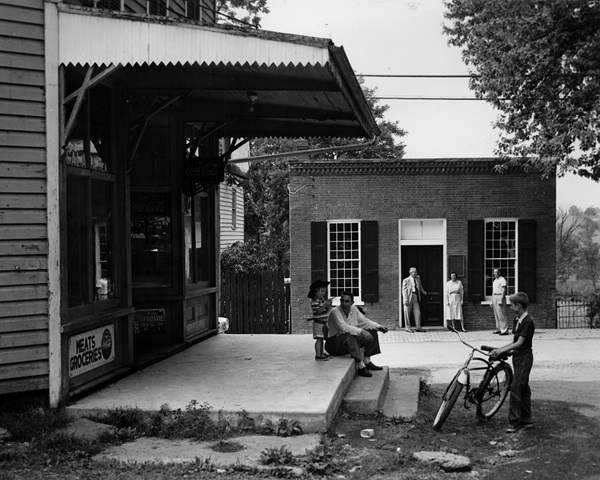
Many holiday recollections center around special foods and feasts among family and friends. Divine remembers the special foods that came to Waterford during the holidays in the early 1900s, sold out of the meat shop operated by E. L. James and later his son Minor out of the Old Insurance office on Second Street:

“At Thanksgiving and Christmas, the meat shop handled oysters. The only time I ever ate oysters was at those two dates: at $6.00 per gallon, they were a real delicacy. Orders were placed about ten days in advance and they were received a day or two before the holiday. The gallon cans, packed in ice, were shipped up on the railroad to Paeonian Springs. Later, when Minor James got a Model T truck, he would drive to the wharf in Washington, D.C. to get them.”


When Waterford and I Were Young is available for purchase online or in person at our offices in the Old School.

Filed Under: history, News, Uncategorized, Waterford History

A War of Conscience: Quakers in the Civil War

August 31, 2023 by Stephanie Thompson

Written by Robert Dabney Trussell. This article first appeared in the 50th Annual Waterford Homes Tour and Crafts Exhibit Booklet, October 1-3, 1993.

The American Civil War–it has been described variously as the war between the states; the conflict that pitted brother against brother; the battle for freedom or slavery.

It was a war of extreme points of view where the middle ground of rationality was razor thin or lost in the bloodletting. It was a war of opposing armies marching, foraging, camping and fighting over the rolling fields and idyllic towns of a new republic. The war involved every community in some way and likewise touched every citizen in the nation.

While most Americans both North and South marched to the cadences of their causes, Quakers in both regions struggled to heed their consciences. For the most part, members of the Society of Friends believed that both governments were wrong to use violence to settle their differences. Quakers opposed slavery as the vilest form of human degradation, superseded only by the act of killing.

Friends generally stood against a war that most Americans, religious denominations and political organizations of the time regarded as a righteous war. How could Quakers take such a stand?

The simplest reason stemmed from a primary precept of the Quaker faith that the light of God burns within every man, woman and child. Therefore, the sacredness of life was not to be violated in any manner. This moral stance had a secular human rights component that faulted both the Union and the Confederate governments. Friends found the federal government’s brutal policy toward Native Americans to be as inhuman as the South’s institution of slavery. Also, Quakers openly decried the North’s abolitionist propaganda while its manufacturers profited greatly from raw goods derived from slave labor.

At the same time, the Civil War altered the traditional isolationism of the Friends and thrust many Quakers into the turmoil of the time.

Even before the war, some Quakers risked their lives as participants of the “Underground Railroad” which provided a route to freedom for thousands of slaves. Quakers, even in the South, attacked slavery through newspaper articles, tracts, and nationally published Quaker journals. When hostilities did break out in 1861, numerous Quakers struggled greatly with their consciences, left their meetings for worship and took up arms against the Confederacy.

Quakers in the South and thereby in Loudoun County, found themselves at particular risk. This population of Friends was sizable, influential and prosperous. Following the land migrations of the 17th and 18th Centuries, Quakers settled throughout Virginia. More than 60 meeting houses were built in the Commonwealth and several Quaker communities were well established in Loudoun County. The town of Waterford became a major center for Quaker education and commerce, as well as the location of the Fairfax meeting.

This whole community of Friends was threatened by the war. Whereas Quaker pacifism was protected in the North (Abraham Lincoln’s great-grandfather was a Pennsylvania Quaker), being a Quaker in the wartime South was a liability.

Quaker men who refused to enlist or answer the draft were frequently imprisoned and ridiculed. One Waterford Quaker objector was even abducted from his home, forced to march with an infantry unit and cruelly placed without defense in the front line of an attack during a battle. Somehow he survived that ordeal only to die from disease in a Confederate prison. The Fairfax Friends’ opposition to slavery left them vulnerable to discrimination or at least shunned by fellow Southerners. Rebel armies would target Quaker farms in the area for food and shelter. Farmers and merchants suffered great loss of property and business. Also the war cut off Quakers from their friends and relatives in the North.

Through it all, Friends in Loudoun County kept their faith and traditions alive and struggled to follow Christ’s words “to do unto others”. A poignant example of this belief is found in a letter written in 1863 by Susan Walker, a Waterford Quaker. 

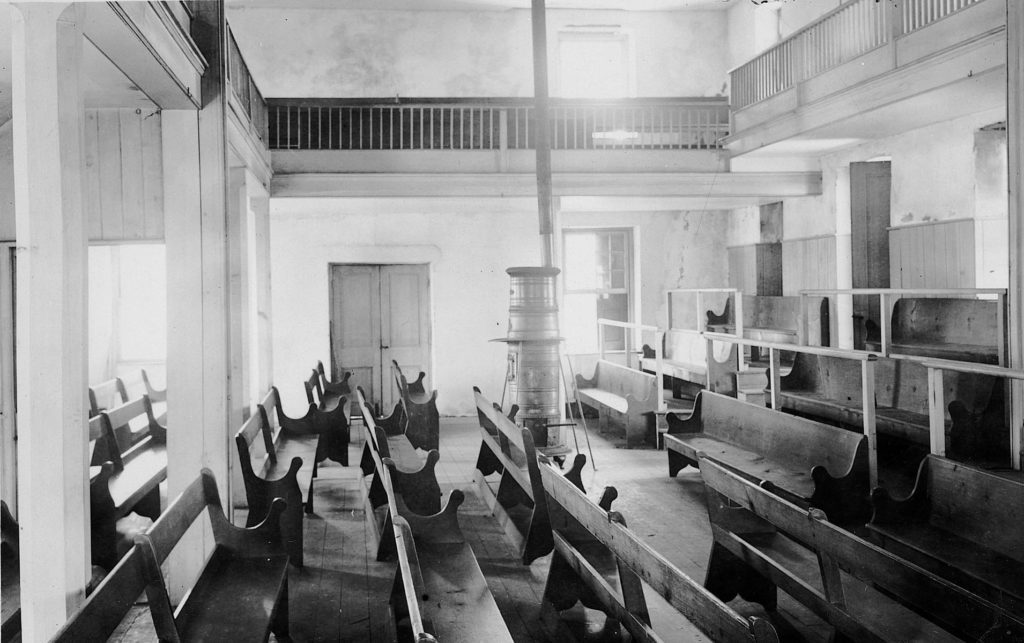
Susan Walker described an event that occurred early in the war. On Sunday, Friends of the Fairfax meeting arrived for worship to discover a company of Confederate regulars billeted in the stone meeting house. Both the house and the yard were strewn with stacks of rifles, flags and campaign gear. Soldiers relaxed on the meeting house benches and slept up in the gallery. As the Quakers entered, some soldiers rose to meet them with jokes about their plain attire and taunts about their anti-slavery beliefs. 

Interior of Fairfax Meeting House

But the Quakers were resolved to worship that day; a quick compromise was reached with the commanding officer. A portion of the meeting room was partitioned off with tenting allowing the Quakers a place to quietly wait upon God. The Quakers then invited the soldiers to worship with them. Curious about “how Quakers prayed”, several of the company joined them. During the silence, an elderly woman, moved by God’s presence, stood and spoke to the odd assembly. In a strong voice she prayed “God bless all here and that the wings of peace might return to our prosperous country and peace be with the strangers in our midst”.

With this the woman sat. So moved by her words, the soldiers wept openly: “…great tears coursed each other down their sun-burned cheeks”, wrote Susan Walker. 

The year was 1861. Four long and bloody years of the Civil War still remained before peace finally returned to the Quakers of Waterford and the Nation.

Contributor: Robert Dabney Trussell who attends Goose Creek meeting in Loudoun County. Mr. Trussell lives in Rosemont, Maryland and works for the AFL-CIO in Washington, D.C.

Filed Under: history, News, quaker, Waterford History

  • « Go to Previous Page
  • Page 1
  • Page 2
  • Page 3
  • Page 4
  • Go to Next Page »

Footer

Email: oldschool@waterfordfoundation.org
Phone: 540-882-3018

Privacy Policy

Join Our Email List and Stay Connected!

Copyright © 2026 · Waterford Foundation · Log in