• Skip to main content
  • Skip to footer
  • Donate
  • Become a Member
  • Volunteer With Us!
  • Cart

Waterford Foundation

  • Education
    • K-12 Education Programs
    • The Waterford Fair
    • Waterford Craft School
    • Waterford HIstory
    • Remote Learning
    • The Quakers
    • African Americans in Waterford
  • Preservation
    • Historic Buildings
    • Mill Stabilization Project (2009-2023)
    • John Wesley Community Church Restoration
    • Dashboard Map of Western Loudoun Development, 1950-2020
    • Phillips Farm
  • Shop
    • Books
    • Donate
    • Membership
    • Lantern Light Fund
  • Events
  • Weddings & Rentals
  • About
    • Contact Us
    • Meet the Staff
    • Meet the Board
    • Visit Waterford
    • Support
    • Join Us
  • News
  • Privacy Policy

Waterford Foundation

The Sins of Christopher Fiddes

January 30, 2018 by Waterford Foundation

Sometimes a query from a Waterford descendant will, as below, reopen a neglected chapter of the village’s rich history…

Of the hundreds of thousands who emigrated to North America from the British Isles before 1800, the great majority were not free. Most had bound themselves to a number of years’ servitude in exchange for their trans-Atlantic passage or had entered into contracts as apprentices, hoping to learn a trade. Many of the remainder were felons who accepted a period of bondage in the New World rather than face notoriously harsh punishment in the United Kingdom, even for minor transgressions. One of the latter unfortunates summed up
his plight:

Forc’d from your country for to go
Among the negroes to work at the hoe,
In different countries void of relief
Sold for a slave because you prov’d a thief . . .

Waterford’s settlers drew from such indentured arrivals to supplement their own labor. And not infrequently, problems arose. At some point in the 1760s, Quaker Francis Hague, brother-in-law of the town’s founder, Amos Janney, took on an Irish offender, Christopher Fiddes, probably “to work at the hoe” on his farm at the north edge of the village. Unfortunately for Hague, Mr. Fiddes’s contrarian inclinations had accompanied him to Virginia. In August 1769 the new hand was “detected” gambling in a local tavern. At the time he was described as a “servant” of Mahlon Janney, Amos’s son and Hague’s nephew. Perhaps Francis, who was nearing 70, thought that the younger Mahlon might better be able to deal with the refractory Irishman. After all Mahlon had hauled into court that same year would-be runaway Duncan McDonald, and had additional time added to his term of service. But Christopher proved a hard case. Within weeks Francis was obliged to post a notice in the Virginia Gazette:

Run away from the subscriber, living in Loudoun County, near the Quaker meeting house, about 12 miles below the Blue Ridge, an Irish convict servant man named Christopher Fiddes, about 5 feet 9 or 10 inches high, and pretty well set. He had on when he went away a light coloured linsey jacket, a cotton ditto, a felt hat, two homespun shirts patched on the back with new linen, two pair of trowsers home made, a good pair of strong shoes, and a large flag handkerchief. He is very talkative, and of a very proud bold behavior, very near sighted, is a lover of strong drink, and very subject to take too much when opportunity offers, and is then very ill behaved; he walks briskly but heavy, taking long steps with a proud air, and is very subject to set his hands on his sides when speaking to any person; has a down look, and is marked with the small pox, tho’ not deep, but plainly seen. Any person taking up and securing the said servant, so that he may be had again, shall have a reward of THREE POUNDS, with all reasonable charges, paid by FRANCIS HAGUE.

No subsequent mention of Fiddes has been found, suggesting that he made good his escape. Despite the setback, both Hague and Janney continued to employ indentured laborers, as did many others in Loudoun at the time, as the system, when it worked, benefited all. In 1773 for example, Hague took on a new apprentice, an 18-year-old lad “bound to be a farmer.” But in this instance, at least, he was taking no chances. The new boy was a relative, Amos Hague.
 

Filed Under: history

Steer-Divine House

January 23, 2018 by Waterford Foundation

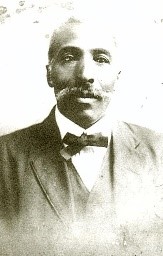
African-American James Lewis (born circa 1800) probably erected this house around 1850. In 1865 Quakers Frank and Mary “Mollie” Dutton Steer bought it, then sold it to Joseph Divine (1841-1933) in 1875. Divine ran a wheelwright shop across the street for many years; he apprenticed with Reuben Schooley before joining the Union Army and did not retire until he was 83. Early in the Civil War he interrupted his long career to join the Loudoun Rangers, a locally raised federal cavalry unit. The home has been substantially enlarged in recent years.

Excerpt from Walk With Us a walking tour of Waterford


Filed Under: archives, Black History, history, quaker

Noah Haynes Swayne, Lincoln’s First Supreme Court Appointee

January 16, 2018 by Waterford Foundation

Did you know…

President Abraham Lincoln’s first Supreme Court appointee attended school in Waterford?

Noah Haynes Swayne (1804-1884) a Frederick County, Virginia, Quaker, was sent to Jacob Mendenhall’s Academy in Waterford in 1817 because of the school reputation for excellence.

Swayne left Virginia in 1824 for the free state of Ohio because of his deep opposition to slavery. Supreme Court records indicate Swayne’s appointment “satisfied Lincoln’s criteria for appointment: commitment to the Union, slavery opponent, geographically correct.”

Courtesy of the Waterford Foundation Archives and Local history collection.

Learn more about Justice Swayne at Wikipedia:   Noah_Haynes_Swayne


Filed Under: archives, Black History, education, history, quaker

Waterford 2017

October 24, 2017 by Waterford Foundation

[arve url=”https://www.youtube.com/embed/YxgUjev1Wno” thumbnail=”38″ title=”Waterford Video 2017″ description=”Waterford Video 2017″ /]

Filed Under: Featured

1FIX Lantern Light Fund

September 8, 2017 by Waterford Foundation


Lloyd Curtis, former resident
of Waterford, VA.

Contribute to the Lantern Light Fund and shine a light on Waterford’s African American Heritage. Waterford’s unique history must be preserved and shared. Some facts about African-Americans in Waterford and our efforts to preserve this history…

  • Prior to the Civil War Waterford was the home of the largest free black population in Loudoun County.
  • African-Americans made up a quarter of Waterford’s households for more than 150 years.
  • Before emancipation, free and enslaved blacks lived side by side
  • Segregation existed in schools, churches, and the cemetery, while homes and business were integrated.
  • Today, the village retains several architectural treasures related to the African-American community, including a one-room school and the John Wesley Community Church.

The Lantern Light Fund honors the men and women of Waterford’s African American community, who worked by lantern light to build the John Wesley Community Church. The Fund will preserve and share the sites, stories, and artifacts of Waterford’s African American community, including:

  • Restoration & maintenance of the John Wesley Community Church
  • Restoration & maintenance of the Second Street School.
  • Operating the Second Street School Living History Program, (offered at no cost to regional elementary schools since 1984).
  • Preservation of artifacts from the African American community
  • Educational outreach including exhibits, publications, and programs.

Donations will benefit the Waterford Foundation’s Lantern Light Fund to preserve and share our African American heritage sites, stories, and artifacts.


To learn more, donate, and join our advisory council,
contact Stephanie Thompson, Executive Director.

540-882-3018 x 5
sthompson@waterfordfoundation.org

www.waterfordfoundation.org
P.O. Box 142, Waterford, VA. 20197


Filed Under: Uncategorized

Loudoun Mutual Insurance

June 7, 2017 by Waterford Foundation

Loudoun Mutual Insurance


Filed Under: sponsor

Anniversary of the Johnstown Flood

May 30, 2017 by Waterford Foundation

Tomorrow marks the 128th anniversary of the Johnstown Flood. Although Johnstown is 154 miles north of Waterford, the same storm impacted Waterford in washing out the bridge over the Catoctin Creek at the north end of town.

An excerpt from When Waterford and I were Young by John Divine, et al,, describes the bridge as “65 feet long, framed with massive 12 x 14 inch white pine runners and girders…roofed with wood shingles and sheathed the sides with oak weatherboard.”

The Waterford bridge went down during the night of May 30, 1889 “in roiling waters” while the Johnstown dam break occurred around 3pm in the afternoon the next day. Looking at the attached map, the bridge is at the top right on what was called Bridge street at the time.

#johnstownflood  #waterfordva


Filed Under: history

1fix Steer

April 23, 2017 by Waterford Foundation

larger image

Filed Under: sss-program

  • « Go to Previous Page
  • Page 1
  • Interim pages omitted …
  • Page 4
  • Page 5
  • Page 6
  • Page 7
  • Page 8
  • Go to Next Page »

Footer

Office Manager oldschool@waterfordfoundation.org
Phone: 540-882-3018 x 2

Privacy Policy


Join Us

Copyright © 2025 · Waterford Foundation · Log in